 GeekCast Radio
Interview with John de Lancie on His Acting Career
Part of a Collection
About this Episode
Hi, this is John Delancey, and you are listening
to the Geekcast Radio Network. Did you miss me,
Celestia? I miss you. It's quite lonely being
placed in stone, but you wouldn't know that,
would you? Because I don't turn ponies into stone.
The Continuum didn't think you had it in you,
Jean -Luc. But I knew you did. I was the one
that got you into it. A directive from the Continuum.
The part about the helping hand, though, was
my idea. The trial never ends. We wanted to see
if you had the ability to expand your mind and
your horizons. And for one brief moment, you
did. When I realized the paradox. Exactly. For
that one fraction of a second, you were open
to options you had never considered. That is
the exploration that awaits you. Hello, and welcome
to this special Geekcast Radio interview. I'm
your host, Steve Megatron Phillips, and joining
me in this awesome interview is... Kevin Optimus
Solo Thompson. Hello, Steve. Hello, and we are
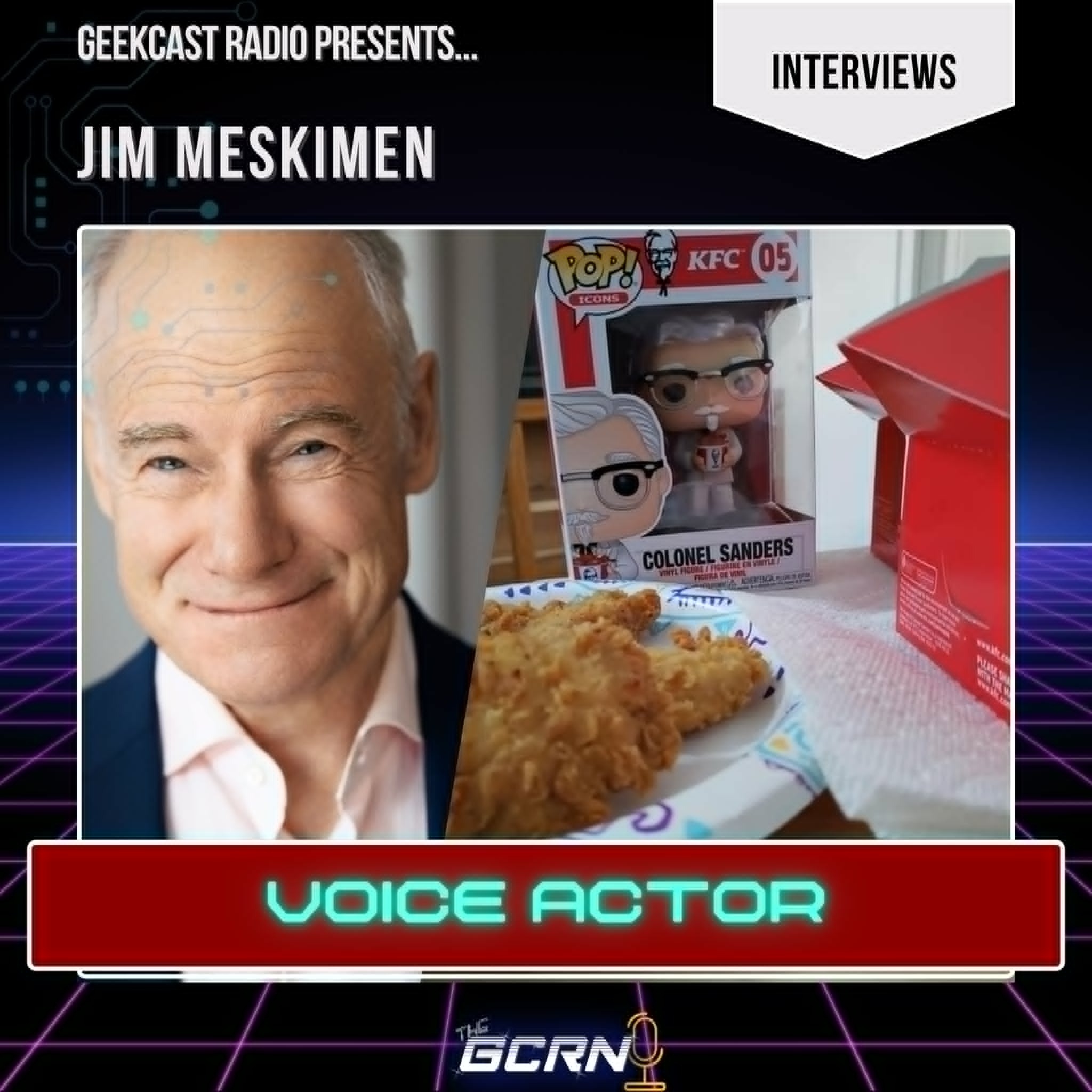
interviewing today John Delancey. Hello, John.
Hello, how are you? Good, how are you? Well,
you know what, it explains, this UK thing explains...
What I was concerned about in terms of being
a lot of jet lag talking to a bunch of guys who
were, you know, like 5 o 'clock in the morning.
So, okay, we're on. We're much better. Yeah,
we're much better. Awesome. We're going to start
out with a couple of just general background
questions and starting those out. Where did you
grow up at? I grew up in Philadelphia. I grew
up in Philadelphia, Center City, for the first,
I don't know, seven or eight years, and then
my folks moved out to the suburbs, and then I
left Philadelphia when I was about 18. Nice.
How did growing up with dyslexia affect your
life, and do you have any advice for the many
other people out there facing the same types
of challenges you've faced? Well, it was difficult.
I mean, it was really difficult because when
I went to school, people didn't know about anything
about dyslexia. So they just figured that I was
a little slow and I flunked out of, I don't know,
one, two, at least two places until I got to
a school in the sixth grade. which was pretty
much for kind of wayward kids, probably a lot
of whom had dyslexia. And the headmistress of
the school said, well, I think that he has dyslexia.
Now, that was okay with me because it was better
to find out I had dyslexia than to just be told
I was stupid again. But it isn't as if anybody
did anything about it. There wasn't anything
to do. It was a name. And it gave some sort of
credence to why it was that I could be fairly
clever on certain things and really behind the
eight ball in others. What was it that finally
kind of let you get over the hump there, especially
going on into a field that, you know... With
lines and acting in general, there would be so
much focus on the reading and everything else.
Well, I think that, like a lot of people, you
tend to gravitate towards the things sometimes
that you don't do that well. And you overcompensate.
I was in class, again, in sixth grade, probably
hacking around in the back. And my teacher came
in. And the next thing I knew, I had a book.
bounce off my chest. He threw a book across the
room, and it bounced off my chest and fell onto
my desk. And he said, you know, probably along
with be quiet and a fair amount of other expletives,
he said, two months from now, we're going to
do Henry V. This was during the spring. Two months
from now, we're going to do Henry V, and Delancey,
you're going to play Howe. And he went around
the room and assigned part. Now, I then had to
go and read the play, which was excruciating.
And well, actually, I had to read the play, which
was difficult. But then I had to memorize. And
that was excruciating. I just didn't know how
to memorize. And to this day, I am not really
very good at it. And it gives me a lot of anxiety.
I don't know why my wife, who is not dyslexic,
can learn. very complicated stuff in a very,
very short time while I am still struggling.
The only difference is, is that once I've got
it, I seem to know kind of what to do with it,
you know, maybe certainly as well, if not in
certain instances better than others. But it's
always been a struggle and it will always remain
a struggle. So what was it exactly that made
you decide to get into the acting business? And
if you could tell us about landing your first
official role as an actor. Well, after all of
this discussion about struggle and what have
you and flunking and having to learn this stuff
and perform it, I went ahead and did that. And
at the end of that performance outside on that
day in May, everybody crowded around me and said,
wow, you're really good at this. And there was
a guy there who had come to see his granddaughter
who went up to my father and said, you know,
if your son wants to do this, he should. you
should encourage him because he's actually really
good at this. Now, this guy happened to be the
editor of the Pelican Shakespeare's for, you
know, well, those Shakespeare books that every
school kid used to have. And so that was the
first time in my life that I'd ever had any positive
feedback in school. And so I just glommed on
to that. I mean, that was like, oh, my God. Little
did I know that each and every time that the
learning of my lines was not going to really
become that much easier as time went on because
it took me a very, very long time to even understand
how to learn lines. But that was something. So
now we jump forward. I ended up going to Juilliard.
I was very fortunate in being able to go there.
I had had a bunch of other jobs in between that,
but probably the first really official job was
was being in the American Shakespeare Company
up in Stratford, Connecticut. And then what else?
Then I came back into into New York and I auditioned
for a bunch of stuff and I got an opportunity
to be in a movie and I went out to Los Angeles
and then I. Worked at Universal for two years
where I did many, many, many shows. And then
I got tired of that. And I went up to Seattle,
back into the theater. And then, you know, so
I was, you know, up and running. I mean, I think
that I was, for the most part, pretty naive and
rather immature. One thing that was helpful is
that in my younger days, I... I sort of looked
like an actor. I was good enough looking that
that was helpful where sometimes my acting was
probably not quite as good as it should have
been. Was there a certain, last question on this
topic, but was there a certain point where you,
did you know right from the beginning that this
is what you wanted to do long term or was there
a certain point where it clicked and you said,
you know? You figured out that this is definitely
what you want to stick with. Well, I really hadn't
thought about it. And when you figure, I started
acting when I was 14. By the time I was 28, I
now was actually making my living at it. But
I was making my living at it in such a way that,
you know, there were, it was a struggle. Not
as much as a lot of people had. I've been very
fortunate. But it was enough of a struggle for
me to go, God, is this something I really want
to do? It was at that time that I sort of sat
myself down and realized, I'm full into this
now. I have no other profession. I mean, there
isn't anything else I'm good at. It isn't like
I'm going to go back and get my PhD. I mean,
for better or for worse, I was stuck. And so
it was at that point that I thought, I really
need to start thinking about this in a way that
will make me successful and not just a feather
for every wind. Jumping gears a little bit more
into something a little bit more specific, do
you have a favorite show that you have had the
pleasure of working on? Well, Breaking Bad is
an awfully good show. You know, I think it's
Vince, the creator of that, is just about the
best. I mean, oh my gosh. He's just amazing.
And so I enjoyed that. I enjoyed the last show
I was in, which I don't think is going to go
anywhere, but it was Torchwood, I thought, did
a pretty good job. Those are some of the shows
that you would have seen of late. Gotcha. What
about specifically looking at all of the different
Star Trek related projects that you've been involved
with? Is there is it possible for you to pick
a favorite out of all of them? Well, Star Trek
clearly is a defining show for me to the extent
that, you know, my grave will say best known.
I went, by the way, I was doing a play not too
long ago, a couple. a month or so ago. And, and,
uh, sometimes on the Saturdays or Sundays in
between shows, we would go and have lunch in
the cemetery. It's, it's the celebrity cemetery
in, in, uh, Westwood. And, uh, Marilyn Rowe is
there and, you know, and Merv Griffin and what
have you. And some of the grave markers are fantastic.
Merv Griffins is, Merv Griffins is, um, I will
not be back after a brief commercial. Nice. And
then there was some actor, and I wish I could
remember his name, but it's so... He goes, I'm
going to come up with a name. Bob Gray, a fine
actor, weather permitting. Oh, jeez. So there
were lots of... So, in any case... Oh, God, now
I forgot your question. It was just out of all
the different Star Trek projects, if you had
a particular favorite. Oh, well, sure. I think,
for me, the next -gen was the more substantive
show. The last episode, All Good Things, was...
was a place where I could sort of do, I didn't
have a great deal to do, but each scene sort
of was pivotal, or at least character -wise it
was pivotal, and that I could present a new facet,
you know, each one had a little different facet
of this character called Q. Is it true that when
they were going to make that last episode of
The Next Generation, I read somewhere that you
had approached Rick Berman and asked if you could
be in that final episode. Is that a factual thing?
No, I didn't. Okay. No. I mean, I'm delighted
on being in it, but, you know, it's very awkward
in asking producers for work. It places... them
in an awkward position if that's not really what
they want to do and it places you in a position
where you know you're you're being told essentially
I mean it's it's I always think of it as like
asking somebody am I going to be invited to your
dinner party right you know it's like no oh my
god so I never I just never ask I never ask Makes
sense. Yeah, that was kind of a nice bookend,
though, having Q in the first episode and the
final episode of TNG. Yeah, I think so, too.
I think so, too. And I mean, you know, for most
people, they don't most people think that I was
a series regular on the show. I mean, most people
think when I when I say to them, well, how many
episodes do you think I was in on all three shows?
Oh, you know, whatever. deep space and voyager
oh they go oh my god i don't know 20 30 i said
well try nine nine um so i uh there would be
shows in which people would say no no no no no
you were in that and you and i go actually i
wasn't he goes well you know really you should
have been in it I think it's just a testament
to how much of an impact that character had.
Well, there's no question. The character had
an impact which was disproportionate to the amount
of times he traipsed around. So what project
has posed the biggest challenge that you've been
a part of? Oh, I don't know. I mean, you know,
since we talked about line learning, Man and
Superman with the Don Juan section represented
about three hours and 50 minutes of me talking
at high speed on stage. That was terrifying.
And also because I did it, it was exhilarating.
I've written a fair amount of shows for. symphony
orchestras, and they are fraught with all sorts
of production issues that don't usually exist
in the theater. But, you know, the symphony orchestras
are not producing instruments, and so trying
to get a sort of theatrical production up in
a symphony environment has been Super challenging.
I don't know. I mean, one of the things, and
I'm changing the subject a little bit, is that
some actors just like to act. They just enjoy
that. And almost regardless of what the material
is, that state that you get in is something that
for them is everything. I'm not somebody like
that. I really need to think the material is
good and really somehow have a feel for the material
above and beyond just wanting to have the job.
And so I tend to work less and less because I
don't really want to sit around the set. I have
other things that I do. that also take up time,
and time is becoming more and more precious.
So I'm doing a little tiny little, I don't know
what it's going to be, 12 -minute little short
for a guy next week, and I'm doing it only because
the material I go, oh, this is very interesting.
It's a story of a psychologist. who is counseling
a woman who cannot accept the fact that her husband
is gone and is not coming back. And she has turned
it into that he actually has run off with another
woman. And what we realize in this very short
short is that her husband died in 9 -11. And
what we also discover is that my wife died in
9 -11. So we are two people in real pain trying
to deal with this issue. And we are hooked together.
There's a symbiotic relationship that we have.
Just as a little, little, it's a little tiny
project. And I just thought, oh, that sounds
really interesting. Let's see where that goes.
So that's the type of stuff. I mean, along with,
I just finished doing in Philadelphia, L 'Histoire
de Soldat, which is a Stravinsky piece. I was
in Rochester a couple of, about a month ago now,
doing a new piece for a symphony orchestra, which
is a very exciting piece. It's a Dr. Seuss. piece,
The Sneetches. I didn't know this. Yeah, I didn't
know it. And The Sneetches was used in Bosnia
by the NATO commander at the time. He ordered,
oh, I don't know, something like a half a million
books printed up of The Sneetches in Croatian,
you know, to distribute to the people there to
try to get them to stop killing each other. And
a wonderful man by the name of Dr. Sidney Sobel,
a doctor in the way in which the arts has always
been. He's a patron of the arts. He has commissioned
He went and got the rights from the ASUS estate
because he feels very strongly about this piece.
And then he went and got, commissioned a Spanish
composer by the name of, oh my God, Lorenzo Palomo,
P -A -L -O -M -O. And me as the narrator. And
we're doing a, we did a... a two -piano version
of it in Rochester, as I said, about three weeks
ago. And then it's going to premiere at Oberland,
and then it's going to start making its rounds
to symphony orchestras around the world. Cool.
The point is that whatever is interesting. Right.
Oh, yeah. I can definitely understand that. Out
of the several animated shows you've been a part
of, What has been one of your favorites to have
worked on? I don't really, you know, the experience
is really sort of, it's a difficult, you don't
get too connected with it. You know, if I did,
I only come in, you know, once or whatever. I
mean, the one that's going on right now is My
Little Pony, which I thought was a kid's show.
Little did I know that there's such a world as
bronies. my understanding of all that, I actually
asked somebody, is this coded? Is this a coded
show that really means something else? And he
said, no, no, it isn't. So there's that. I just
finished doing a... What did I do? It was a game,
sort of a fun game. I cannot remember the name
of it. I don't know. You'll have to help me with
the... Was it Assassin's Creed? Oh, I did Assassin's
Creed. That was very interesting. That was very
interesting. I really had a sense that I was
working with people who really, you know, obviously
they know their business very well, and it was
fun. That was nice. That was nice, yeah. You
mentioned a couple different things here, working
with the symphonies and the orchestras. You've
obviously done theater work, you've done film
work, television work, video games, cartoons.
Do you have a favorite medium within the whole
acting genre? Is there one that you prefer or
one that is a personal favorite of yours? No,
I don't. I tend to, if I'm doing a play, which
I just finished doing, you know, after three
months, four months, I'm really ready to get
out of that. I just like the variety of stuff.
I like that. In a way, though, I mean, just from
a technical point of view, sometimes you don't
get, you know, you become a jack of all trades
sort of person. But I mostly enjoy just being
able to go from one different project to the
next. The notion of doing a play for two, three
years is really abhorrent to me. I just can't
imagine. And I know that there are a lot of actors
who think that that's absolutely fantastic, but
I just would hate it. I absolutely would hate
it. In the same way that doing a television series.
I mean, I did two or three television series,
and they would last a long time, and it's a real
grind. I sort of go dead upstairs after a while.
Makes sense. If you can remember, was there ever
a project that you were involved with, whether
it be most likely a TV show or something like
that, that you were really excited and thought
would do? go places or do great that never really
materialized? Or was there something that you
thought was completely hopeless once it got involved,
but it really took off and was successful and
you didn't expect it? Well, Legend, the television
show Legend, was something that I thought was
going to run for a very long time. And most people
who saw it just loved it. And I thought that
it was a shoo -in. And we did 13 episodes, and
that was it. There are a number of reasons why
that was it, and I don't think it had anything
to do with the show. I think it had everything
to do with being on a new network, them not having
the affiliates to be able to make sure the show
was given its due. Sometimes it would be at 1
o 'clock in the morning or 10 o 'clock in the
morning. I mean, just ridiculous. Shows that
I thought of that I didn't think were going to
be successful and were. No, I have not. It probably
kind of goes into the fact that you seem pretty
careful, like you said, about the roles that
you're picking and you want that kind of value
to it. So it kind of makes sense that you wouldn't
get involved with something if you didn't think
it was going to take off. Right. I mean, you
know, everybody goes into a show hoping and expecting,
you know, there's a sort of a suspension of reality
or disbelief or whatever you want to call it.
You go in going, oh, this is great and stuff
like that. And then it's only when, you know,
other people get involved that you begin to say,
oh, well, geez, I guess I misread that. I just
came from a show tonight that my wife was doing.
She'd been working on it for the last two months.
And I would say the last two weeks have been
a constant. She has been so down on the show
that, oh, my God, it's just going to be terrible.
It's not going to work. It's all this effort
and stuff like that. And I went to see the show
this morning, this afternoon. And it was really
good. And then I went back tonight. That was
sort of a dress rehearsal, and then there was
the performance tonight. These are kids in the
high school of performing arts, and they had
to write a show. They picked a story, a really
interesting story, one of the first prototypes
for science fiction, a Chinese story that dates
back to the 13th century. It's one of the first
stories that is in human history that has a character
come from another planet. Well, it actually isn't
another planet. It's the moon. And she comes
from the moon and she's a daughter of the moon
or something like that. But, yeah, I mean, oftentimes
you do shows that, you know, you do say, oh,
my, you know, you get into it thinking it's going
to be fabulous, and then you go through a period
where you go, this is going to be hell, and it's
just going to be terrible, and then, as we say,
you know, the gods of the theater come down and
smile on that night, and everything seems to
work itself out. What prompted the creation of
Alien Voices? I was doing... a bunch of shows
for la theater works and uh la theater works
is a producing arm of uh uh or their shows are
on npr and they are they are plays and they're
they're plays that are done as radio shows and
i had been with la theater works for a long time
and i had done a number of their shows and i
had directed a bunch of shows i'd act i've acted
and directed They were looking for ways to be
able to sort of bring in new audiences and what
have you. And I had suggested to Susan that we
do War of the Worlds. And at that time, I also
wanted to have a sequel to War of the Worlds.
So I called Howard Koch in Woodstock, New York,
and asked him if he would write a sequel to War
of the Worlds. He was very old at the time. He
was 90, and he really, in the end, was not up
to the task. But Nat Sigaloff, a writer friend
of mine, he and I did, in fact, write the sequel
to it. And so I put together a science fiction
cast made up of science fiction actors, the vast
majority of them from Star Trek. Susan really
didn't know who they were. Let me tell you, the
night we opened, we had people around the block.
Most people, a lot of people did not get into
that opening show. And so it was very successful.
The headliner of that show was Leonard Nimoy.
When the show was over, I said, Leonard, did
you have a good time? And he said, oh, yeah,
I had a great time. And I said, well, I have
an idea. So he and I talked, and I said, I'd
like to bring that in, and you and I, and my
idea is to do classic science fiction. The reason
I wanted to do classic science fiction, and now
I'm beginning to see that probably a lot of my
life has to do with this dyslexia stuff, is that
my first book that I read from cover to cover
and enjoyed immensely, I was probably around
13. It was about the time that I began to be
able to read at enough of a speed so that I could
sort of enjoy the process. And that book was
Jules Verne's Mysterious Island. And not only
was it a book that, as I said, I really enjoyed,
but it was a book that has gone on to... impress
me in many different ways. I just thought it
was fantastic that here were a bunch of guys
who had nothing. And when they fell into the
sea, when the balloon finally deflates and they
fall into the sea, they arrive on this island
with nothing. And they created through their
wits and their understanding of science and what
have you, they created essentially a utopian
society as best it could be done. You know, the
fact that I remember putting the book down when
I was reading it, you know, in bed. I would put
the book down and just think about it because
they would go, you know, one guy would go, oh,
I see against this hill. I see that there's a
lot of iron ore. That means we will be able to
create a forge and we'll be able to make metal.
I go, oh my God, how would they know that? Oh,
this is fantastic. And I wanted to be somebody
like that. And I just thought it was just great.
So I said, I want to go back and I went on to
read. many of the classic science fictions. The
Wells, the Vernes, you know, I read many, many
of those. And I said, I'd like to go back and
do that. And one of the things is, is that I
want to make sure that I do it in a way that
is respectful to the book. Because at the end
of that summer, when I read Mysterious Island,
the movie came out. And I was like, oh, my God,
the movie. This is fantastic. And I went to the
to the to the matinee to see the movie. Well,
the movie opens up with a bunch of dinosaurs
on the beach. And I go, what the hell is this?
There are no dinosaurs in the book. And then,
you know, and then from the sea on a raft arrived
two very blousy women. And I stood up. amongst,
you know, a theater filled of kids my age. So,
you know, we're all 13. And I started screaming,
this is not the story. This is not what was in
the book. This was not it. And I got collared
and I got thrown out. And I just thought, God
damn it. God damn it. I mean, this is just not
acceptable. So here it was many years later that
I am talking to Leonard Nimoy and I'm going,
Leonard, we're going to do, you know, what do
you think? And he goes, I think it's a great
idea. And I said, OK, well, Nat and I will, you
know, we will read these books and we will create
radio shows from these books. And from and from
the script of these radio shows, we then can
do other things. We can create television shows
out of them. which is what we did for the Sci
-Fi Channel, and we had deals with other companies.
So that's where all of that came from. Yeah,
I've listened to a couple of them, most notably
being the First Men on the Moon. There was Time
Machine, Journey to the Center of the Earth,
The Invisible Man. As a matter of fact, I've
just put them up where you can download them
now. What is it called? Alienvoices .net. I think
that's right. Alienvoices .net. Actually, I can
do it while we're talking. If you can go to alienvoices
.net, you can go there and you will see that
they are all there to be downloaded. Very cool.
What are some future plays or projects that you'd
like to add to that brand name or some other
things that you'd like to revisit? You mean for
Alien Voices? Yes. Well, Leonard and I are not
doing Alien Voices anymore. I mean, what happened
is that we had a wonderful time in the four years
that we did it. But, like all good things, it
came to an end. And it came to an end in no small
way because we ended up moving from being creators
to being salesmen. we just didn't want to sell
stuff. I mean, you know, right. Yeah. It just,
and, and then, you know, we had different ideas
about how you sell it and then, and then, you
know, handing it off to other people. And then
you kind of go, well, why are they doing that?
And, and it just became it, it, a labor of love
became burdensome. And, uh, since there was never
a thing that, you know, let either of us were,
actually making our living from. You know, so
that was that. You know, she, it was, we just
said, look, that's sort of it. Right. I was,
I did, I did do a, I did do just, I floated an
idea about a year ago, right at Halloween, about
a year ago, which is, I went online, well, I
went into my garage and I did The Raven. with
the help of a friend. I did The Raven. And it's
pretty good. And it's really straight right into
the camera. But it's a pretty intense read. And
the last time I looked, it had something like
70 ,000 people had seen it. And my intention,
I think we've got a theme here. My intention
was, for teachers to play this to kids who, because
one of the things I didn't add to any of this
is that I taught myself how to read through poetry.
When I would look at a page of a book, the typeface
would be always sort of floating. It's like,
whoa, and everything looked really dense. But
poetry, and those poetry books, especially the,
the, whatever it's called, the living, the treasury
of poetry or something like that. Um, they were,
they were spaced on the page kind of in a pleasing
manner, you know, little, and they were little
blurbs, you know, a half a dozen lines, or maybe
at the most, uh, a page, what have you. And so
I use those as a way to practice. And, So I have
a very, I have a good heartfelt feeling about
poetry. So this was going to be my, I was going
to create a whole bunch of those. Uh, and maybe
I still will. I mean, I, I've gone up there,
you know, everyone's, I go up on that site every
once in a while and people are always saying,
Oh my God, would you do Xanadu or you've got
to do the rhyme of the ancient Mariner or what
about, you know, blah, blah, blah. You know,
so one of these days I might do that. And, and
the, and the, um, the people who, the comments
that are the most wonderful for me. are the ones
in which somebody will say, I'm a teacher of
a sixth grade class, and I played this, and the
kids were absolutely mesmerized. And it got them
to realize that just words and ideas can be really
fun. So those things are very gratifying. What
are some of your favorite characters out of the
many you've played over the years? Do you have
one in particular that's your favorite, or do
you just whatever happens to catch your attention
at the time? It's sort of whatever catches my
attention at the time. I mean, Jack in Man and
Superman, Byron in Child of Byron. I really grew
to love Byron. I really think, you know, you
research. a lot when you play these characters,
and I grew to really love him. I thought he was
great. And Eugene in Days of Our Lives was a
really silly, wonderful, wonderful romp. Three
years of absolute fun, great fun. Q, of course.
What else? I don't know. Oh, Bartok, which was
Nikola Tesla. That was wonderful. I don't know.
Those are some that I can think of. You mentioned
Q. How exactly did you come up with the personality
and the character of Q and how you portrayed
what was in the script for that character? Was
a lot of it outlined in the script or was a lot
of that just stuff that you chose as far as how
you envisioned the character? Usually, especially
in television, where these things are not always
that sketched out, they're really waiting for
somebody to come in and hand them the role on
a silver platter. I happen to have been doing
right then and there. I mean, I was in rehearsal
for a show called Terra Nova, which was at the
Taper. And I was playing the character of Amundsen.
Now, that character was Amundsen who got to the
South Pole before Scott. And he was a bigger
-than -life character. And I myself tend to be
a little, perhaps a little overly, you know,
a little too big. But in any case, all of that
stuff was all of those juices were flowing. OK.
And so they called me in. They asked me to do
an audition. And I went in. I looked at the material
and I kind of knew. I don't know. I just he's
an arrogant son of a bitch. You know, who happens
to enjoy enjoy himself. You know, he's mad, bad,
dangerous to know, which is Byron. which is what
was said about Byron. He's omnipotent with clay
feet. He's the most powerful person in the world,
in the universe, but too stupid to know it. I
mean, it's whatever are the juxtapositions of
those two things. And so I went in and I delivered
it. Bam. And and I think it was at that moment
that they went, oh, OK. All right. Yeah. Well,
this we don't have to. One of the things, especially
in television and movies and what have you, is
that you don't have a ramp up time. You know,
it isn't like, well, in three weeks, the character
and stuff like that. What you do in the office
is what you need to be able to do tomorrow morning
at six in the morning. So. If you can come in
as full blown as that, then and obviously I obviously
I nailed it. So I nailed and I nailed something
that they might not have known was quite there.
You know, they certainly had no sense of it having
humor in it. So that was something that was not
part and parcel of anything in the scripts until
until the until I brought that. And I'm assuming
that when you auditioned for that character in
the beginning that that was a, am I right to
say that that was a guest role that didn't necessarily
have future appearances planned? Right, that
was a one -shot. Right. That was a one -shot,
and Gene Roddenberry's original notion was that
they were going to just go right into making
episodes. But he lost the battle of it being
a, you know, an M .O .W., two hour M .O .W. And
so in the process of losing that battle, he had
to come up with like, well, how do I extend the
story that I have? And what what which, you know,
took him only a certain distance so that he had
to bring in. kind of the B story or whatever,
you know, another story. And you can see that,
and I haven't watched, you know, I watched it
maybe twice, the show, but many years ago, but
you can see the seam in there. I mean, you can
go, oh, wow, boy, we really took a right turn
there. You know, it's really stitched together,
not very elegantly. of these two stories. And
I guess a couple, I mean, there are many reasons
why that became successful. Flamboyant. You know,
people love the notion of having power and having
no responsibility. You know, whatever I brought
to it, the tweaking, you know, whatever they
brought, who knows? Who knows? It's obviously,
you know, all of these things are of a collaborative
nature. So any actor or any writer or any director
who says it's all them is wrong. It's a collaboration.
And even when all is said and done, you go into
the editing room and it's yet another collaboration.
All the stars have to align. That's right. And
I guess the stars align. After it obviously became
a recurring character and then obviously appeared
in different series, looking back, once... Once
the Q character had run its span, looking back
at the character after the fact, how did you
feel about the character overall? Were you able
to do everything with the Q character that you
wanted to? Was there things that you wish you
could have been able to explore with that character?
Or at the end, did you feel like you had done
everything you could do with that character?
Well, you know, the biggest problem with the
character is that... And I had gone through this
experience actually on the soap opera. I would
say, do not write me funny. My sense of the undercut,
my sense of irony and sort of that wise -ass
thing will give it enough of that. But do not
write me funny. Because nobody is really a comedy
writer, and this is not a comedy show. So let
me give the wink and a nod. Sometimes that was
successful, and sometimes it went over the line.
The best shows were always the shows that had
to do with big philosophical issues. Now, you
could have a little bit of humor in there, but
by and large, what's driving that show is...
You humans have so screwed up your own backyard.
What makes you think that you have any right
to come out here? Is suicide a reasonable choice
to make? You have one more opportunity. to get
your life back? What will you do with that? I
mean, these type of things, you kind of go, oh,
these are pretty big ideas. Whether Q loves Vosh
is like, who cares? And those were not as good,
and I don't sort of remember them for that reason.
Makes sense. Yeah. I've noticed that you're pretty
widespread in all the areas of the acting field.
What has it been like working on so many iconic
shows? Well, you know, like what? Like Stargate,
Star Trek, Breaking Bad, Torchwood. Especially
like the science fiction, especially iconic science
fiction shows. Well, I was just going to say
those are genre shows. Fine. Yeah, fine. When
you're on a major show that's doing really well,
it's great fun to be on. The West Wing is great
fun to be on. Everything is clicking at a high
level. And then there are lesser shows where
you just feel it. You're just cranking it out.
And it's not as interesting. What are some of
your favorite film roles that you've had the
pleasure of being in, or is there one in particular
that stands out from the rest? Well, the one
in which I enjoyed the most, and it's the most
bittersweet as far as I'm concerned, was my work
with Peter Weir in Fearless. I had many scenes
with Jeff Bridges. his uh that had to do with
everything up until you know getting onto the
plane and all that type of stuff and then i got
a call from weir saying you know i want to tell
you that we've decided to cut all the scenes
up until the plane i went oh my god my god i
thought i thought that this was going to be something
that was going to be really great for my career
as well as being involved with some really wonderful
people and uh You know, I made some impression,
but not nearly. I just, I don't know. I went
from seven or eight scenes to one. So it was
just like, whoa. Who else? I don't know. I'd
have to look at my resume. I'll look at it here.
I will bring it up. I know you're in, you know,
Reign Over Me and Multiplicity, and you did the
letter reading for Saving Private Ryan. You're
in Gamer. Oh, yeah. I mean, they're fine. They're
fine. There's nothing special. What has it been
like over the years dealing with the fan bases
like you have? Like, you know, obviously Star
Trek has an insane fan base. I don't mean it
in a negative way, but... You know, there's so
many of them out there. And your recent exposure
to the My Little Pony fan base, what has it been
like just interacting with such passionate fans?
Well, they are Hand That Rocks the Cradle. That
was great fun. I see that. Fisher King. That
was wonderful working with Terry Gilliam. The
Big Time is a show that you guys never saw, I'm
sure, but that was really wonderful. That was
a wonderful show about the move from radio to
television in the late 1930s, early 1940s. And
I played the radio actor. Who, in fact, cannot
make the transition. It was an interesting thing.
I'm sorry. Ask me the question again. Sorry.
It's just about dealing with your interactions
with some passionate fan bases like Star Trek,
My Little Pony. You know what? They are no different
than the people who meet you at the stage door
after a show. The only difference is that sometimes
it's like 20 years later. And they're asking
you questions. as if you just finished the show.
But the vast, vast majority of the, what would
be considered the ultra fans are very sweet,
very respectful, very, in many cases, very smart
people who just happen to, you know, like like
that show right have you been to any uh of like
the different fan conventions for oh yes i've
been to many of them yeah and uh and they're
terrific i mean and they're they're terrific
they you know i mean i consider this to be to
be the uh science fiction has essentially offered
the that the sanctuary from the other half of
the population which would want to be at a NASCAR
race or a sporting event. It's a little bit of
a gentler crowd, and they are well -read in many
instances, and it allows for a sense of They
enjoy science, and then they enjoy fiction, and
then they enjoy computers and movies and history
and costumes and all that type of stuff. So it's
great. I actually had the pleasure of actually
meeting you one time at a Star Trek convention
back in, I think it was 94. Yeah. I remember.
I know. Long time ago. Yeah. Were there any funny
inside gags you had while being involved with
any of these different projects? You know, everybody
asks me that. And the people who you can ask
and they will actually say, oh, yes, are the
ones who are usually series regulars. Because
there are certain days that they have, frankly,
virtually nothing to do. Just nothing to do.
Okay? I mean, there are other days where they
have a lot to do, but in the course of 25 episodes,
there are times and weeks, actually, where they
just don't have anything to do. So they can play
little games and stuff like that. When, for Star
Trek, one of the actresses actually said to me
one day, she says, you have more lines in one
episode. than I have in an entire year. So when
I would go on, I was really jammed. And then
add to that the fact that I'm saying these words
for the first time, which means I've had to learn
them, which now goes back to the tension and
unpleasantness of having to learn lines. And
there was nothing necessarily, I mean, there
were days that it was fun if I didn't have a
great deal to do, but it was never relaxed or
fun enough for me to be screwing around at that
level. Yeah, I can kind of see that. Because
understand, if I fiddle fart around in the morning
and I have really lots of work to do at the end
of the day, The time that I will want, oh, can
we do that? Can we just do that take again? Can
we, you know, let me just think here. That will
all be gone. That time will have been eaten up.
So I was always very protective about that. That
doesn't mean that I wasn't part of my success
there was to be, you know, silly and naughty
and sort of pranksterish. But in terms of just
the... just getting the work done. I just didn't
have time for those sort of pranks. Who were
some of your role models when you were growing
up that influenced you for acting? Well, probably
people who did not help me understand what acting
was like. But in any case, Basil Rathbone, Adolph
Mongeau. All of these character actors that I
saw, it was a very long time before I began to
understand that acting naturally was part and
parcel. I was all about just the choices, all
these great choices, these, you know, sometimes
operatic choices, and not recognizing that the
style even from when they were acting to when
I was a little kid, was moving very directly
towards more and more psychological. I just finished
watching a film a couple of nights ago, a crazy
title, 44 -inch chest. You'd think it's some
sort of... porn thing or something, but I mean,
it was a wonderful British movie, and the acting
style in it is really, is so current and so tremendous,
but it was certainly not what Basil Rathbone
and Adolph Marsh were doing. You know, and Clifton
Webb, you know, and all those people. If you
could pick any actor, you know, living or dead
to work with that you never got the chance to
work with? Who are some people that you would
have just given your right arm to be able to
work with? Well, I've become a huge fan of a
guy who I will never work with. But do you know
who Tom Hardy is? Yeah. Amazing. Amazing. Have
you guys seen Bronson? No, I haven't seen that.
Wow. Holy moly. I mean, that is amazing work.
Just amazing work. Oh, I don't know. All of these,
I tend to be typed into the sort of, you know,
the intellectual, you know, the guy, the guy,
whatever it is, the lawyer or the teacher or
the so -and -so. So, you know, I don't know.
So I don't. I don't have much hope that I will
get roles with these guys. One of my all -time
favorite shows is MacGyver, and I read somewhere
that you are or were close friends with Richard
Dean Anderson. Is that valid? No, we weren't
close friends, but he and I were in the same...
He was in Legend. Okay. So we worked with each
other for whatever it was, eight months. Okay.
What did you... Think about getting to work with
Leonard Nimoy for the Alien Voices. What did
you think about getting to work with him and
the other ex -Star Trek cast? Well, I thought
it was great. I mean, Leonard is a wonderful,
wonderful man. Really a terrific guy. And a consummate
actor. Used to be an acting teacher. Obviously
a wonderful director. So all of that was great.
Just my last two questions here. Do you have
any, besides the ones that you've already mentioned,
do you have anything coming up that you would
like to promote or let us know about? Any projects
that you have coming down the pipeline? No. I
mean, I have a couple of symphony orchestra things
that I'm doing. One is in Rochester in May. And
then the other is in Oberlin in April. I think
I'm going to write a new piece about the Russian
composers for a show here in Los Angeles in September.
And after that, it's to get my boat ready for
the South Seas. And that's that. Nice. Final
question for me, what was it like having each
one of your, I believe I read this right on the
resumes and IMDb and whatnot, but having each
of your kids appear in some of the projects,
especially some of the Star Trek projects with
you, and what are your kids up to these days
as far as their... My younger son is studying
architecture at the University of British Columbia,
and my older son... works for an organization
called IOM, International Office of Migration,
out of Jordan, and he runs the Iraq mission,
which is to determine, to figure out what's going
on with the displaced people in Iraq. Interesting.
And he was the one who played my son on Star
Trek. Okay. Oh, cool. Final question. Do you
have any advice for people who aspire to get
into acting or voice acting? Well, sure. Think
of it as a sport, which is to say that it's all
about doing it. And so you just have to do it
over and over and over again. It sort of works
with that 10 ,000 hour rule. Nobody gets really
good at anything until they spend a good 10 ,000
hours at it. And not to, you know, say, well,
I'm going to go to New York or I'm going to go
to Los Angeles right off the bat because you
will most likely get eaten up. And, well, more
to the point is that most likely nothing will
happen. So what they should do is that they should,
whatever town they're in, you know, whatever,
you know. Louisville, Kentucky, or Sacramento,
California. They must exhaust all of the opportunities
that they have in that town first, which is to
go to the community theaters, to the opera, to
the whatever it is that they want to do, and
make sure they shoot as many films as they can.
Get to the point that they've outgrown their
own town. And then, begin the the march as it
were to these two or there are probably three
or four meccas uh chicago new york la maybe seattle
i don't know but that's about the only you know
oh san francisco uh boston i don't know if you
can really make a full living in boston or not
but but um until you begin to move to those towns.
And then get a resume going so that when you
do come to New York or do come to Los Angeles,
somebody can look at it and go, oh, well, gee,
you really got some stuff here. Okay, okay. You'll
still start on the bottom rung, but... people
won't just blow you off as just kind of a wannabe.
You will actually have experience. Makes sense.
Yep. We'd like to thank you once again, John,
for taking the time out of your busy schedule
to hang out with us this evening. Is there any
way for people to contact or get a hold of you
for more information or just to chat you up online?
Websites? I don't really want to do that. I just...
Only because I get into dialogues and I just
don't want to be rude and I just don't have that
time. I just don't have the time to do that.
And so that's why I do these things. We appreciate
it. Yeah. I mean, that way you can ask me all
the questions you want. I think I answered pretty
fully. Otherwise, and this way you can play it
to many, many different people as opposed to
me, you know, one person at a time answering
a question. Right. I'd like to thank you, too,
personally. I really appreciate this. If you
would have told me 15, 18 years ago when I was
watching whatever Star Trek The Next Generation
that I'd get to talk to you someday, I would
not have believed it. So I really appreciate
you taking the time out and talking to us. Well,
it's my pleasure, and your questions were great.
And I hope that you can use this material well.
Oh, yes, we will indeed. We'll ask you to hold
the line, and we'll be back after this. Quote
the raven, nevermore. And the raven still is
flitting, still is sitting, still is sitting
on the pallid bust of palace just above my chamber
door. And his eyes have all the seeming of a
demon's that is dreaming. And the lamplight o
'er him streaming throws his shadow on the floor.
And my soul from out that shadow that lies floating
on the floor shall be lifted. Never more. In
any case, I'll be watching. And if you're very
lucky, I'll drop by to say hello from time to
time. See you out there. You've just listened
to Geekcast Radio. On the Geekcast Radio Network,
there are several ways to get in contact with
us or leave feedback for the show. First, visit
the website geekcastradio .com where you can
comment on all of our different podcasts. Second,
you can rate our show and leave us feedback in
iTunes. Third, follow us on Twitter at Geekcast
Radio. Fourth, become a fan on Facebook. Go to
facebook .com slash geekcastradio. Call the voicemail
line 502 -526 -5821. Please remember to tell
us the show you are leaving the message for and
your name. So until next time, unleash the geek
in you.
No chapter markers for this episode.