 ToonCast
Interview with Jim Meskimen the Impressionist!
About this Episode
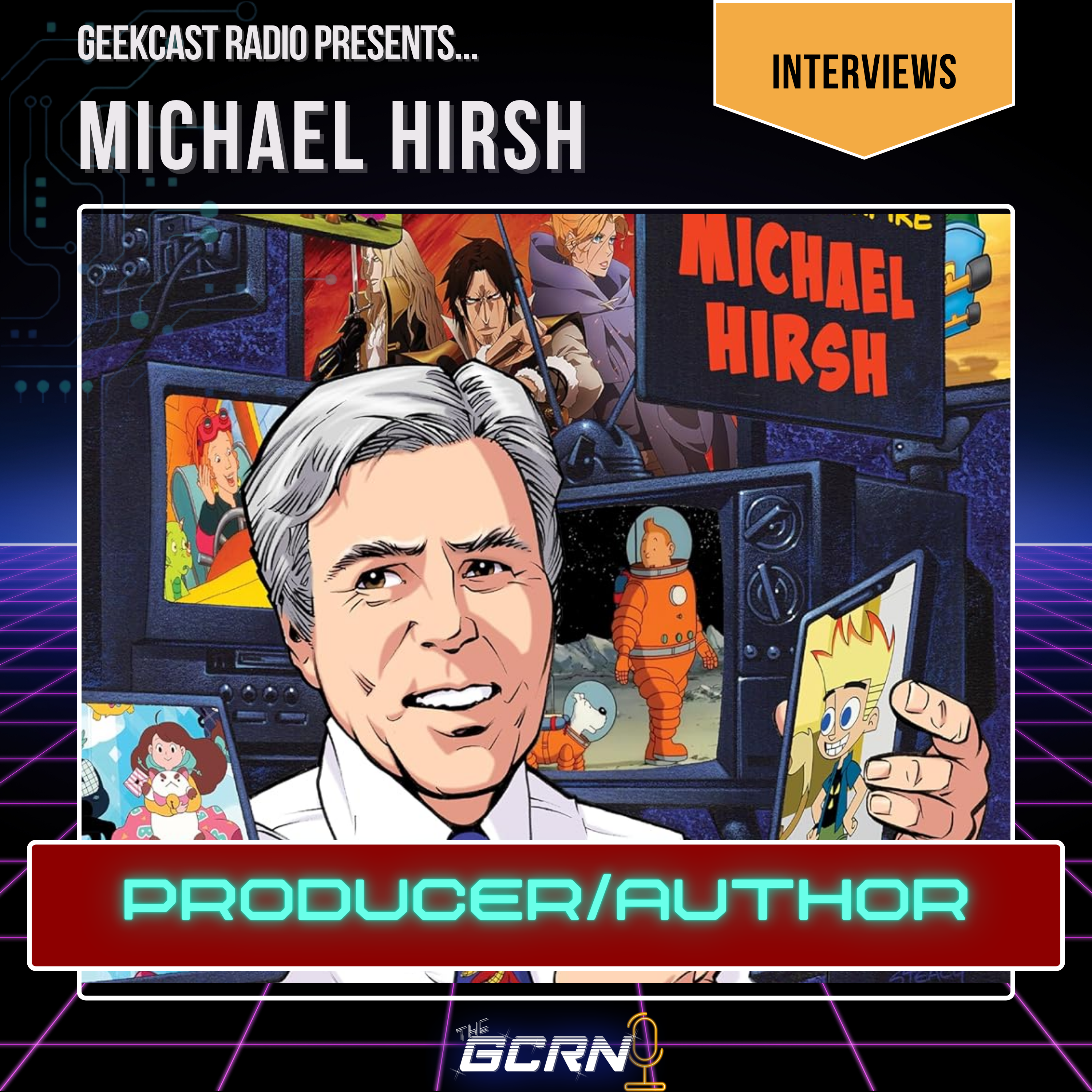
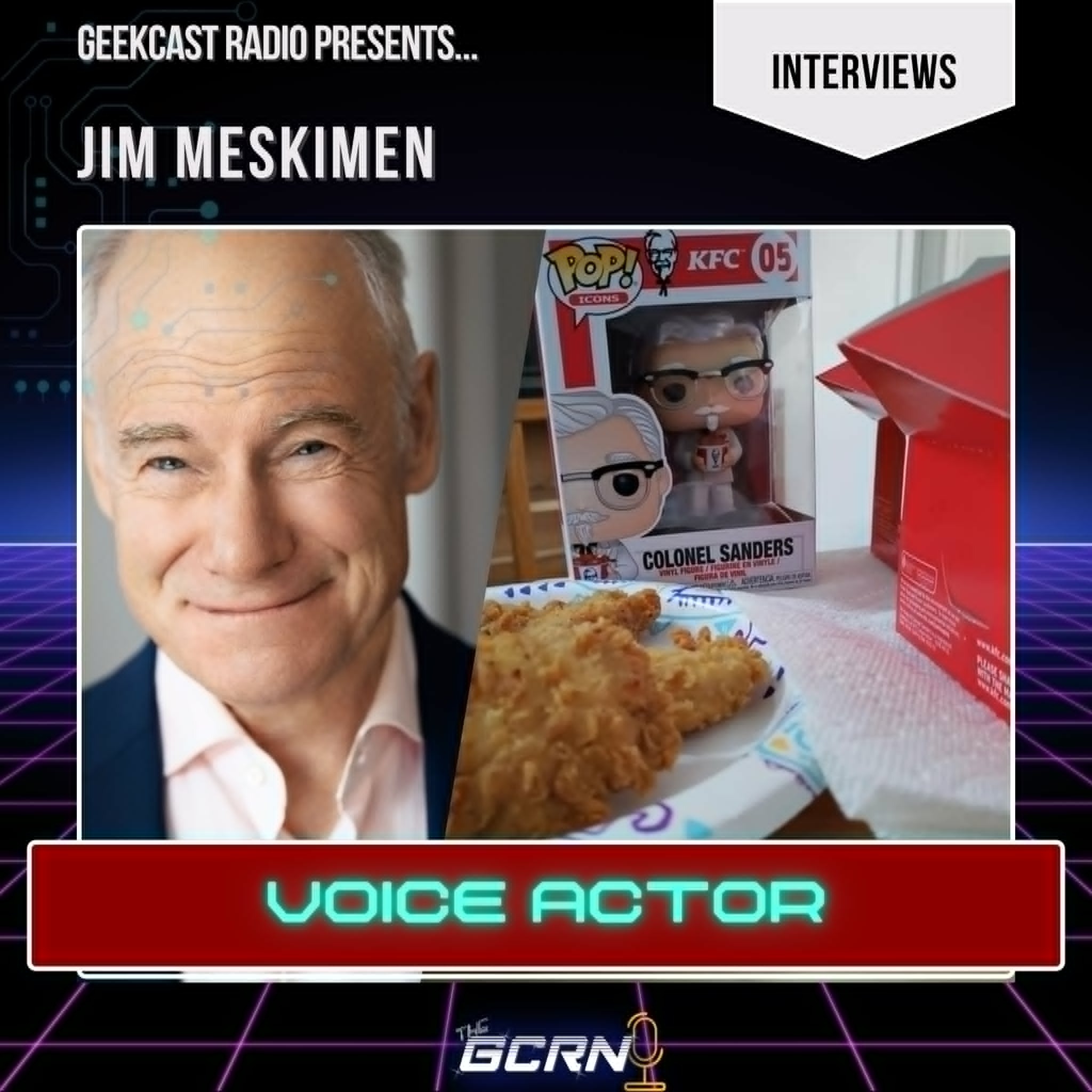
In Episode 307 of ToonCast which crosses over with GeekCast Radio, TFG1Mike is back, and this time Mike sits down with voice actor and impressionist extraordinaire Mr. Jim Meskimen! We discuss Jim's career in acting, and Mike learns a whole lot about taking on another character's point of view through Jim's mindset. Plus we discuss the roles he's done through out his career, such as being the voice of Colonel Sanders the founder of KFC, to Ultron in Marvel Rivals, and many other Marvel projects as that character's voice! Jim was also a secondary character designer on 1985's Thundercats! All this and so much more!!!
Check out Jim Meskimen's website HERE!
Use TFG1Mike's LinkTree to Follow Him!!
Use Steve Megatron's LinkTree to Follow Him!!
Hi, this is Jim Meskimen, and you are listening
to the Geekcast Radio Network. Hello and welcome
to GeekCast Radio. Also, this is going to be
a ToonCast crossover interview. I am, of course,
TF2 and Mike here at the GeekCast Radio Network.
I'm very excited to talk with Mr. Jim Meskimen
from being Colonel Sanders for seven years to
multiple character voices in animation and video
games. Plus, he sang as Elmer Fudd when Bugs
Bunny and Friends sang The Beatles. Talk about
a good day sunshine in a yellow submarine. Hi,
Jim. How are you? I'm good, Mike. Thanks for
that nice introduction. Yeah, I've been working
as a voice guy for a long time. People have been
hearing me and not even knowing it was me, which
is just fine. Yep, yep, yep. Unless they go to
your YouTube channel and watch that drive -through,
drive -through video. That's right, where I portray
Colonel Sanders and make a given order through
the speaker, just like they're a general public.
And the people behind the counter, they're kind
of flummoxed for a minute, but, you know, it
all smooths out. See, the one thing, you should
have been fully dressed as the colonel. You weren't
fully dressed as the colonel in that video. Not
even partially dressed as the colonel. No, I
know. Yeah, but it's fun. It was a great experience.
You know, I don't do Colonel Sanders anymore,
but seven years. It was really a great experience.
A lot of fun. And I flatter myself that I presented
a very authentic kind of sound. I grew up listening
to Colonel Sanders, as probably a lot of your
listeners did. And, you know, he did his own
advertising for, I don't know, decades. I can't
get that voice out of my head. And his manners
and his attitude about things is just kind of
old -timey viewpoint about things. It's just
very refreshing to dip into every now and then.
Actually, I actually made a lot of content on
my own featuring him talking to different celebrities
and stuff. That's on my YouTube channel, too.
That is very, very cool. And the YouTube channel
for Jim will be in the show notes, as always.
Most everything usually is when we do interviews
here at the GCRN. You can find me pretty easily
at Jim Pressions across most platforms. Jim Pressions,
clever name. Yeah, exactly. Absolutely. Absolutely.
All right. So we usually. Ask this, but I've
phrased the question in a different way now,
just to make sure that nobody gets in trouble,
because there was a time where we almost got
in trouble. But before we get started, can you
give us the scoop on what's going on in the world
of Jim Meskimen? Are there any upcoming projects
you are allowed? To talk about. Yeah, we're on
a short leash, those of us that work in video
games and cartoons and stuff like that, so that
I can't just unload all the things I've been
working on. I tell you, mainly I'm working on
some projects of my own. I have, of course, projects
I'm working on for big studios and big video
game providers and stuff like that. The things
I'm working on for myself are a screenplay that
I'm getting cast and funded. that will feature
me a story about an impressionist who is in las
vegas and he runs afoul of some criminal types
that want him to use his ability to duplicate
people's voices to scam the elderly and he starts
to go down this road of you know begrudgingly
of of working with a con man and because he's
under a lot of pressure to make money his father's
in assisted living and he can't make ends meet.
Like a lot of pressure that people feel these
days. So he eventually gets in very bad shape
with the mob and it's a story about how he gets
out using his impression. how he gets out of
this jam of working for the mob to scam people.
So that's what we're working on very heavily
right now. And then I'm producing tons of content
for Instagram and TikTok and YouTube every week.
Lots and lots of stuff with my daughter. Our
Hey Dad videos are popping up all over the place.
And then I fill in the gaps with audiobooks.
I'm an audiobook narrator, so the studio that
I'm in right now is my home studio. Do a lot
of reading. Nonfiction, fiction, multicast, whatever.
I enjoy it. I love literature. I love reading,
and I love portraying different characters. So
that's kind of a quick wrap -up. Very cool, very
cool. That is so awesome. Yeah, audiobook stuff
is very, very interesting. I've found myself
over the years, when I was a kid, I was a kid
in the 80s, so reading was everything, because
it was either reading or rot your brain on the
TV, because heaven forbid we rot our brains on
the TV, but that was the generation back then.
But yeah, no, reading was everything, and what
I find now is, even though I don't have full
blindness, but I'm classified as legally blind,
and what I find now is I can't get my eyes to
concentrate. on reading the page of an actual
prose novel comic books i can read comic books
all day because i can zoom in and zoom out on
them but i can't zoom in and like because i don't
i don't want to read i don't want to read a prose
novel on my screen i just yeah i can't read text
like that but if it's a comic book and there
are pictures around the text and i just have
to zoom in on the text or like a visual manuscript
essentially kind of thing and but i find myself
going to audiobooks more and more because it's
just so much more enjoyable and most of the time
i'm doing like non -fiction autobiography type
stuff Yeah, it's a huge market and a great thing.
Most of us are multitasking, so it's nice to
be driving and listen to a book. I like it because
it keeps the language, the sound of language
alive. And it also helps people with their vocabulary.
And just to be more specific about what they're
saying, perhaps even be more articulate when
they're speaking. So it's a cool thing. Absolutely,
absolutely. All right, getting into the questions
I have for you today, sir. We're going to talk
a little bit about acting in general, and then
we'll get more specific a little bit later. Acting,
as I just said, is the general term for the craft,
but we all know that there are many differences
and different genres of acting, from voiceover
to on -camera, whether that is film or television.
There's stage acting. What is it about acting
that you love the most after all these years
of being an actor? Oh, it's a great question.
Well, I, Mike, I've been, you know, trying to
be an actor and a performer since I was a little
boy. And my mother, of course, was an actress.
And we, we was very understood in our family
that there was this thing called acting and that
it had, you know, it was fun. And some people
make a living at it, and there's all kinds of
applications of it. For me, it's knowingly taking
on another point of view. So acting is taking
on some other character's point of view and presenting
it. And there's all kinds of benefits to that.
We tell each other stories. We experience life
differently. And I think we all are very eager
to experience life from another point of view,
from somebody else's shoes. to walk around in
those shoes. So I love that because it doesn't
have any cap to it. There's no ceiling to acting.
There's always more challenges. I just recently
put up a video where I was doing an update of
the great Peter Finch's speech from Network.
I updated the context of it a little bit and
made some references to present -day things.
But that was a very meaningful monologue back
in 1976, which is 50 years ago. I remember as
a kid. And I gave myself the task of let's see
how closely I can duplicate this performance,
both his sound and his acting beats that he takes
and the intensity of the performance. And I found
it just fascinating to try to do that because
obviously he created and crafted that thing.
For someone to come in and then try to completely
duplicate that, it was very, very interesting.
It's had some very good reports from people.
So I like the fact that there's always more things
to explore. But I tell you, I didn't always feel
confident when I started out. Most people don't
in the arts or in a lot of enterprises. You don't
feel confident. You're starting out. You're going
to make mistakes. And there's a lot of anxiety
that comes with that because you have a desire.
Well, I want to be an actor. Well, okay, if you
step outside your front door and tell everybody
you want to be an actor, suddenly it's a different
experience than when you're... in your house
and watching TV and going, I think I could do
what Matt Damon does. That doesn't look too tough.
But once you actually start to spread your arms
out a little bit and embrace this whole thing,
it can make you feel very anxious. And indeed,
even though I'd done plays and worked in theater
a little bit in college and had various experiences,
I found that when I really wanted to pursue it,
I had tremendous... Body discomfort, anxiety,
and things, somatics that would turn on. And
it was very distracting. And it made me feel
like, well, maybe I shouldn't do this. Maybe
this is nature telling me that I really don't,
I shouldn't go down this path. Because it feels
like fear and anxiety and warning and go the
other way. You know, the body sometimes tells
us to do. Flee, you know, fight or flight. And
the way I handled it, you might be interested
to know. was with a book, a book that was written
in 1950, of all things, by L. Ron Hubbard called
Dianetics, the Modern Science of Mental Health.
And I know you've heard of it. It's a bestseller.
It's been a bestseller for years and years. I
put that book to work because a friend recommended
it to me. One of my great mentors said, hey,
give this a try. And that was how I eventually
peeled off all the anxiety and I replaced it
with confidence. and ease of feeling and enjoyment
you know so even though i made mistakes along
the way and i had struggled and obviously it
was not always smooth i at least didn't have
this extra burden of weird anxiety coming from
who knows where that was like an obstacle in
my path i took care of that entirely using dianetics
modern science mental health anyway that's a
short commercial but it was for me Life changing.
And I still continue to use those principles
today. And I always recommend them because there's
no reason to go through life with a burden of
strange, unexplained anxiety or fear or trepidation
or, you know, weird computations in your mind
or voices in your head if you don't need to.
I have voices in my head, but I put them there.
I put Robin Williams in my head a long time ago.
I put Robin Williams in there. Oh, yes, I put
him right there on the top shelf. I put him right
next to my keys so I wouldn't lose him. And it's
come in handy, I tell you what. It's a good voice
to have. Okay. Now you... Okay, now I'm going
to make you say every single famous line he ever
said at this point between good morning, Vietnam
and... Good morning, Vietnam! Mrs. Doubtfire,
most famous line from Mrs. Doubtfire. Do you
remember that? I don't. Really? Oh, man. I quote
that almost on a daily. It was a run by fruiting.
Oh, yes. It was a run by fruiting. Yeah. Well,
so many great lines. I mean, he left us with
such a legacy. I also do got George W. Bush just
to change the subject a little bit. I don't know
if you remember. He was the used to was president.
He became a painter. The father or the son? They
both used to was. One used to be alive. They
both used to was. Oh, God. Oh, God. What times
we live in. The sad thing is you went both sides.
You had HW, you had W, and then you went Lewinsky
-ing. That's right. That's right. Just about
all the presidents. Yeah. Yeah. Lewinsky. Lewinsky
wasn't even a verb back when I was growing up.
How about that? Nope. Nope. Wasn't even a verb.
Definitely changed into a verb. Oh, yeah. Anyway,
what else do you want to know? Oh, everything.
So following up the previous question and focusing
in on voice acting, what is your favorite type
of voice acting to do from animation to video
games to narration? There are obviously many
types, but what is your favorite type? I guess
animation, film animation particularly. I've
done quite a few films. Uh, the ones that sort
of skew into, into reality a little bit, make
them sound more like the word they use is grounded.
Uh, you're grounded. Uh, you used to be a bad
thing. Now it's a good thing in the show business.
Who knows? Anyway. Uh, so yeah, realistic stuff,
monsters. The thing, you know, honestly, Mike,
the thing for me that is the greatest about voice
acting is that I can portray any kind of thing.
or person. And, you know, when you look at me,
I'm a pretty normal looking guy. I'm, you know,
a Caucasian. I'm in my 60s. I'm, you know, there's
lots of people that look like me. I'm not particularly
startling looking. But if I play something that
is more monstrous, less human, then you perceive
me as having a completely different identity.
And that's fun. It's fun to turn that on. Or
it could be a fellow like this, you know. Now,
normally, if you walk around the street, at least
where I live, and talk like this, people assume
something about your intelligence. Well, I can
make my intelligence go up or down. You know,
it's like on a sliding scale. Because I can also
sound like someone, you know, like Sir Patrick
Stewart, who we at least grant quite a bit of
leniency towards. We think, well, he must be
quite bright and quite a genius because he's
portrayed so many geniuses on television and
in films. So you can alter the way that people
perceive you because they're not seeing you.
So that's fun. It's like a fun game. Yeah, absolutely.
Okay, so the first voice, I'm like, when did
Clancy Brown show up? Literally, I'm like, seriously.
Nice compliment. Well, because he does have that,
when he does certain voices, he has that kind
of voice. And then when you went into the more
whistly voice, I'm like, wait, is that Ross Perot?
Prospero, he was even more up like this, if you
remember. Yeah, yeah, he was. He was a close
cousin, vocally, to Colonel Sanders, but a little
more Texas. Colonel Sanders, of course, is Indiana,
as you know. Yep, yep, yep. All right, so as
I was doing the research, before we get into
the seven -year stint as Sanders. I scroll all
the way down to get the very, very beginning
of anything, and even though, according to everything
I've looked at, your very first, not very first,
but at least according to the stuff I have, you
did have... acting the comic strip you were two
episodes in the comic strip in 87 i did many
more many more episodes i did 65 episodes of
the comic comic strip i happen to know that was
my first big animation job so yeah i blame imdb
they have it i do i blame them constantly yes
yes blame them blameworthy but yes yes uh but
the first um big film you had was Gordy. However,
when I was scrolling down, just looking at other
things, at least now this could be right. This
could be wrong. I don't know. They credit you
as a secondary character designer on Thundercats
in 1985. Is that correct? Okay. Yeah. My first
career, it was as a cartoonist illustrator. Yeah.
What was that like? Because we are huge fans
of the Thundercats around here. That was one
of ToonCast's very first... I think that was
episode three or four of the pod... No, it was
episode five of the podcast, if I remember correctly.
Oh, really? Yeah, when we started back in 2011.
Yeah, it was a great experience. I mean, we don't
have a whole lot of time, so I won't go into
great detail, but I was hired. I was the only...
Only designer in New York on that show. And it
was a great experience. And that was where I,
you know, I worked at a desk, you know, and drew
cartoons all day long and designed characters,
weapons, vehicles, strange animals and plants
and anything that Jules Bass needed. He was a
great man. I owe him so much. I revere him. And
from there, they invited me one time incautiously.
They said, would you like to come and see the
actors record? And I said, oh, sure. And then
once I was in that studio watching those actors,
Bob McFadden, Earl Hyman, Earl Hammond and Lynn
Lipton and Peter Newman and Larry Kinney. And
I watched them do their thing. I was like, oh,
my God, this is the job I really want. And eventually
I worked for Rankin -Bass. As I said, I did the
comic strip. I did 65 episodes of that show.
So they were very supportive and helpful. I mean,
sometimes companies say, oh, well, you don't
even dream about getting into voice acting because
you're in the blah, blah department. Yeah. And
they weren't that way. They understood that I
was a performer and they were very happy. It's
a miracle, really. They supported me that way.
And that's Jules Bass again. Yeah. Amazing guy.
Yeah, absolutely. Um, I remember all those out
to what the, as a Sam off land. Yeah. Yeah. The
outtakes. Oh, the outtakes. But no, that, that's
one of our first loves around here is that show.
And when I saw that, I was like, I at least have
to ask him because I'm like, that's so cool.
Yeah. Thank you. It was a great, great, great
time. Great time to help me stay in New York
and develop my own career. So great. All right.
So let's get the drumstick. Let's get the chicken
leg out the way. So in 2016, you got to start
being Colonel Sanders for seven years. How did
the process happen? Who was the colonel right
before you? Even though we just talked about
it. It was Daryl Hammond. It was Daryl Hammond.
It was Daryl Hammond before you. I had auditioned.
For the Colonel, in the same way that Daryl Hammond,
with the same advertising agency and the same
campaign, I think. Okay. No, that's not, actually,
that's not really accurate. I misspoke. I had
auditioned for an early iteration of some commercials,
and I don't resemble the Colonel at all, so I
didn't have any illusions that I really wasn't
qualified. And it was before they were casting,
you know, Tom, Dick, and Harry. Right, right.
Irrespective of their looks. But I knew that
I did a very good vocal impression. I was very
confident about that because, as I said before,
I'd heard him for years and years in my formative
decade. So I went in and I did that. And they
went, oh, OK, well, there may be a world where
you just do some voiceover. And I went, oh, great.
That eventually evolved into them hiring me to
do. Some demos and then some radio and TV. But
it really came about because I kept in contact
with a copywriter friend of mine who I'd worked
for on some Sony commercials. And I said, hey,
how are you one day? And he said, I'm good. How's
your Colonel Sanders? And he was working on the
campaign. And so I came in kind of through the
back door, which was great because I didn't have
to. My audition consisted of me sending them
samples of what I thought the Colonel sounded
like. And they eventually went, well, that sounds
pretty bloody good. And it was great. It developed
very slowly, but then it was very solid for,
like I say, for seven years, even though it changed
agencies at one point. And the third time it
changed agencies, they flung me off like a dog
shaking water off the bed. You know, seven years
is not bad for a commercial campaign. That's
the longest commercial campaign I've ever had.
There are longer ones, I suppose, but that was
very, very helpful because that was all during
COVID. So I got to work at home. We actually
did. We were very comfortable financially during
COVID because of Colonel Sanders. So I'll always
be grateful to them for that. That's amazing.
Yeah, it was amazing. And it was I always love
those commercials and not to I love the way those
commercial. I love the way that the commercials
were portrayed. I love the storyline of those
commercials when the actors would change the
whole like, oh, well, I don't know what that
last guy. Well, like just the way that they did
those was so funny to me because having to figure
like having to tell a story of why there's now
a new person as the colonel. Yeah. Well, the
George Hamilton one was the quickest, that's
for sure. Yes, it was. I mean, he's already so
extra crispy anyway. I mean, you know. Yeah,
exactly. So, all right, getting into voiceover
for animation. My girlfriend always says this
question's silly, but I'm going to ask it anyway.
Obviously, I know part of the answer. Did you
grow up watching cartoons, and at what age do
you first remember noticing cartoons? Yeah, you
know, I was obsessed with cartoons as a little
boy, and it's Saturday morning. Saturday morning,
I would watch the Hanna -Barbera, and I later
worked for Hanna -Barbera. So, yeah, I don't
watch cartoons anymore, although I know there's
some really sophisticated stuff. The Simpsons,
obviously, is very popular, and I know Nancy
Cartwright very well, and I'm an admirer of the
show, but I don't... I don't tune in on a regular
basis. Uh, there's a show called Rick and Morty.
That's very wild and funny. I know there's a
lot of, uh, a lot of great stuff to consume,
but in this, you know, massive world of, uh,
entertainment on demand, it's not what I go to.
I don't go to animation myself because I don't
know, because I can, I'd rather sit and draw
a cartoon, frankly. Yeah. And I do that for my
own entertainment. Um, I'll, I'll draw on my
iPad. I like to watch older movies, the black
and white movies, the movies that my mom was
in, that generation. I just think it's a different
kind of art form, and I'm just drawn to it. I
don't know why. I can't defend it other than
to say that they were quality and they had messages
and blah, blah, blah. I don't mind that today
a lot of things have no message or are just random
or are just... kind of insane. And there's something
interesting about that stuff. I think of Rick
and Morty, which is so insane, but it's very
funny. So, you know, but if I have my druthers,
I don't really consume cartoons. You mentioned
your mom in the movies she was in. What movies
was she in since you mentioned it? Oh, well,
she was in a lot of movies, but she was in a
movie called Operation Petticoat with Cary Grant
a long, long time ago. I don't know if people
on your... necessarily remember Cary Grant, but
he was a very, very, he was the George Clooney
of his day. Yes, he was. Very handsome man. Yeah,
very masculine and handsome and tan. White, very
white teeth. She was in Operation Petticoat.
She was in Sabrina, the original Sabrina with
Humphrey Bogart. Okay, now that's funny you mention
that because I'm still working on this, probably
still be working on it by the time this airs.
I'm late in actually doing it. I actually got,
because I work with La La Land Records, the CD
soundtrack company. I have the 1995 soundtrack
in my hand of when Harrison Ford, when they did
the 1995 version, Harrison Ford, Julia Ormond.
Literally, it's in my hand right now of Sabrina.
wow wow small world again small world very small
world oh boy so when it when you were a kid watching
the cartoons the fascination with voices what
was it that made you want to be like was there
a specific voice was there a specific character
that you as young jim looked at the tv and said
i want to do that No, I'm not. You know, I didn't
grow up that way. Nancy Cartwright grew up that
way. She was like determined to be a voice cartoon,
a cartoon voice from an early age. I was not.
I was a kid who, like everybody else, you know,
the television was still a new thing. And gosh,
you know, cartoons were something magical and
funny and distracting and amusing. But I didn't
think to myself any more than I looked at Rich
Little at that age and went, wow, that's what
I want to do. I want to get me a nice tuxedo
and be in Vegas and perform. I never had that
thought. It wasn't until I became really a grown
up that I thought, hey, you know, for better
or for worse, after consuming all this stuff,
I have these skills. And maybe there's a way
to supplement my income. or actually have a career
by utilizing this. Because I noticed when I went
to New York in my early 20s, I was just a little
bit better than other actors my age, better in
terms of, well, I could do all kinds of accents,
I could do all kinds of characters vocally, and
I could do impressions. And some of my earliest
work that I got was impressions and doing people's
voices. So I had a bit of a leg up from an early...
moment in my career and so then i realized oh
well i should really you know market myself that
way and and press on that because i have a little
bit of an advantage but it wasn't that from an
early age really from an early age i always wanted
to be a cartoonist that was my that was my big
thing and uh but i found that in order to have
the lifestyle that i really wanted I needed to
stretch and do something more. And that's when
I became a performer because making a living
as a cartoonist was just a lot of, it was very
hard work. There was no residual income the way,
you know, that I knew how to create. So it was
always sort of hand to mouth. And the way I chose
was I knew my mom, when she had worked in commercials,
we would get residual checks and that would help
support the family because she was a single mom
with two kids. And like, well, you know, mom
gets a commercial. It's going to be just a little
bit less tight around here. So I started with
commercials, and I worked that into voiceover,
and then onto TV and film after that. Yeah, the
thing about being a comic artist or a comic book
artist is, I think, and I could be wrong, comic
book artists, you can come at me in the comments
and stab me with your pens, whatever you want
to do. What I've noticed, because I do a comic
book podcast where we discuss comic books that
we read, I think where hitting the ground running
and doing all the hard work that you're talking
about, I think where they sometimes make up where
you're talking about having residuals for stuff.
Their version of residuals is selling prints
at conventions, like going to conventions and
getting the exposure and selling prints and selling
all the extra stuff besides having a multi -sellout
book. Multi -sellout book would be amazing. Obviously,
that's the goal. But I think that's the difference
between the voiceover versus the comic thing.
Yeah, yeah. Yeah, it's, you know, everybody's
different. Everybody's comfortable doing, approaching
it in a different way. We all have to earn a
living. We all have to work. I wanted to have
a family. I wanted to have a nice place to live.
And I thought, well, you know, I'm going to need
to have multiple sources of income and not just
be scribbling late at night with a pen on paper.
although I love to draw and today I draw I draw
for myself I draw for my own amusement I draw
to promote things I draw as an artistic expression
I'm quite a trained artist, but I don't know
exactly how to make a really good living at it,
and I don't have time now to shift gears. No,
no shifting gears. Totally in that direction.
No, no, no. Yeah, but I've been very fortunate,
and I love the arts. I'm only interested in the
arts, basically, and writing and doing all these
things. I feel like I'm very lucky to be able
to do all the things that I know how to do. What
was the number one voice you always wanted to
do but you have not done it? Yet or ever. Wow.
I don't know. I don't think that there's anything
that fits into that. I don't know how to answer
that because I've at least tried to do all kinds
of voices. Yeah, I've been pretty satisfied.
I've got to do a lot of different things. I know
you know that I do Ultron for the Marvel series.
Ultron. And Ultron is a lot of fun to do, although
he's evolved over the years since I've done him.
He first started out as a kind of an impression
of James Spader. But then that's changed, and
now he's just a cranky, clanky old villain. He's
about to be a cranky, clanky old villain when
Vision Quest comes out, because human avatars
only, Ultron, because they don't want to put
any special effects in Vision Quest when it comes
out. Uh -huh. Yeah, interesting. Well, because
they released at D23, they released the trailer
for Vision Quest, and it's Bettany and Spader
as Vision and Ultron, and come to find out that
Ultron has been... either locked away or whatever
inside of vision this whole time in the Marvel
Cinematic Universe. And again, this is just me
assuming and making an ass out of myself because
that's what you do when you assume things. But
I'm assuming when Paul Bettany has the line of
human avatars only Ultron, I'm assuming that's
because they don't want to put any more money
into the special effects budget. very good question
don't know don't know can either confirm or deny
nope nope nope nope but yeah no uh yeah no it's
uh in in when i originally wrote up the script
for the questions uh my my placeholder for the
video game section we'll get to here in a minute
was uh before i started writing questions i'm
like ultron Everywhere, all the time, because
every Marvel project you did, I was like, okay,
he's Ultron. Yeah, it's kind of weird. It's kind
of strange that I have this career that stretches
between Colonel Sanders on one point and Robin
Williams on another and Ultron. You can't imagine
them all together on the same camping trip. And
then in some weird haze, I swear at some point
you had played Batman. And then I had looked
again this morning to confirm or deny my haziness.
I'm like, oh, right. He was Commissioner Gordon
in Batman. Yeah, you were Gordon, not Batman.
Not the bat. Not the bat. No, no. Heaven forbid.
One of these days. All right. It's time to pick
your children out of every. Voice and animation
that you have done, which is your favorite to
do and why? I think I like Droopy Dog the best.
He's the most amusing. And it's just a lot of
fun to create this character. It's always inappropriate.
Now all's I have in my head is the one with the
wolf and Little Red Riding Hood. Damn, man. Little
Red Riding Wolf, that's all I have. I love Droopy.
I grew up watching Droopy. Droopy is the ultimate,
before they even did Rover Dangerfield, Droopy
is the ultimate Rodney Dangerfield of cartoon
care. He gets no respect. He gets no respect.
Like, literally, I don't know anybody who is
screaming at the top of their lungs that they
love Droopy. Nope, nope. I met Tex Avery years
ago when I worked at Hanna -Barbera. Tex Avery
walked in to the little office where I was working
to talk to one of the old animators there. And
it was a great, great experience. Wow, that's
awesome. Everyone has a preparation process for
warming up their voice. What is yours? I like
to sing, and I also like to play the mouth trumpet
or trombone. And I find that helps me warm up
my voice. But being musical, singing, that kind
of thing, that's the best way for me. Very cool,
very cool. I wonder how much it would cost me
to ask him to do a new theme song for the podcast,
folks. We'll talk about that later. Anyway, getting
into video games for voiceover. And yeah, as
I already mentioned, I noticed looking through
the video games, I noticed I see Ultron forever.
What was it like doing the marvelous journey
as Ultron? It's always fun. I go in. Obviously,
I don't get to. See the material ahead of time
because it's a video game and it's very hush
-hush and confidential. Sign non -disclosure
agreements and go in and see what it is. And
different games treat Ultron slightly differently.
They like a slightly different kind of performance
sometimes. Even though it seems like it should
always be just one standard way, but it isn't.
There's some wiggle room. particularly in the
area of effort noises. You know, like most characters
in a video game, they have a separate kind of
recording session where you just do, you know,
these kind of either getting struck or hitting
another person or leaping, you know, that kind
of thing. And Ultron generally doesn't make any
sounds like that. So if he gets hit, you know,
I guess it doesn't faze him. And I guess he doesn't
have lungs. So if you don't have lungs, there
are a lot of effort noises that you just don't
have to make. So I consider myself slightly lucky
in that respect that Ultron is just the speaking
Ultron. Yeah, you don't have to go home and gargle
a gallon of salt water to clear out from all
the ee, ah, oo, ah. Yeah. Exactly. And other
than Ultron, you've done so much more in video
games, but what is your favorite part of voicing
video game characters? My favorite part is just
kind of working with the teams, you know, the
teams of people. It's an interesting sub -genre,
subculture of people that are interested in games.
And the creators, the... the the writers the
the people that are really building these worlds
are very interesting people and um often they're
really really buried and enmeshed in all this
all the rules and all the facts and all the characters
and all the ins and outs of this game because
they're really creating a world that has not
existed before or they're trying to and um they're
really wrapped up in it and they're very eager
to to describe to you all these things i did
a video recently of uh of a typical I made it
up, you know, it's not real, so it doesn't violate
anything of a typical voiceover session where
the director is trying to explain to the actor
all the background about what this story is.
And really all the actor has to do is go. Oh,
no. The whole performance. And it kind of feels
that way sometimes that you're in there going,
all right, drop the weapon, you know, and. They
want to explain to you, well, this is a world
in which people have fish gills on their backs.
And they're all orange. And they are looking
for this mineral called plimfamdenum. And, you
know, like, okay, I'm just going to ask him to
put down the weapon. So do we really need to
know this? So it's fun. It's fun to get with
people and to see their creative process and
to experience the worlds that they're inventing.
Yep. Absolutely. So I removed the question earlier.
I had had a question at the end of the animation
one about do you watch the cartoons outside of
the work that you do for them kind of thing because
you had already answered it. Right. But at the
end of this, I'll ask you, do you actually play
video games? I do not. I'm not a gamer. I don't
have any of the equipment. I wouldn't know where
to start. I've seen it, and it looks overwhelming.
It looks like now it's like a speeding train.
Jump on that. You have to be someone with acres
and acres of free time, which I just don't have.
No problem, no problem. All right, getting into
the convention questions. How many conventions
have you, like, how often do you attend conventions?
I'm just trying to get a feel for your... Yeah,
in my career so far, I've done only, I think,
less than half a dozen. I really have done a
lot very often. So I find that I experimented.
I went a few times. I went to Utah. I went to
San Diego. I went to another one. I have an agent
for such things, but... You know, I think because
I don't know. It's very dependent on what are
the fans interested in. And you can't really
manipulate that. They're interested in what they're
interested in. I get some attention for the Robin
Williams genie. I get some attention for Ultron.
But it's not something that I've really scored
big in and not something that I feel terribly
comfortable with. I like meeting people. I like
meeting the fans. And hearing the stories and
seeing how my work affects other people, that's
great. I don't, I'm not crazy about the, I feel
a little bit like I'm here with my hat in my
hand and I'm hoping you'll drop a coin in it.
I'm not crazy about that. Maybe when I need more
coins, I'll change my mind. But right now it's,
I don't know, it's not a big part of my life.
Right. Gotcha, gotcha. Did you, out of the ones
you've attended, do you have a favorite fan interaction
at one of the conventions that you attended?
Actually, I met a really interesting little person
at the Utah Fan Expo a few years ago. And he
was dressed up in this fantastic cosplay. I don't
know, it was some kind of guard in some sort
of game. And he just had this little uniform
on and he was... A lot of people you talk to
that have talked to me want to be voice actors,
but they're cosplayers. Right. Which is a different
flavor of what I do. It's like, well, I want
to be that character visually. I want you to
look at me and treat me as this character because
of the way I look or what I'm holding. And that's
great, too. I mean, it's totally valid. I like
I don't like to dress up particularly. I like
I'm not into cosplay. I don't mind, but I don't
stop my interest. My interest is sounding like
a character. Right. I like that tickles me. So,
you know, I met this guy and we took pictures
and. I tried to inspire him to record his voice
and to do samples and to post them and things
like that. I don't know if he ever did. But I
always try to encourage people, if they want
to be voice actors, they should record themselves
a lot. And first of all, get used to their own
voice. Because most of us hate our own voice.
Yes, yes, we do. When we hear it recorded, right?
Even you. You've recorded yourself hundreds of
hours, I'm sure, but you probably don't feel
tremendously fond of your own voice. 17 years
over 4 ,000 episodes. Oh, my God. So lots and
lots of hours, yeah. Thousands of hours. But
if you really want to do this job, you're going
to need to at least tolerate your own voice because
that's your product. That's what you're going
to be selling. that you were a vacuum cleaner
salesman and you just hated this vacuum and you
just hated it, that would be very hard. It would
be a kind of a sad, sad life. I'm sure there
are people out there who are selling things that
they hate, maybe in big pharma. I don't know,
but you know, it might be a sad existence. So
if you get used to your own voice by repetition,
by listening and by study, then it makes it a
lot easier. Yeah, absolutely. All right. So I
think that's going to do it for the overall interview.
Before we let you go, just as yes, yes, we got
to go through all this stuff. Remind the listeners
what you have coming up of what you're allowed
to talk about. You were talking about one of
your own projects. Does this have a name yet?
Yes, it's called my feature film is called The
Impressionist. And we have it out. That's right.
celebrities right now and some people for funding.
We haven't shot it yet, but it's a good script.
People like it. The Impressionist. I think probably
2028 is when you'll be able to see it released
somewhere. And you can see me, of course, on
Landman, the Billy Bob Thornton series. It's
going into season three. I was in season one
and season two. I have high hopes to be in season
three. That's a great show. You can see me. And
I'm also going to be in, I believe, the season
premiere of Tracker. If any of your listeners
watch Tracker. And, you know, you'll start noticing
me in a lot of TV shows because I've done guest
spots for, I don't know, 50 shows or maybe more.
I haven't actually counted it up. But I stay
pretty busy in television. doing guest spots
on different shows. Of course, I was on Parks
and Recreation many, many times. Anyway, you'll
see my name pop up here and there. Very cool,
very cool. Well, I would like to thank Mr. Meskimen
for taking the time to chat with me in this special
Geekcast Radio slash TuneCast crossover interview.
For now, I am TFG1 Mike, and we will catch you
next time here on the Geekcast Radio Network.
Bye, everybody. All right, Colonel. Say goodbye.
We're bye now. Bye, everybody. Thanks for listening.
And plus, bye is chicken. Yeah. Well, it's not
mine anymore, but keep some wholesome food inside
of you. That's my advice. You've just heard a
podcast from the Geekcast Radio Network. If you
enjoyed this discussion, head over to geekcastradio
.com to check out this episode's post for more
insights and links. Interact with the show, feedback
at geekcastradio .com or interact with us on
X at Geekcast Radio and on Facebook at Geekcast
Radio Network. Don't forget to subscribe to the
Geekcast Radio Network podcast on your favorite
podcatcher. So until next time, unleash the geek
in you.
No chapter markers for this episode.
Hosts