The Comic Concierge
Royal City Vol. 2 Discussion
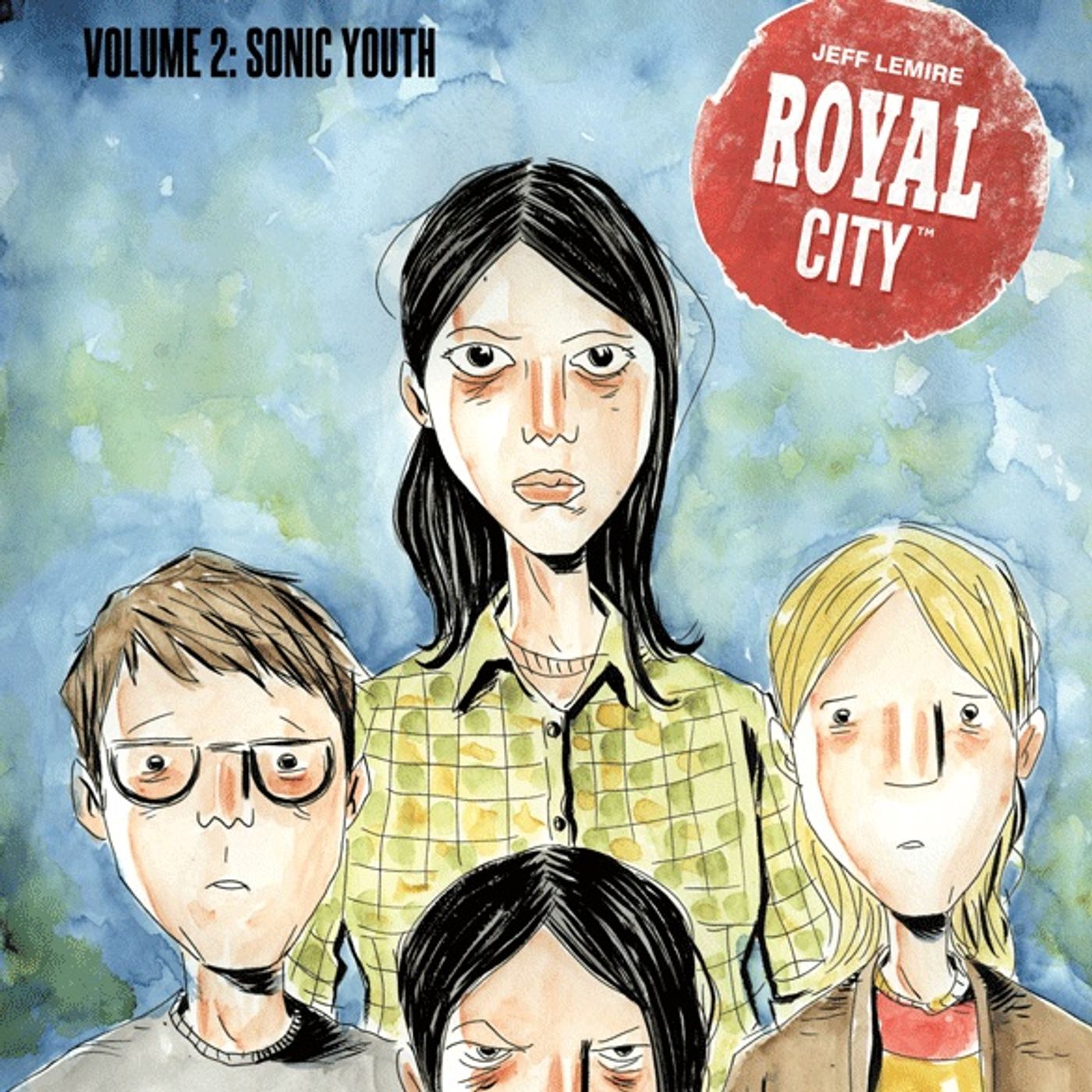
About this Episode
Hey, this is Josh Keaton and you are listening
to the GeekCast Radio Network. Welcome to the
Comic Concierge Podcast, a podcast that believes
that comics are for everyone. The key is finding
the right one. Today is another one of my concierge
episodes where I bring someone on, I recommend
a book to them, and we discuss it. This is actually
a continuation episode as back again to discuss
Royal City is JD Rand from In Session Film. Welcome
back, man. Hey, thanks for having me. I am super
glad to be here. And boy, do I have thoughts
on the comic you recommended for me. Good to
hear. Good to hear. Yes. This is our second time
discussing World City. We talked about volume
one a few months ago. I will put that in the
show notes so people can check that out. I would
highly advise checking that out before getting
into this. But before we get into the actual
World City JD, because I know we talked about
your Comic book history last time but before
we get into oral city. Why do you discuss your
your podcast and session filming what you guys
are all about? Yeah, so over at In Session Film,
we talk movies, of course, and we have two versions
of the show. On our main show, we talk about,
you know, the new releases, typically your bigger
releases, a la your, you know, solo, your solos,
your Deadpools, your Ocean's Aids. And we have
Top 3 List and other fun banter for that show.
And then we have... um our extra film podcast
on fridays, which is dedicated to your Indie
films your art house films or classics that we
just don't have time for on our main show So
we do our best to you know cover a nice little
range there because we're Equally as interested
in the moonlights of the world as we are, you
know the infinity wars if you will so Yeah, you
guys definitely cover a lot and great discussion.
It's to me one of the best most consistent Filled
podcast. Thank you there. So highly highly recommend
it So you guys always have great discussion no
matter what you're talking about. So definitely
appreciate it. Yeah, so we're talking about Royal
City because Listening to your podcasts and knowing
your sensibilities like I'd mentioned last time
I know you're you're big into especially stories
that involve father -and -son dynamics in family
dynamics and then we last volume We definitely
got into that, but this is a little bit different.
We actually go back in time and focus mostly
on Tommy. We obviously know what happens to him
in volume one as his death is the major element
that is hovering over the book, literally and
figuratively. Now looking at volume two, how
did this work for you compared to volume one?
Oh, boy, Dan. I was very, very much moved by
this comic, and a lot of it comes down to what
you're saying. In volume one, and I do think
the two are very intimately tethered together.
I don't think volume two carries as much weight
if you haven't read volume one. But going into
this, having experienced volume one and... You
know, the characters of Richie and Tara and Patrick,
you know, they are very much haunted by Tommy's
death as you're talking about. And I do think
there's a lot of potency to that. And in this
version, we get more perspective from Tommy before
he died and what his life was like. And we come
to find out that he is. um experiencing some
physical pain he's having these massive headaches
and migraines that he just can't escape from
and on top of that uh it's coupled with this
depression or this he's just you know miserable
he wants to get out of royal city he wants to
have this life um but he's not exactly sure how
to escape He's not exactly sure how to escape
this melancholic feel that he is carrying with
him. Uh, he just feels like he is anchored down
and he's not exactly sure where to go. And there's
so much about the exploration of that by Jeff
Lemire that I find so poignant, um, and visceral
and human. Um, and I love how that connects back
to Richie and Tara and Patrick, the younger versions
of them and, you know, and how we see them interact
with Tommy when he's alive. Um, there's so much
concise writing and storytelling from Jeff Lemire
that makes not just a cohesive story, you know,
regarding the specific flashback that we're,
you know, witnessing, but It gives a lot more
weight, I think to volume one, when you see,
you know, where these characters are and why
they are haunted by Tommy's death. There's so
much that volume two gives to that. With those,
those, those specific characters that I quite
love, but with Tommy specifically, there's so
much going on with him that I was moved by, especially
issue seven. I sent you a text earlier today,
issue seven and issue 10 wrecked me. Both of
those issues just emotionally destroyed me for
reasons I'm sure we'll get into. As I'm rambling
on here, I'm saying a lot of words to say, I
quite love this, even though at the end of the
day, I'm probably as depressed now as Tommy was
in this comic. Yeah. We were talking beforehand.
I'm like, next time we get you on, I got to get
you more of a cheerful book. This is not... It
is dour. It is very dour. Yeah. And I think you
make a good point about how this definitely...
Informed the first volume and as and I agree
that I think you probably wouldn't have as much
weight without without that But obviously that's
the way that the story is told and it's just
interesting reading this volume in is seeing
the relationship all these you know all the brothers
and sisters Richie and Patrick and what the relationship
to Tommy and just thinking back into the way
they envision him currently especially the one
that really caught my eye was was Richie because
Was interesting going back and seeing their their
the way they interact within this volume because
you know, considering the fact that he sees him
as a reflection of himself, he sees him as like
very much an extension of who he is. I would
went into this thinking, OK, well, their history
must be that they were very tight, that they
had a strong bond, but. That that is not the
case. Not the case. Yeah. They're very distant
from one another. And so I'm just that to me
then leaves the door open to where exactly is
that coming from? Because, you know, obviously
the mother, you see why she feels the way she
does. She does have such that motherly motherly
quality to her. She is very much looking out
for him. But some of the other characters. They're
you know, especially Richie as I mentioned It
just seems like his his point of view seems to
be swayed based upon past reflection And I don't
know if that's obviously we still have a little
bit more story here But I found that the most
intriguing aspect of it one of the most intriguing
aspects of this volume. Yeah, absolutely And
it's interesting to see Where Richie goes at
least in volume one anyway comparatively to volume
two, but there's so much about volume one that
makes more sense as to why Richie responds the
way he does, why he is the way he is given the
events that unfold here in volume two. And it's
heart wrenching where this goes for me. It's
really heartbreaking. And I think Lemire does
a great job of not only, you know, rendering
a reflection of... Richie and his relationship
with Tommy, but Tara as well, the sister character,
I think has a smaller role here, but a significant
one. I mean, Patrick as well, given that he's
a writer and, you know, there's parallels between
Tommy and Patrick in that regard as well. And
the fact that all three siblings, speaking of
Richie, Tara and Patrick, they end up at they
end up at the same place at the same time at
a pretty pivotal event and the way Lemire builds
to that it's actually handled with subtlety and
perhaps it's a little bit obvious but I think
that obvious is the obviousness is crucial at
least for me given you know the fact that all
three of them have been haunted similarly and
given the symbolism here and we talked about
the symbolism in Um, you know quite heavily in
volume one I think volume two while it doesn't
have the same kind of symbolism regarding tommy
being this haunting figure It does make sense
of why all three of them become, you know equally
as haunted but perhaps in in different ways and
Um, it was pretty affecting for me Yeah, you
mentioned mentioned the haunting nature of it
and one thing that For me that felt like it was
pertinent throughout and you know it's even called
out directly by Tommy at one point is is the
loneliness is the isolation that this person
resembles you do get a lot of situations where
rarely are characters in the same frame together
they're often always separated even when they
are taught you know when they are together rarely
are they discussing or talking once in particular
that that really spoke to me was with. With Patrick
and his dad going to work and they're driving
and just three three panels of them and there's
like no conversation they're just going there's
just there's just a Lack of connection there
and I think that is kind of key throughout This
is that all these characters for whatever reason
there's it's almost if they were a family based
upon happenstance we you know, you know the background
of why the parents were married and it's almost
because of it's almost like that they're Was
like, you know going to back the future with
a wrong family getting people get married It's
almost like that happened and there's just no
connection and I just found that that was really
key to me It was just like yeah everything there
was just a loneliness and an aspect to it that
yeah especially from Tommy's point of view where
just he's searching for that connection and Even
he can't find it. Even if like when it's family
is together. There is just a barrier there for
him No, I completely agree. There's this aura
of loneliness and disconnect with the mom and
dad characters that very much cast a spell among
all of the children. And it does create this,
you know, this ambiance of dysfunction among
this family. And I love the dramatic irony of
that given the title of this Royal City. Royal
having this meaning of like high glamour, at
least, you know, that comes to mind and this
is anything but that. So I kind of, you know,
love that dramatic irony. But yeah, I think Lemire
does a great job of not just offering this depressive
state for the sake of it. I do think he's saying.
something fundamentally about how we react when
we are in these depressive states that I find
very provocative. And because this volume focuses
heavily on Tommy and his story before he died.
I want to spend a few moments on what moved me
so much within that because, you know, you're
right. You're talking about, you know, Patrick
and his loneliness or, you know, the familiar
loneliness that we see in all of these characters.
But there's one moment that really spoke to me
with Tommy where he's talking about his parents
and the fact that, you know, they are you know
kind of lonely their marriage isn't necessarily
you know super strong or great by any means but
he says this line that rings so loud to me where
he says i don't want my mom or dad to get any
smaller i want them to see i i want them to seem
big and grown up i need them to because the truth
is i'm really scared oh That's a heart -wrenching
line for me when you realize the emotional state
of Tommy, the physical state of Tommy, the turmoil
that he's experiencing for his parents to revel
in their own loneliness. It has this massive
effect on this character that only becomes more...
It just becomes more despondent as this story
unfolds, and it's just heartbreaking. I don't
know what else to say about it, but I find it
heartbreaking in a way that it's earned and it's
ultimately satisfying on a thematic level. Yeah,
and I agree. That certainly is a very poignant
moment. Just seeing, obviously, this kid who
is just legitimately the weight of the world.
in some ways is on his shoulders even if it's
not not directly designed to be but it just seems
like he you know he's just trying to do what
he can to get by and It just seems like everyone
around the lack of support isn't there though
One of the moments that like you mentioned like
moments that moved you one of the moments that
moved me was one of the few instances in which
we do get that connection and what was with his
sister sitting on oh, yes sitting on the roof
the rooftop or and then And it just then you
know, it's it's tied back to me the the first
volume where you see her Having such a motherly
quality with him and how you see glimpses of
that here They like they do seem to have some
sort of connection and just the honesty that
that's there She's obviously going through a
lot and she wants to be reassuring but She in
her own right has a lot of things on her mind
and but there is just that the the one specific
shot panel of them just slightly leaning in and
just you know what then looking out into the
world it's like one of the few moments in which
you saw two people connect and that was like
an image that just really stuck with me and I
think that's why there was. You know, it wasn't
a beat down of sadness when we did get those
moments of actual of glee or even somberness
it was effective and I think that that means
specifically just it was One of the biggest pieces
of this volume that like tied everything together
that made This entire journey like worth it because
you see that. Yeah, there is there is caring
here. Even if it's not perfect. Yeah I completely
agree. There's another moment of connection that
I really liked. And this also goes back to issue
seven. The, you know, the moment I was talking
about before was also an issue seven, but you
know, this issue ends with a moment where Pat,
where Tommy is in the car with his mom. And this
is after they've, you know, they visited the
doctors, the doctors are, you know, they suspect
something is probably wrong and they give them
some medication to kind of help in the meantime,
till they get some more answers. And they're
just in the car. There's actually two panels
where again, there's nothing talking, going back
to what you were saying with Patrick and the
dad moment. They're just there. And then his
mom just leans over and calls out his name, Tommy.
And he just says, yeah. And she simply says,
I love you. And it kind of ends on this really
beautiful moment of connection, these two characters
that hardly interact in this issue. And after
seeing all of this familial dysfunction and depression
for You get this moment of hopefulness that I
found quite riveting. And, you know, I think
it's pretty clear. I mean, perhaps, you know,
you can tell me if you feel differently, but
I think it's pretty clear with this volume. It's
it's still bridging what another part of this
story that's going to come. So there's going
to be a volume three. And I imagine that we'll
see. you know, the mom, you know, the dad, the,
the siblings kind of respond to, you know, the
events of this. And of course, volume one. And
I think you have to go to the extremes of Lemire
does here, given what he did in volume one. And,
and so there's something about the bleak nature
of this volume. The fact that you get these little
moments of connection here and there, which is
great. I just, I don't want it to get lost that
you know because we're talking a lot about how
you know this is a a dour volume and I don't
want to dissuade people from reading it because
of that because I do think we're going to get
to more of a you know a hopeful resolution with
these characters later on down the road. But
I think you have to go to this territory. And
I'm glad that Lemire never sways from that. I
love that he sticks to those convictions. I think
it makes for powerful storytelling. Yeah, and
I definitely agree and it's interesting you talk
about, you know building to the next volume or
there's more story here and Lumiere just recently
indicated that there's gonna be one more volume
volume three and he's gonna end it there and
He actually intended it to be more of an ongoing.
He thought it would go longer But in writing
the story and moving it he felt that he actually
came to an endpoint that it just found itself
So he didn't keep going but so It's kind of the
the aspect of comic book storytelling how it's
a little bit different in the sense of you know
You you can have it that your your end point
isn't always determined you think you have an
idea where you want to go but eventually things
change and so i'm curious to see like how how
this all wraps up, but I do you do make a good
point that Obviously, you know, we're talking
about the emotional impact of this but it is
it is not like, you know, like I mentioned it's
not just It's not exploit exploiting this the
sadness there it it arms it and I think ultimately
Especially with that first volume you do care
about these characters There's just a human quality
to them and it's through that human quality that
you know, we do you know, we do see loneliness
and I think That opens up the ability for it
to be such a relatable story because I think
we've all had those situations where you know
We especially you know this taking place with
most of these characters in high school Just
getting out of college where it's just that lack
of direction that we're you're just trying to
find and how that you know how that can can impact
you so I agree that there are moments in here
where even if it's a connection that you know,
we see Connections that maybe aren't morally
100 % Correct in the sense of past loves coming
up and the conversations that began but it just
informs us about You know, it doesn't make you
paint anyone out to be the villain which I think
I was concerned about with the first volume But
I think by this volume we just see people for
who they are. Yeah, absolutely I think there's
an argument to be made that Richie comes out
the worst but I think you could argue that in
volume one as well, though. I mean, there's just
something about his personality that's different
than everyone else's, but there's a consistency
to it. And I respect that in Lemire's writing.
And I think another reason this volume works,
given its dour state, and not just the fact that
we're going to build to something that will hopefully
not be quite as bleak in volume three. I think
it does make sense to end after three volumes,
but it's just the overall storytelling here is
just so concise and it has a purpose like I don't
think there's a wasted frame in this entire comic
I think he interweaves all of these characters
the three siblings Tommy gets the most focus
but you got the three siblings the the two parent
characters as well so we are bouncing back and
forth a lot but there's something about the pacing
of all of that and um just the timing of everything
comes together that makes sense so even though
it's um it certainly um isn't an emotional story
I feel like the through lines of all of these
threads coming together are are very stirring
and evocative in a way that is or unlike like
you were saying so it's you still engage with
these characters you're still interested to see
where it all goes and honestly with with Tommy
himself Given the fact that, you know, we all
know what happens to him physically, his arc
here actually ends on a very beautiful note,
on someone of an uplifting note. And I didn't
expect that, but there's something kind of profound
about that, I think. Yeah, that's a good point
in the sense of it is building to that what we
assume, what we have learned that Ventral dread
and you're going into this this this volume.
We knew where it ended up We didn't know how
or why and you know get some early hands obviously
with his health concerns and putting the pieces
together thinking of how we get there though,
I think the Expediency in into which it seems
like we're getting there was quicker than than
expected But you do make a good point to the
sense of where you're thinking. It would be building
to this ultimate moment of just tragedy In which
it is there but there's there is some sort of
yeah completion there. There is yeah, there is
this there is of that longiness is just at least
put to a side for a moment and Making it almost,
you know making it worthy not worthy but worth
this journey because there is something Tangible
that that occurs and he isn't completely lost
Even even if it's just for that moment Yeah,
no, I completely agree. I mean even though I
mean there's there's heavy foreshadowing going
on for sure. I mean you can You can see where
this is going to go. I mean and even without
that foreshadowing I mean, we all know that this
is gonna go given what we know about Tommy in
volume one but Again, I think there's something
about that storytelling that I find really striking
and how it all works here. And I love that, you
know, it kind of ends on this symbolic moment,
like this thematic moment with Tommy, instead
of relishing and the fact that, oh, here's this
dreadful moment we all know that's coming. And,
you know, Lemire kind of avoids all of that to,
again, tap into something that is human, something
that a lot of us can relate with. And given Tommy's
arc and you know this loneliness that he's feeling
for it to end on a note that is kind of the antithesis
to that I find really evocative like I said I'm
kind of curious what you thought of the artwork
here we talked about that in volume one and I
and I quite loved it I think the it's obviously
a very similar style I feel like you know I haven't
read volume one since we talked about it last
but My recollection. I feel like the artwork
here is a little bit darker at times darker colors
To kind of you know represent that the mood of
this version, but overall I still really love
the artwork here. I'm curious what you thought
Yeah, I really do and I feel like with this volume
and it could just be me not miss miss remembering
But I feel like when it comes to his panel layouts
and stuff like that. He's playing with it a lot
more Oh for sure like you know we And there's
obviously a lot of that the continuous motifs
that we keep seeing with how music is often portrayed
with that like wavy line and and also just like
there's some really, I think, specific moments
in this to how it even like. Transitions to like
legitimate like notebook design where you're
yeah Which again just makes you realize that
this perspective of this volume is coming from
Tommy Even if it's not he's not really within
within the story at the moment And I like the
little the handwriting like the actual like words
on the page, you know mimics like handwriting
Yeah, yeah, I felt like I know I know the mirrors
Style is not for everyone because it's it's got
somewhat of a sketch like quality to it But it
speaks to me and I feel like the aesthetic of
it fits with the story Specifically specifically
and especially, you know the the water coloring
there, you know There is a the running this to
it in a way like it's fitting like it does it
fits with with the mood of the book and a lot
of like sometimes the mirror does black and white
which he did with Essex County, which is his
first book, but I felt like with this The coloring
I think plays a huge role, especially as we're
definitely We're within these two time frame
two periods, you know in the 90s and present
day I do think the color palette is is a little
bit different. It does have a darker texture
to it But also just stylistically it's a little
bit different, but I like how this takes place
in the 90s but it never feels like it's Pushing
that to forward, you know, you get some, you
know, calls to the music of the time, but it's
not like Everyone's wearing grunge pants and
the grunge pants or thing wearing, you know,
classic 90 gear It feels a little bit timeless
in that sense. But yeah, I'm a huge fan of the
artwork and I thought like I mentioned that some
of the panel choices like there's a great moment
with showing Tommy and Again talking about the
foreshadowing him looking In the car in the early
sense with with Richie and his girlfriend, and
he just gets this. Vision, I guess you would
call it with all the different versions of himself.
So again, tying back to that, I love that. I
love that moment. Yeah, tying back to the aspect
of is there some sort of supernatural element
here? Is this you know, how how does this tie
back to the like the ghost like that we've seen
the first one? But yeah, I'm a huge fan of the
artwork, though. I like I mentioned I know for
some that like the more realistic piece, it may
not work, but. Enjoy it. I think like you mentioned
with the storytelling how it gets a lot out of
a little it's the same thing with Lemire Like
you can get a lot of emotion out of a character
with only a few lines. Yeah now I completely
agree the 90s aesthetic is certainly there for
sure and it parallels the Dialogue at times in
some interesting ways the the whole Nirvana is
not gonna be remembered in 20 years line So there
is at least one moment of levity in the whole
thing, but yeah, no, I love the artwork and I
love the varying, I guess, stylistic elements
because you're mentioning the moment, or there's
a few moments, I guess, where it kind of mimics
panels where it's just white with, you know,
the characters kind of small, you know, just
kind of, you know, just kind of soaking in, I
guess, this complete white background, which
I thought was very interesting and kind of unique
as well. So and then there's a couple of, you
know, spurts where, you know, Tommy is kind of
in this dreamlike state. And, you know, I kind
of like how all of that is designed as well.
And sometimes it's just, you know, like. the
simplicity of it. Earlier, you were mentioning
this moment that Tommy has with his sister Tara
as they're just kind of sitting on part of the
house, I guess. And there's something really
stirring to me about it where it's just... you
know, we're seeing them from behind, you know,
and Tara is just kind of resting her head on
his shoulder. And they're just kind of looking
out in the Royal City. And there's nothing complex
about the artwork there, but there's something
about the simplicity of it and how it kind of
helps complement that moment on a dramatic level
and an emotional level that I just find really
evocative. So I love how Lemire is able to make,
you know, You know the complex moments work the
simple moments work. It just all comes together
beautifully. I think yes speaking of that let's
like especially with with the coloring there
because You know how their backs kind of intertwine
and almost like come together Near the touching
of their heads, you know, I think it really Complement
how they they're relating to one another and
just the open space, you know how they're in
the corner Yes, and where the sky is dominating
that that that page and it just that I think
that that hopefulness comes because of that it
just there's openness where Much of it's been
confined, right? We're confined in the factory.
We're confined in these cars Where that was one
of the few moments where you you feel like there
is an actual openness here and it weirdly parallels
when his mother's talking to her former boyfriend
and on the lake again, it's one of the few times
where It just seems like they're the world's
open again. So it I know that's a big piece of
you talked about simplicity, I think that's why
that's a good example of that by just opening
it up and Not what's not said and what's not
there speaks volumes Yeah, I completely agree.
Another aspect to my experience that I want to
mention, and this is sort of of a side note,
it doesn't directly affect how anyone listening
could view this comic in terms of what it has
to offer and its quality, but it was a major
influence into my experience for it. And a lot
of this played out naturally. Like I didn't...
set out to do this intentionally because, you
know, I like to listen to music as ever what
else does, but I wasn't listening to 90s bands,
I guess, to get in the mood of this comic, but
I listened to a lot of movie scores as one can
imagine. And we talk about movie scores often
on our show. And randomly, as I'm reading this
comic, the score that came on my Spotify list
was Friday Night Lights, the movie, not the TV
show. And a lot of that soundtrack was done by
Explosions in the Sky. And if you're familiar
with their work, you'll know that their music
would probably complement the mood of this comic,
as we've been talking about it quite well. And
I didn't really catch it, honestly, until we
were near the end, but I think there's something
about listening to that soundtrack as I'm reading
this that actually kind of put me into the right
mood. So it was just kind of weird how like,
I guess, divine interaction, I guess, kind of
played a role into why I was so moved because
as that music is just kind of blaring in my ears
and I'm reading this really emotionally stirring
comic that's really well written and well constructed
for the reasons we've been talking about. That
was... It was just perfect. So I guess I would
recommend that if you want to if you want to
read this it certainly helps certainly The comic
works on its own very well, but it did make the
experience for me. I think You know more memorable.
I think that's interesting because I think to
Jeff Lemire actually has like playlists that
he creates that he that he recommends. I think
there might be in Spotify or something like that.
They correspond with with nice with the book.
But maybe maybe that's on it. That's a good point.
Yeah, it does. I mean, that's the thing about
comics. They do don't have a score. But in a
way, you know, there's ways ways to portray music
and in some occasions. But yeah, I think I could
certainly see how like, it gives you that little
extra oomph of, you know, emotional impact. Yeah,
so Basically, that was a long spiel to say that
movie scores can be effective. And because I
wasn't even thinking about it, it just kind of
something that happened. It was like, man, I'm
finding myself really moved. And then I was like,
oh, I'm kind of listening to this music that
I think is helping a lot. But it's also I don't
want it to get lost. And it's also the writing
of, you know, Lemire's work here is what makes
it more affecting than anything else. But I thought
that was a Interesting, you know, side note.
Yeah, very, uh, uh, not serendipitous. Maybe
I don't know the word for it, but very cool.
Was there anything else you wanted to talk about
before we bring this episode to a close? No,
I mean, really my only final thought on it is
that I cannot recommend it enough. I mean, it
is one of the most heart wrenching things I've
ever read, but it's equally as provocative and
just so satisfying in every single way. So I
found myself quite emotional at the end of it.
And it was interesting because... As soon as
I finished, I usually like to, you know, to do
some like audio notes on my phone to just kind
of, you know, purge my feelings and, you know,
just kind of try to articulate how I felt about
it. And I struggled to do that exercise this
time around. If I was to play those audio notes
here on this show right now, it would be... Awfully
embarrassing to be honest with you then because
I I struggled I mean I I got I broke down quite
a few times doing those notes I was I was I was
a wreck after this and I think I think a big
reason why is because as a parent And I'm sure
you could feel the same But I I could when I
put you know, like if I exchange Tommy's name
with my son's name and then I see how this plays
out Um, it, it just, it speaks volumes to me
as far as like how this situation could happen
to anybody. Right. And, and so then it affects
like the way that I parent and it affects the
way that I look at my son knowing that, you know,
I, this is the last thing that I would want,
you know, for my kid and And I think that just
speaks to the quality and how engaged I was with
this more than anything else. I view that as
a good thing for this comic, that I was able
to go to those lengths and grapple with this
on such a deep emotional and personal level.
And it just kind of affected my day. I mean,
I immediately went home and... you know, grabbed
my boy and gave him a big hug. And a lot of it
just comes down to reading this piece of art
that I think is really wonderful. So, you know,
I just I can't recommend it enough. I mean, it
is dour, it is bleak, but it's beautiful. I can't
recommend it enough. I'm very glad that definitely
worked for you. And I agree, I think. being a
parent of myself, just the idea of the lack of
control in that type of situation, putting putting
in the shoes of seeing a sibling or loved one
or child, like be forced with this, like, you
know, ultimate horror of the unknown and what
that could possibly mean. And also, you know,
we didn't talk about this a lot, but also the.
the irresponsibility of everyone involved, right?
I mean, because there are moments in this where
people aren't sympathetic toward Tommy's situation.
The fact that he's having these physical ailments,
you know... They just kind of are like, it's
Tommy being Tommy, like this is how he's always
been. And, you know, the parents are struggling
with their own things. The siblings are doing
their own things. And so there's just a general
lack of empathy and responsibility for Tommy,
who was the youngest of this entire family. So
then to see him, you know, to see his art crystallize
the way it does, it just adds a level of, you
know, as a parent, it's like, OK, I need to make
sure that I'm. I don't fall into these traps.
And I think this film does a great job of, you
know, flashing the warning signs, if you will.
Yeah, yeah. And, you know, as I was the youngest
of five kids, so I completely kind of relate
with Tommy because I could see, you know, if
you're your your siblings are very quick to call
out when they feel like you're, you know, you're
just calling for attention. So I think that is,
again, a very realistic piece of it. But irresponsibility
is a good point. It's even, you know, The father
in this who is who you know at the beginning
of the first volume He is a central figure because
he's the one that is dealing with some major
ailments in this again seeing He has some moments,
you know, I do love the moment of of wouldn't
Richie or sorry when Patrick determines he's
actually gonna he's gonna quit and just the the
eventual smile that kind of gets around his face
just Seeing that like, okay He's not gonna go
down the same path that I did and that again
another small moment of hopefulness there and
connection but how often he is he purposely isolates
himself and you know how he finds sort of sort
of connection within you know his radio or just
walking or Yeah, I think if anything, he's probably
the one character I felt like probably got out
left out the most but I'm don't know if that's
where we'll dive more and Yeah, I agree. I think
we're going to see more of that. I assume we're
going to see more of that in the next volume,
because it certainly plants the seeds of, you
know, where we see them in volume one, like you're
talking about. So, yeah, I mean, it should be
interesting to see how I guess they, you know,
Lumiere kind of connects all of that. But yeah,
there's so much about this that I love. Yeah,
and I feel back some I'm one issue ahead of you
excited I've read the most recent issue and I
think the next volume will this will be complete
within the next few months So hopefully get me
back on and uh, yeah and do the trilogy because
then that will definitely be great But uh before
we go, why do you let everyone out there if they
want to follow you learn? Hear more from you.
How could they do that? Yeah, so you can follow
us On the social medias Facebook Twitter Instagram
at in session film just search in session film
You'll find us you can email us in session film
at gmail .com And you can find links to not just
our social medias, but our podcasts our reviews
Everything is at our central hub in session film
calm and thanks for having me. This was a lot
of fun Yeah, I think definitely for coming on.
I appreciate you taking the time to read it and
then talk about it I know it was great having
you on and Definitely have to do it again sometime,
but if you want to communicate with this show
you can do so by I'm on Twitter at movie revolt
the shows on Facebook and Instagram just search
comic concierge can also go to the pot go to
the website geekassradio or nerdly .co .uk and
leave a comment there. And if you would like,
you know, leave us a review on iTunes because
those are very helpful, especially for a newer
podcast. But for now, again, I want to thank
JD for joining me. And just remember that comics
are for everyone. The key is finding the right
one until next time. Thanks for listening.
No chapter markers for this episode.