The Comic Concierge
Lowlife Review
About this Episode
Hey everyone out there, Dan here aka The Comic
Concierge and welcome to a brand new series I'm
starting as I look through the career of Ed Brubaker.
I'm going to do an Ed Brubaker career retrospective.
What I hope to do for about the next 20 weeks,
so I hope you'll stick with me with this adventure,
is going through the career of Ed Brubaker and
talking about a number of the different comics
that he has done, starting with the earliest
I can get into the latest. I'll be going in Order
for the most part, there'll be some adjustments
to that here and there. I'll be talking about
multiple comics. This episode, for example, I'll
just be talking about one. But the hope is to
kind of look at how much his career has progressed
and talk about some great comics. When people
talk about and ask, like, who is your favorite
comic book writer? I go to and say Ed Brubaker,
but the truth is, there's a lot about his career
I have not read yet. A lot of really notable
series, especially a lot of his earlier work.
So I thought, let me change that. And now that
I have a comic YouTube channel, it does seem
to make sense to include you all in this journey
as well. I will say some of his early work is
a little bit hard to get a hold of, especially
if you don't have it right now. Lowlife, for
example, is right now out of print. Top Shelf
did do a printing, I guess, right now nearly
a decade ago. And it used to be available digitally,
but for whatever... reason it's not anymore maybe
it will come back maybe there's kind of changing
in the in the ownership of it who knows however
and there are other books like I'll get into
next week that or books I had to get from eBay
because I couldn't find them anywhere relatively
cheap though at the seams I think I got for like
six bucks on eBay and then an accidental death
which is actually a combination of three different
issues of Dark Horse Presents again it was like
twelve dollars so despite the fact that they're
relatively rare and I think to me An important
part of comic book history doesn't seem like
speculators killer all that much about him, which
I'm all for But I was able to pick them up. So
you may not be able to follow along with those
Hopefully they'll be available in some form or
fashion sooner or later or if you are interested
Like I said, I think I still see a lot of copies
available on eBay that you can kid up relatively
cheaply and cheaply and I will spoiler and say
those were two books that I really did like,
so I do think it's worth the money for sure.
I'll be talking to you, like I said, not about
everything he did, but I'll try to cover really
the majority of things, starting with his early
career, getting into his DC work, his Marvel
work, and then what he's kind of doing now with
Image in his Reckless series. If there are certain
books you feel like I definitely have to cover,
let me know in the comment section below. I think
I have most of the main stories, at least the
main stories I can get. But if there's something
maybe that you definitely think should be included
in that, I'm all ears. So let's actually get
into the book we'll be talking about this week,
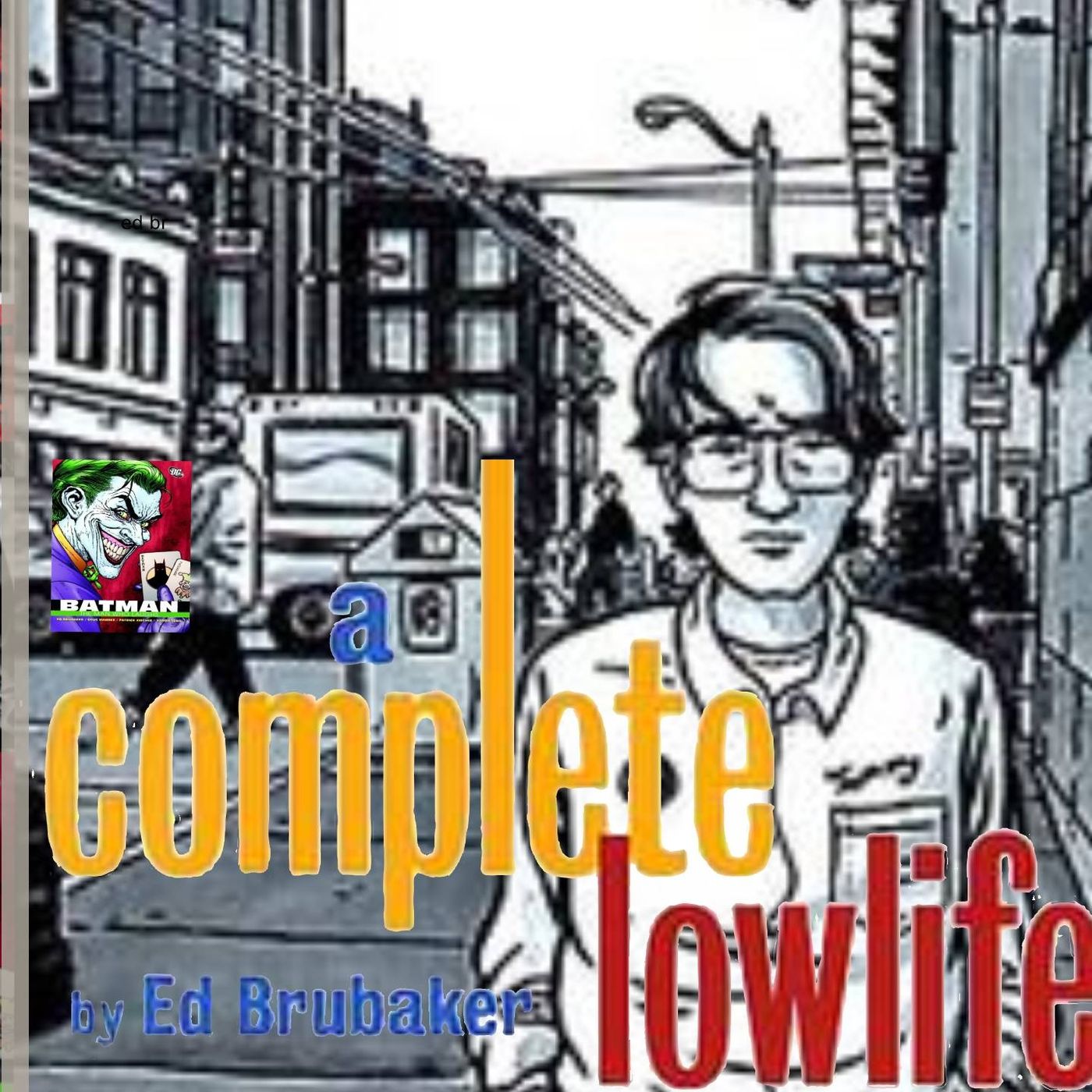
which is Lowlife. And this is written and drawn
by Ed Brubaker. A lot of people don't realize
that Ed Brubaker, yes, when he first started
out, was in fact an artist too. This came out
in 1995 and it was published by both the... Caliper
comics and a on comics later in his publishing
career. I was kind of going between both publishers
And it's really that the first thing that broke
at bro Baker out. It's not the first comic he
ever wrote. I think that was maybe Gumby 3D,
for example, but I was unable to find any copies
of that. If you're able to find it, check it
out. It might actually be kind of cool to see
what was Andrew Baker's first comic or first
notable comic like. But this was really the thing
that you can tell was the story he wanted to
tell because it's semi -autobiographical about
his life and just the trial and tribulations
that he went through. And reading this and knowing
that, the word that comes to mind is honest when
it comes to this story. This is a story that
feels very honest, almost feels like a confession
in a way, going through all these bits of his
life, talking about what happened, and the main
character, Tommy, in this, is just clearly a
representation of him. It's not a good person
like it's a person that you'll end up really
not liking for a multitude of reasons. He does
bad things He's annoying he can be abusive at
times both physically and emotionally And it's
not like it's trying to redeem the character
in any way I think showing a complete picture
of him look at this. This is a combination of
a number of short stories There was about four
issues that made up the entire entire set and
each issue It itself sometimes had multiple stories
as well The first story is about him and this
kind of failed crime adventure where he and another
individual when at the time They were kind of
low -key drug dealers and things were drying
up a bit So in order to get money and really
they just wanted money for drugs that they could
take themselves They came up with this friend
came up with this idea of robbing this computer
sword that would be easy money Have the guy go
in the back pull a gun on him Take his money,
get the computer, and you're good to go. However,
what they're seeing is that a life of crime is
not a hard one to turn down if one time you're
successful and what happens next. And then you
see the volatility of his friend as well and
what he's willing to do. You just see him kind
of going off the deep end. And it's kind of an
example of how an old friend of Franklin's saying
of when you sleep with dogs, you rise with fleas.
And you saw Tommy really put him in situations
where he was with a lot of people that were not
the greatest people in the world. And to be fair,
either was he. And this was a story, this was
a combination of stories where story plot wasn't...
the main thing wasn't the most important piece
of this. This was all about character and really
kind of slices of life stories. Looking at this,
I saw a lot of people compare this to like Richard
Linklater movies, which to me makes a lot of
sense. You know, Slacker is something that I
kept thinking about reading this, you know, before
series. For those that don't know, the before
series is done by Richard Linklater and it's
the before midnight, before sunrise, before sunset.
And there are really stories that all take place
in a day and are just people having conversations.
I know a lot of people will think that that are
awful. I do really love those movies. But again,
with which literally link later, maybe something
more like Days and Confused, for example, where
you're just kind of hanging out people that are
even not always the greatest people in the world.
Maybe they are. But they're always interesting,
and they're always intriguing, and there's always
that element of honesty throughout. And then
looking at the cartooning here, again, this is
Ed Brubaker doing everything on the page, and
reading this, it's like seeing just how much
indie comics has changed throughout the years.
When you think indie comics today, image, and
things like that, you realize the fighting factor
between which image, what's indie and what's
big, too, is not as big as it used to be. They
all have kind of the same Access to things like
it doesn't cost nearly as much when it comes
to making comics in the sense of the tools You
can use due to things being digital and things
like that This was a complete in the book all
done in that fashion It makes you realize how
much things has changed like from the hand lettering
to the black and white look, you know This was
a true indie book kind of the style you don't
get anymore This is very much in the vein of
a 90s. Although not that like the fashion is
super 90s Although the hairstyles do appear that
way in a way, and I think when I think of 90s,
I think what it really gets to in the 90s is
that Gen X got a lack of direction. You see these
characters, and that is the continuous thread
throughout. There's just this confused lack of
direction. They just really don't know where
to go in life. They're just kind of getting by,
just kind of hanging out. That's why I think
it works, because narratively, yes, it is just
this story about hanging out, but I think it
speaks to the specific time and place. We have
a lot of that in the zeitgeist, for movies like
Clerks, for example, people just at a store talking.
It also makes me think, why was it so entrenched
into the 90s in that way? Why was that the kind
of slacker mentality, whatever you want to call
it, such a big piece of the culture at the time?
Was it simply because there's this lack of progressive
movement? I mean, when you think about the...
you had all the different protests and the free
love of the 70s whatever you want to compare
it to the Access of the 80s and maybe it was
a reaction to that, you know 80s were big and
bold Greed is good all that type of stuff where
the 90s really brought things down to the basics
in a way and again I'm speaking as someone who
was a kid for most of the 90s. So Perhaps this
is just the perception of what it was and it
was much more varied than that. That's certainly
the case But I do think this book specifically
is speaking to that generation in that way and
you know get other stories Really the the center
of this similar again comparing it to the before
series, which is about a relationship That's
the case here with Tommy and Sonny and their
This is strange relationship where their their
stories go throughout and if I had one one issue
with this book is that it does shift in timelines
A lot like it's hard to really get your bearings
of one comes first. What comes second and sunny's
in the picture. She goes away i don't know if
that's because you have a book that again was
switching publishers this wasn't something that
was maybe designed to like be a complete series
at that time you know trade paperbacks weren't
really something that people did to a great extent
i think they were just meant to be here's one
issue it's complete and when you put it all together
it's a bit messy to read when you're trying to
just figure out where everything is within the
timeline it doesn't sadly Impact your comprehension
of everything all that much, but you feel like
one story line is over then it picks up later
It's a minor issue. But generally again, it's
about Tommy and Sonny You see that relationship
pop in and out a great deal and the relationship
is what you would classify as an unhealthy relationship
There's even times where you know there again
and we talked about it getting abusive There's
a later one of the last stories is about Tommy
has this friend who basically for whatever reason
Is all women are attracted to him and he has
this saying about we're all people and he'll
like openly make out with someone Even if their
boyfriend's like right there. He just like yeah,
we're all people That's how we all are and you
just see the jealousy there But I think what's
really interesting to you is that I think he's
trying to comprehend like what exactly our relationships
are we in fact all people we don't really own
individuals are we making a big deal out of everything
and I think that's a thing with this is that
This isn't a book with answers, it's a book with
questions and a book with just trying to figure
things out similar to the characters are. And
that's, I think, was something I felt rather
comprehensive and rather compelling as well.
And when you look at the art here, too, again,
that's another part of this. And I was interested
to see, like, you know, Edward Baker clearly
doesn't really do art anymore. Was it because
he wasn't very good at it? I don't think that's
the case. I think similar to his writing style,
his art is very character focused. Most of the
attention is on the characters, their design.
They kind of have that oversized head in a way
so you can get a lot of expression on the page.
Good body language. I do think, though, it's
very clear when it comes to storytelling, he
was much more comfortable as a writer than he
was as an artist. A lot of the words are doing
the heavy lifting. There are times when he lets
the art tell the story, but more often than not,
the words are the ones that are kind of putting
everything in perspective. Rarely does he just
let the words, the art on the page kind of tell
you what you need. And he does, I think, have
the fundamentals of what makes a good artist.
I don't think he'd ever be an all -star artist,
anyone that would ever cross over to like a Marvel
or DC if he went that route. He doesn't have
that type of style or that ability to really
adjust. The other issue too is that... Sometimes
it felt like the characters designs didn't differentiate
themselves all that well at times I thought someone
was a character from a previous story, but it
was entirely someone different Maybe that was
just because everyone had a similar look to them
because especially when it came to facial hair
I don't know but and generally I thought the
art was solid. It was good It was effective when
needed to do but really what was the star here
was the story itself in the way that every broker
told it and Looking at his career, knowing what
I've read so far, what I see right away is how
well he uses first person perspective. And again,
I think breaking down those walls, and it makes
sense when this is a story that he's telling,
because it is actually real life to choose that
method. I think that would make you the most
comfortable if you're telling a story that is
relating to what you've done in the past, you
know, the actual adjusting things, trying to
tell it in third person, it would be a bit weird.
So tell it as it is, change the names, but with
that i think that's why we got that honesty in
a way and he's very effective in that it's just
a naturalistic aspect of the dialogue everything
feels real like he feels like he's talking to
He feels like he's talking to himself and that's
why even though there's a lot of words on the
page at times It's always compelling. That's
something right from the beginning He was really
strong at was his ability to build dialogue and
have characters that were unique and interesting
and flawed extremely extremely flawed and as
I mentioned the stories do vary throughout you
have one story when it's him like and working
at this video store and This weird relationship
he has with the owner there and like he's kind
of stealing money, but people are worse That
he is and you see him like being kind of conflicted
in a way and that's really The thing that you
see throughout is that this conflict throughout
like trying to figure figure himself out And
again, I think that is probably something he
was working through As he's writing this as much
as he was when the events happen That's again
just something that is me just putting something
there that may not be there, but it seems pretty
obvious to me So if you are a bootbreaker fan,
ultimately when I look at today enjoyed this
book that I not enjoyed this book I really did
like this book a great deal. It's a really impressive
debut or if you want to call it debut And it
to me when now when I'm reading debut comics
or any comics I'm gonna think about like this
book and how well and how much of ed brubaker
was there at the beginning It's not the best
thing he did. It's a little rough around the
edges at times. Like I mentioned, it's a bit
messy It's not as complete. I think he did struggle
with endings here and there and I think sometimes
people tend to, especially earlier in their career
when it comes to endings, be a bit ambiguous
or have endings that just kind of happen because
that's the way life is, which I get, but it's
not always the most narratively satisfying. It
doesn't happen all the time. One of my favorite
endings was actually really a story of them going
to the nightclub and how Tommy was just this
awful human being, just kind of got drunk and
was awful. And then he went with his friend and
how that ends. And it was a funny kind of coded
to that. And there was a good... amount of humor
here to dark and twisted humor, but funny humor.
And if you have the ability to check this out,
if you do have, if you see it on your shelf or
at your local comic book store, at our bookstore,
you can get it for cheap online. It was hard
to find online. I think the actual eBay price
for the graphic novel was like $80, which I wouldn't
spend that much. Like I said, there'd probably
be another printing at some time when you have
someone like Ed Brubaker. It would make a lot
of sense. I could see this becoming some sort
of TV show or something like that. I doubt it
at this time since it's been, you know, almost
30 years since this debuted, which made me feel
old saying that out loud, but it was great. If
you like those movies like I talked about, Richard
Linklater's movies, The Clerks in a way, it's
not as, I would say, as sardonic as Clerks or
as brash with its humor, but just, it very much
speaks to that time the same way that Clark spoke
to that time, but anyways, I'm getting a bit
repetitive now when it comes to my breakdown
of this, but it does have me excited now because
now it was great to go back and see how much
of every Baker was there for the beginning. It
makes me wonder, like, where does he go next?
You know, when I think every Baker, I tend to
think crime and this wasn't. a crime story. This
was a human drama story. This was a relationship
story, which now makes me realize when it comes
to Kill or Be Killed, which is a crime story,
but has really successful kind of relationship
drama within it as well. It all makes more sense
now because I'm like, oh, that's kind of where
he started. Like, that's really what was his
strength to start off with. And then he evolved
into the crime bit. I saw people kind of link
this as a crime book. I would not call it a crime
book whatsoever. Yes, you have that opening story
that deals with a crime gone wrong. But that's
really the only one really like everything else
outside of that is just general human drama Relationship
drama dealing with roommates dealing with a job.
You hate was all that type of stuff So going
in with those expectations you've been going
in thinking you're getting you know criminal
the early years That's not the case. All right.
Well, that's it for me for this week. I'll start
babbling next week I'm actually going to be talking
about first up the accidental death, which was
Taking place in three issues of Dark Horse Presents
and he did not write and draw that he just wrote
that one with a different artist and then the
second book I'll be talking about in next week
is at the seams as I mentioned earlier That is
a one shot that he did here He wrote and draw
it and it was very similar to lowlife which which
is a combination of short stories So we'll talk
about those next week and then eventually we'll
be getting into some of the more notable books
But I figure you know, let's get into the earliest
up first and see how things kind of Started off
set that foundation and then we'll get into you
know, the Batman's and the Captain America's
eventually Thanks for taking the time to check
out this channel. Let me know what you think
of every breaker as I mentioned What are some
books I should check out? Have you read this?
Are you interested in it? Let me know I know
there are a ton of comic book channels out there
So I appreciate any comment anything like that
I think you were taking the time to do that and
really means a lot Just remember that comics
are for everyone. The key is finding the right
one until next time keep reading
No chapter markers for this episode.