The Comic Concierge
Travis Anderson from the Why Is That Podcast on March: Book One
About this Episode
Hey guys, this is Rob Paulsen and you're listening
to the Geek Cast Radio Network. Hello and welcome
to the Comic Concierge Podcast, a podcast that
believes that comics are for everyone. The key
is finding the right one. Today is one of my
concierge episodes where I bring someone on,
recommend a book to them, and we discuss it.
On today's episode, I am very happy to have Travis
Anderson from the Why Is That podcast. Thanks
for joining me. Yeah, absolutely. I'm happy to
be here and looking forward to talking about
some comics. Yeah, yeah, it's exciting exciting
for sure before we get into the discussion Why
don't you tell everyone out there kind of a little
bit about your podcast and email brought you
here today? Yeah, so kind of a brief synopsis
of the podcast. It's a history podcast. It kind
of explores the origins of today's common occurrences
from like word etymology to holiday traditions,
kind of everywhere in between. Like some of the
episodes that I've done so far is my most recent
one. I talked about the pope and how he rose
to the level of supreme pontiff in the Catholic
Church. And then I also discussed like the phrase,
I don't give a damn. and a couple other episodes.
Nice, that's fascinating. Yeah, that's kind of
cool because we have a lot of things that we
do and say, and the reasoning behind it often
we have no clue. And I think that kind of gets
into the comic that we'll be talking about a
little bit, which is March, another book very
much based in history. So going into this, have
you had any experience with comics? Have you
read any previously, or is this really the first
time you're reading a comic book? Like in in
school and when I was in college we for our English
course we read Persepolis which is a graphic
novel as well kind of about history and so that
one was kind of my first historical graphic novel
and then beyond that I've read some various Batman
graphic novels and I have and I currently keep
up on the current run of Batman that Tom King
is doing the Batman Rebirth or Batman 2016 however
you want to classify it Have you read his uh
speaking of Tom King the sheriff of Babylon series
he did I haven't yet I I Wasn't familiar with
Tom King before he started doing Batman. So Okay,
so now I've I didn't read for about the first
six months So I'm all caught up on the series
now so now and now I'm interested in going back
through some of Tom King's Prior work because
I've enjoyed the story that he's put together
so far Yeah, it's interesting because he was
actually in the CIA previously so it's kind of
it's not his story per se but it's taking place
I think during the Iraq war like near the beginnings
of it centers on a murder mystery so you might
enjoy it definitely I think it's kind of where
he cut his teeth in the comic book world. Okay,
yeah, I'll be I'll be interested in that he he
seems like he has a really interesting point
of view I've I've read a couple of his his interviews
where he's talked about doing Batman and he just
he seems like a like an interesting guy As you
say is intriguing sensibility when it comes to
storytelling Yeah, it's been a little bit different
because I've like I have a Batman encyclopedia
Book that I got for Christmas one year and I've
read like online like synopsis of a lot of stories
that I haven't read So it's been a little bit
interesting to see how it actually plays out.
And, you know, he's doing things a little bit
differently. He obviously has a lot more focus
on the Batman and Catwoman relationship, which
is I've I mean, I've enjoyed the relationship.
I don't know, like if I was 12 years old, if
I'd be as into the Batman and Catwoman relationship.
But now that I'm an adult, it's kind of an interesting
dynamic to the Bruce Wayne Batman. Definitely,
definitely, for sure. Brings us to March in the
book that I recommended to you as I indicated,
a big reason behind your interest in history
and this being graphic memoir of John Lewis,
the congressman and civil rights leader. So I
was curious what you thought of March book one.
I really enjoyed book one. I was somewhat familiar
with John Lewis. I'm from Minnesota. I knew of
John Lewis. I don't keep up on every congressman
and woman throughout the whole U .S. because
there's 435 of them, a little bit difficult to
do that. But you do hear of John Lewis just because
he's been, I think since 86, been in congress
and he's obviously a huge figure in the civil
rights movement. So I knew a little bit about
him, so it was actually really fascinating to
hear. Especially in this way, I never thought
of really writing a biography in a graphic novel.
I think especially for his life, it really was
able to bring it to life in a different way than
you'd expect. Just because some of the images
were very striking. They start the book off when
they're crossing the bridge. And you know they're
they're talking about you know whether or not
they can swim and I thought that was just kind
of you know a powerful way to you know start
but also a powerful way to to tell a story as
unique as you know John Lewis is like. Yeah definitely
it's actually kind of intriguing like the how
it got to the point where he was even a part
of this project because you know I don't think
John Lewis is one of the comic book shops on
every Wednesday to pick up his Batman comics
but the author of the book Andrew Aden. He actually
is a comic book fan and I was listening to it
was a speech that John Lewis was giving and he
mentioned that Andrea was mentioned about going
to the Comic Con in San Diego and some of the
other staff members are kind of ribbing him a
little bit and John Lewis mentioned that, you
know, comics should be treated with respect because
it was actually a comic book that helped him
get in. To think the civil rights move it was
a Martin Luther King junior and the Montgomery
story which was you know it pretty infamous comic
that was like only 14 pages but it was about
you know the Montgomery boycats and he mentioned
like how that had a huge impact on him and a
lot of other civil rights leaders so it's kind
of come full circle now with him writing his
story in comic book form. Yeah and it's it's
kind of interesting because I think they mentioned.
The the comic book in the in book one. They mentioned
the Montgomery Martin Luther King in the Montgomery
story And it's kind of interesting the way that
the way that they you know did the story is it's
basically on Barack Obama's Inauguration day
and he's telling the story to a couple kids that
came into his office And so it was interesting
like it was even like a bigger thing where he
Or he got started with was like you said that
comic book No, he's it's kind of like he's passing
on his story to the next generation in this in
the same way Yeah, I think you made a good point
too about how this was a good way of telling
the story because I think this came out around
the same time as the Selma film and obviously
centered this this opens with that same March
and I think one of the benefits of Telling a
story like this in comic book form like you mentioned
reading Persepolis and similar story with that
is that it kind of gives you the benefits of
both you would get from a traditional novel or
autobiography or biography along with that of
a film where you get that striking imagery the
the graphic nature of it and you know those images
can certainly say a lot but at the same time
this being his memoir and this being his story
you get that personal connection as well like
the Understanding of really the thoughts in the
minds of the people there like you would with
a traditional novel So you get a kind of good
combination of both to really I think really
put you in that place in time In a way that like
it's hard to do with just a movie or just a TV
or just a regular written novel Yeah, because
even with with like movies where they you know
have the obviously powerful imagery it can still
be You still have limits to the form, you know,
you can't really go past two and a half hours
Whereas with the book you can kind of you know
flush out what you need to and and a direct attention
in a kind of a certain way and I think then with
the with the picture or with the images of the
novel it kind of adds to that, I don't know,
gravitas of the situation Yeah definitely i think
that was a big piece of it and why it's i think
as acclaimed as it is and putting john lewis's
name on it it being his story i think certainly
brings a huge amount of credibility to it as
well into that of even the genre or the medium
of comics because it. It's you know it's one
thing for an author to take this or someone like
a story historian to take the story and tell
it but when you're getting the point of view
and getting actual one of them. Biggest figures
in that and in that store a part of it it it
adds a lot of credibility to it of course and
I was just intrigued like how it starts really
at the beginning and he him learning about his
chickens and how that really set the stage of
like his desire to basically preach to his chickens
and how the patients to raise them and kind of
where the tenderness of him came into and then
how then we kind of just see him growing up within
within this first this first book of the three.
Yeah, that yeah, I hadn't I never had heard like
a story at all about you know His chickens and
that was it was a really humanizing way To start
the story and to start like so even like someone
who has no idea who John Lewis is I think that
was a good way to kind of introduce who he is
and to kind of Let you see his human side before
he kind of gets political because you know sometimes
you know if you start writing the political it
Can become for better or worse polarizing? How
do you think utilizing the juxtaposition of the
present day or at the time present day? Where
we know Barack Obama getting getting his inauguration
compared to that of the life that on Lewis lived
For you did that device? I think it showed you
showcased like just how much has changed with
that period of time obviously Still still growth
mean developments still so need to occur, but
I just thought that was a good way Just seeing
the journey that he went on as a person from
the days of being in this farm in Alabama to
being a congressman and being there on the election
of the first African -American president. Did
that device work for you? Yeah, I think it worked
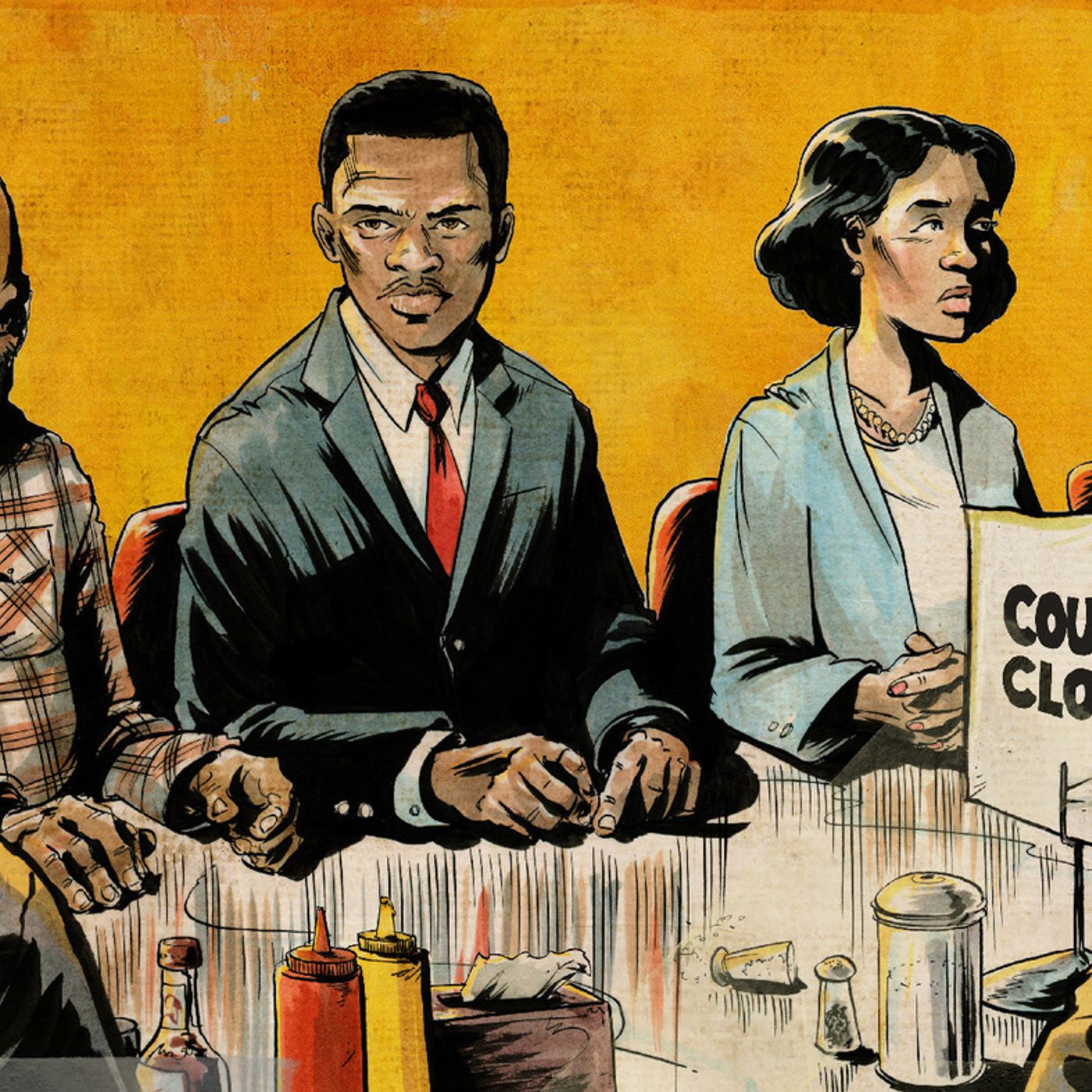
really well because one of the things is as he's
telling the story, you get a point in time where
he couldn't even sit in a restaurant to order
a meal. And then all of a sudden you switch back
to present day. And there's actually, you know,
it's one of the huge events, you know, Barack
Obama's Inauguration Day. And it just shows,
you know, through, you know, the work of people
like John Lewis, you know, what they've been
able to accomplish in a generation. I think that
that part of it kind of inspires that hope is
because I think a lot of times for people, they
think, you know, what can one person do? In a
single generation to actually change the way
things are. And this actually shows just how
big of an impact one lifespan can be on an entire
civilization. Yeah, yeah, for sure. That's, I
mean, obviously John Lewis is a name that many
people know, but just seeing how many things
he was connected to just in this first volume
and the things that they went through, like there
was that. Going to the the process of the counters
and ends you know at those restaurants and we
often see the end result of that You know where
people are sitting there and they're you know
being berated but just seeing the progression
of it how they would first go in and ask if People
could be seated and they would you know be denied
and they would go in with more people and just
like there were the method to their To their
processes and in the way that they would you
know, there was a lot of thought and planning
that went into all those and something I thought
what I thought was really effective in this was
being able to see how that all came about because
we see you know we always see the the imagery
in the in the effects of it but knowing that
it wasn't a random act there were you know a
lot of things that went in to get to that moment.
Yeah, I think that was like the the build -up
through it was such an interesting thing because
like you said once you know It doesn't make the
news tell there's fire hoses being sprayed at
people until they're being pulled out until there's
actually violence and Whereas in this book it
shows, you know, they they went through the process
of you know, having each other Berate them so
like berate each other so that they'd be ready
for whatever insults were hurled at them. So
if they'd be ready to you know, completely go
the route of non -violence because that was,
you know, their explicit mission was to go the
non -violent route, which is a very admiral way
to do things. It's a lot easier said than done,
and it shows just how difficult it was to kind
of get to the point that they could, you know,
make these decisions, make the choices of, you
know, today we're actually going to stay in the
restaurant and how Just that decision kind of
blew up and how, you know, how much preparation
they had. I know with your podcast, you get into
a lot of like how things became the way they
are, where the meaning behind things and things
of that nature. Did you find yourself reading
this and discovering any of that? Like, OK, this
is I didn't understand, know where this idea
came from or anything that you felt like, well,
this kind of falls in line with a lot of what
interests you regarding historical tales. There
there were certain pieces like I think they there
because there was a few times that they They
mentioned like where certain ideas came from
where it was either three, you know Because obviously
both John Lewis and Martin Luther King jr. Were
very religious, but then they also talk about
Gandhi's influence as well kind of on their decision
For how to you know integrate the society. It
was interesting to see the formation of ideas
for the actions that they actually took and how
they, you know, were hoping that they would be
received after they took those. And so I guess
it was kind of, you know, to watch the kind of
path to the reasoning behind everything. That's
a good point. Like, it's seeing how a lot of
these teachings more and where they came from
and why they thought the way they did, like,
especially where John Lewis's desire to kind
of seek. And education and where that came from,
like how he's going on this road trip, but I
thought it was really, really striking where
we're talking about traveling across the country
during that time. And they mentioned there was
like certain states that they have to specifically,
you know, design their route around in order
to make sure that they're safe and like how they
would have all this. He could tell his uncle
was super had a lot of tension until they finally
got into Ohio and he felt like, OK, we're OK
now. And just something that you really don't
even think about just knowing how. isolated people
were at the time and not just because of lack
of technology, but just the fear of knowing what
it could mean if they left the community that
they were in and all the kind of chances that
they were taking at the time just to really go
to school or to, you know, traverse the country
outside of their small communities. Yeah, and
it was like that ride north, it was interesting
because it also kind of talks about the innocence
of a child. He didn't really realize how bad
things were off his farm because he had never
had a reason to leave the farm really. And so
like you said, when he could noticeably tell...
the tension and then like when they finally got
to I think Ohio and his uncle was finally able
to relax and just that that complete difference
of how do you explain something like this to
a kid who grew up on a farm where The biggest
people who were oppressed in his eyes were the
chickens. And all of a sudden he sees that people
judge him just because of the way that he looks,
not because of what's in his head, not because
of his actual actions. And it was just a completely
fascinating thing to kind of see his awakening.
Yeah, that's a good point that you make regarding
you know him looking at the chickens and thinking
that you know He's the one that's being cruel
in a way that he's confining them when the fact
that on a larger scale He's him and his family
are being confined into this specific location
and then learning and seeing what the world can
actually be like when he makes this trip and
he sees what life is like outside of his little
farm and how that propels him to want to go to
school and even though like his family is doesn't
necessarily prove knowing that like it's gonna
cause him and have some rifts with his father.
But I thought it was also intriguing that like
his father even though he would scold him in
a way he felt that his father was still proving
of what he was doing because he knew that ultimately
it may be the opportunity for escape that he
actually needs. That was one of the most interesting
kind of relationship dynamics is when you know
he would hide until the school bus was coming
and then run out as fast as he could so he could
get on it before anyone could tell him to stop
and it was you know because of you know, he had
this thirst for knowledge and even though each
time he got yelled at when he got back, you know,
it was never you know, if you're looking at If
you're looking at you know, he was born in you
know, the nineteen nineteen forty and so, you
know, he would have been growing up like 1950s,
you know, his father certainly could have, you
know, taken the belt out and really taught him
a lesson if he really wanted him to stop going
to school for the days that, you know, they had
to work on the harvest. But it was, you know,
he was only scolding him. He wasn't like actually
punishing him because, you know, he as a father,
you know, he has to, you know, he has to protect
that, you know, authority. He has to make sure
that, you know, he's getting his point across.
But at the same time. It kind of seemed like,
at least from John Lewis's perspective, that
his father was proud of the fact that he was
working towards what he wanted to do. And even
though his father might be scared of the path
that lay ahead of his son, it seemed like he
was very excited that his son wanted to at least
try. Trying can be terrifying. Yeah, and even
seeing like his first encounter, like how when
he first meets with Martin Luther King Jr. and
ultimately knowing that this desire to try to
desegregate his community and what that would
mean and knowing that he'd need to get his permission
from his family, but knowing that they couldn't
necessarily do that because of The danger it
would put them in but knowing that like he they
still in a way like Even despite that they were
supportive of him But also there was a realization
of like there were certain things that they couldn't
do just because of simply You know what it would
mean for them and and the rest of their family
Yeah, because they they talk about how certain
families like once someone got prominent Sometimes
they would attack their attack their family's
house. You know, there's multiple mentions of
of some of these authority or some of the civil
rights leaders families houses getting burned
down and it kind of to make a connection to other
comics there's it's almost like the you know
the reason that superheroes use a secret identity
is they don't want yeah you know they don't want
their family to be harmed and so he was kind
kind of since his family wasn't you know they
were supportive of him doing it if he wanted
to but they didn't want to be involved. And so
he had to walk a fine line between as he got
involved to keep his family safe. Instead of,
like you said, instead of going through with
trying to desegregate the school after meeting
with Dr. King, which I thought the meeting with
Dr. King was a very powerful scene just because
his first time where he... talk where he kind
of had that reality check of what backlash there
would be, you know, if he kept pursuing this.
And so he and so he and it was in that moment
that he kind of made the decision that, yes,
he wants to keep keep pursuing it, but he wants
to do it in as safe a way for his family as possible.
Yeah, yeah. And it was it was intriguing that
like, fascinating to me really that he met Martin
Luther King Jr. so early because I know They
can watch read this for the first time around
the same time of watching someone you know he
was depicted in that as well and it seemed like
that was like the first time they ever encountered
each other but knowing that it also kind of makes
you realize how small that community must have
been within the civil rights movement knowing
that like he's just. in that early stages of
it, but he's already working with Martin Luther
King Jr. to the point that he's such this figure
in historical context. It's just weird seeing
someone interact with them, knowing it's coming
from the person that was actually there. There's
almost a surreal quality to it, just because
he's such a figure that it's hard to even quantify
what it would have been like to encounter him
in real life. Yeah, Martin Luther King, he was
assassinated, you know, 1968. 50 years ago, you
know, he was he was assassinated. So it's it's
almost like in our for for historians, they generally
classify like the last 25 years as current events.
And so and so Martin Luther King, he is literally
a historical figure. And then you're talking
to someone who is not even still alive. He's
still a member of the government who actually
knew Martin Luther King and and came up with
in Martin Luther King Jr.'s movement. It's a
reminder of how close to the present all of this
is. It's sometimes easy to think of that stuff
all in history and forget that that's just a
generation ago that people were going through
all of this stuff. Yeah, yeah, it definitely
is like a reality check to realize how soon that
it like how recent it is and Like I mentioned
to just how much the world has changed and hasn't
changed in the sense of the opening pages of
this or the opening of John Lewis's story that
the life he was living like you could have You
know just showing those and thinking he was alive
during like the late 1800s or something of that
nature but realizing that was in the 20th century
and I mean, obviously we probably even today
have many communities and locations like that.
But in the benefit of a story like this, it does
provide a context to all this to all those moments
and to just how important they were and how connected
we still are to them. And that's that's one of
the things that's that's most most interesting
is that very real connection to this story. It's
and I think that's like you said earlier with
having John Lewis gives you that. that powerful
essence of the story is he's kind of the connector
of all of this. Obviously, it's his story, but
he connects it both from the past and the present
and dedication of the book, he says, you know,
to past and future children of the movement.
And I think that very much is what this story
is. It kind of it connects everything and it
makes you realize, you know, how how how recent
it was and how This movement is still continuing
for it's just kind of a powerful reminder. Yeah,
yeah, for sure. Knowing this was, you know, the
first book of three, did you feel by the end
of this first volume that you obviously it's
not a complete story because it's a story that's
still going as we mentioned, but do you feel
like within itself like it as a piece as a work
of. Historical fiction nonfiction does it work
as a first volume or does it feel like you know
you would need to read the entire trilogy to
fully judge the quality of it overall I think
just from this first one I can tell that it's
you know high quality piece and even if like
obviously we now now know that book two and three
were successfully published but you know say
if something happens and. We go back in time
and something happens and for whatever reason
book two and three were not published And they
just had and you'd only had book one to judge
it on I think I think it's still has still be
a very powerful story still Create a nice picture
of it and it and it does make you want to learn
more about the movement It does make you want
to learn more about John Lewis and and everything
else. So it kind of is it's a very successful
first volume For a trilogy, but it's also just
a successful standalone if this is you know,
the only thing that you're going to read of it
Yeah, yeah makes sense Were there any other pieces
or anything else you wanted to bring up regarding
March book one? Oh, I just wanted to mention
the Kind of the art the artist of it who you
know actually drew everything was you know, Nate
Powell Who I haven't read his other stuff, but
I know he's a very highly acclaimed writer and
comic book artist, but it was very interesting
that they chose to make, to keep it all black
and white, because they have, you know, the cover
is in color, but then they keep the rest of it
black and white. And I think if done correctly,
a black and white, where you very much get to
see the pencil drawings and, you know, the markings
as they create this book, I think that kind of
helps to add to the overall story. Like obviously
the We've talked about the power of John Lewis's
story, but I think very much the penciling and
the style that Nate Powell brought to it kind
of elevates the story to that next level. I think
it's a hard book to figure out even just how
you're going to illustrate it. Like sometimes
with non -fiction books you mentioned like Persepolis,
it's very cartoony in its design. And this is
kind of in there, some that are non -fiction
books that are very, you know, almost like Brotoscope
in the way that their design. And this is kind
of like a little bit in between. It's not 100
% realistic looking figure figure design, but
it's certainly it's not like super cartoony either.
And I think that strikes that balance, especially
when you're that that opening moment where you're
seeing kind of the brutality of what happened
in Selma. And I thought, yeah, it's a good point.
Like his art, I think, as we mentioned, is a
big part of what's what makes this story work
the way it does. And I think choosing to maintain
it within black and white is that was a I think
it's smart choice, especially when it comes to
the violence, it leaves a lot of things open
for interpretation or like the way that we would
see the effects of what would occur. I think
by putting it in black and white, you do have
the opportunity to probably give this to all
ages, maybe not all ages, but to a variety of
audiences that maybe wouldn't be able to fully
grasp it. But I think that it was effectively
drawn and considering like Tough subject matter
to get correct, and I thought he did a good job
doing that Yeah, it keeps it. It keeps it grounded
in reality while also you know letting the the
story speak for itself without and Because that's
always one of the one of the things that can
be so I don't know almost jarring like sometimes
the the coloring can almost take you out of a
story Whereas a black and white can kind of keep
you going through because it And that's always
something that with a graphic novel or a comic
book, the art, since you've chosen to do it graphically,
is one of the most central purposes of the story.
And I think for this one, the way that they did
it, it adds to it. And at times, I think if they
would have gone with color, like seeing all of
a sudden, oh, he's wearing a red shirt. okay
like why did they choose red shirt in this one
and so at no point does it take it away but it's
but it allows it allows for the story to stand
on itself but it also allows it to elevate that
like even even with the when he thinks the one
chicken dies and you can see like his his tears
in his eyes it it very much powerfully conveys
that emotion without And so it has that ability
just because of his talent of, like you said,
the shading and everything to really make the
story flow, make it work really well. And I really
appreciated the art of the story. So even if
someone's not interested in the content of the
story, I think the art stands by itself as well.
Yeah, I think even at times you see, most of
it is a lot of... Negative or positive space,
but there are times where it's like When I think
they can get really intense where the shadowing
and it gets nearly all black and with a little
bit of of light just especially like when they're
in their in their jail cells or Some intense
moments going on where the pages turns You know
black to white with the white lettering on a
black page, and I think it really helps those
moments stand out specifically and there's that
one page as well where it's like this big piece
of realization that John Lewis goes through and
it's a silhouette, which I thought was also very
effective. And, you know, I think the black and
white quality aspect of it too gives it more
of a timeless quality, where sometimes if it
was in color, like you mentioned, it would really
make it stand out to specific place and time
more so, even though this obviously is historical
tale, but I think it, it makes the juxtaposition
of the present day in the past, not as, not as
jarring, it makes it much more connected in that
way. Yeah, when I saw the colorized cover and
I flipped it open to the first page where they're
doing the march, my first thought was maybe they
colored the present and then left the past in
black and white, which now they do in some movies.
But I was glad that they kept it consistent all
the way through, because like you said, there
is that connection and then also it keeps it
timeless. I recently purchased the anniversary
edition of the killing joke for Batman and they
talked about and like they did a did an interview
with the person like just a little a short one
with with the person who did the color on the
on the new one they talked about how There was
certain colors of the original that like made
it stick out You know the year that it was was
out where he wanted to kind of fix that so that
since it's such a timeless tale to make it so
that it could also go while also not losing the
qualities of like the yellow shirt and some of
the imagery that we're familiar with. So he was
kind of trying to walk that line. And I think
with this book, since they chose to do it in
black and white, even if you were to reproduce
it in 20 years, they wouldn't have to really
change the coloring or the stenciling or anything
like that. It would just be, like you said, timeless
and continue to tell the story in a way that's
that very much connects everything. Yeah, very
true, very true. With all this by, would you
see yourself picking up the next volumes that
continue the story? Yes, I absolutely plan to
read both volumes two and three now. It definitely
caught my attention and I'm very interested now
to see where the story goes. And so I definitely
am planning to read both volumes two and three.
And this is also part where I like to try to...
Recommend you know based on your reaction that
some other books that you might enjoy or you
know either based upon You're not liking it or
liking it and you know We talked about obviously
did some of the Tom King stuff if you're enjoying
his Batman run But to look at some other historical
comics that kind of remind me of this in a way
There's one that's more fictionized this current
series or was original graphic novel from like
a decade ago And now it's come back. It's called
Incognito Negro And there's a new one called
Renaissance and it takes place during the 1920s
in Harlem with this the center character is a
reporter he works at an African American newspaper
during the time and but the thing about him he's
got a very light complexion and so much so that
he is able to pass as a white person with like
makeup and things like that so it allows him
to go into different parts of the you know the
city that he wouldn't be able to otherwise so
it's kind of an interesting look at like how
Seeing kind of the way society would work at
that time and taking place them during Harlem
I like I fairly find that time period really
fascinating. Yeah, you might really enjoy that
And another one that's kind of on a very different
subject matter But it's a really powerful story
and its own right is the Ukrainian and Russian
and it's about train during the time of Stalin
and when they would they basically starve the
country and what they it's a very depressing
story as you would just imagine but it's it's
similar to this and and it's not the person who
wrote it went around and Like a documentary in
a book form because he got interviews from different
people to put it all together But I think it
serves a similar purpose to something of March
but telling a very different story Yeah, that
sounds really... those both sound interesting.
I really like the name of the first one. It's
a clever name with once you described the summary
of the story. And both time periods, they lend
themselves to a visual medium that just can make
it very powerful to... that kind of just adds
to the story because there's... you know, for
any time that there's oppression or violence
towards a group of people, when you're reading
it, it's like, it almost becomes like statistics
where you're just like, oh, that really sucks
that that happened and then you just turn the
page. Whereas if you're, you know, actually seeing
it, it kind of, it adds to that realness and
it adds to that, you know, just emotional impact.
Yeah, very true. I agree very much. So before
we go if you I know we talked about your stuff
the beginning, but if people wanted to follow
you or hear more from you What would be the best
way to do that? So the shows available on all
of the the regular podcasting applications whether
you know Apple podcasts a cast itcher I heart
radio podcast addict everything there. You just
search. Why is that podcast? should find it.
Otherwise, the website is whyisthatpodcast .blogspot
.com. I post all the episodes there. I've also
posted a couple articles on there. Like I posted
an analysis of a battle. I've posted kind of
lists of some of my favorite podcasts. more than
just just the podcast page and then on Twitter
you can find me at why is that pod and then on
on Facebook at the same why is that pod otherwise
if you search why is that podcast it should come
up the to make sure you're you know finding the
right place the picture of the podcast is of
Socrates Nice nice. Yeah. Yeah, I would definitely
recommend people checking it out So I have to
uh, I'm interested in looking at your analysis
of battles. That sounds really cool So I will
put all that information in the show notes for
the podcast as well for this episode So you'll
be able to spot it there but definitely want
to thank you for coming on today taking the time
to read the book and talk to me about it and
if you do end up reading the other issues or
Installments that want to talk about those more
than free and welcome to come on Perfect yeah,
I'll let you know once I once I finish both of
them, and I'll just send you an email I would
definitely be interested in doing this again
great great, so well Yep, that'll bring us to
the end of this week's episode. So if you want
to get in contact with this podcast, you can
do so. You can get me on Twitter at movierevolt,
go to the show notes at GeekCastRadio or nerdly
.co .uk. Send an email to movierevolt at geekcastradio
.com or you can find us on Instagram and Facebook.
Just search Comic Concierge podcast. But remember
that comics are for everyone. The key is finding
the right one. Until next time, thanks for listening.
this life.
No chapter markers for this episode.