The Comic Concierge
Freiheit!, Infinitum, and The Black Panther Party Review
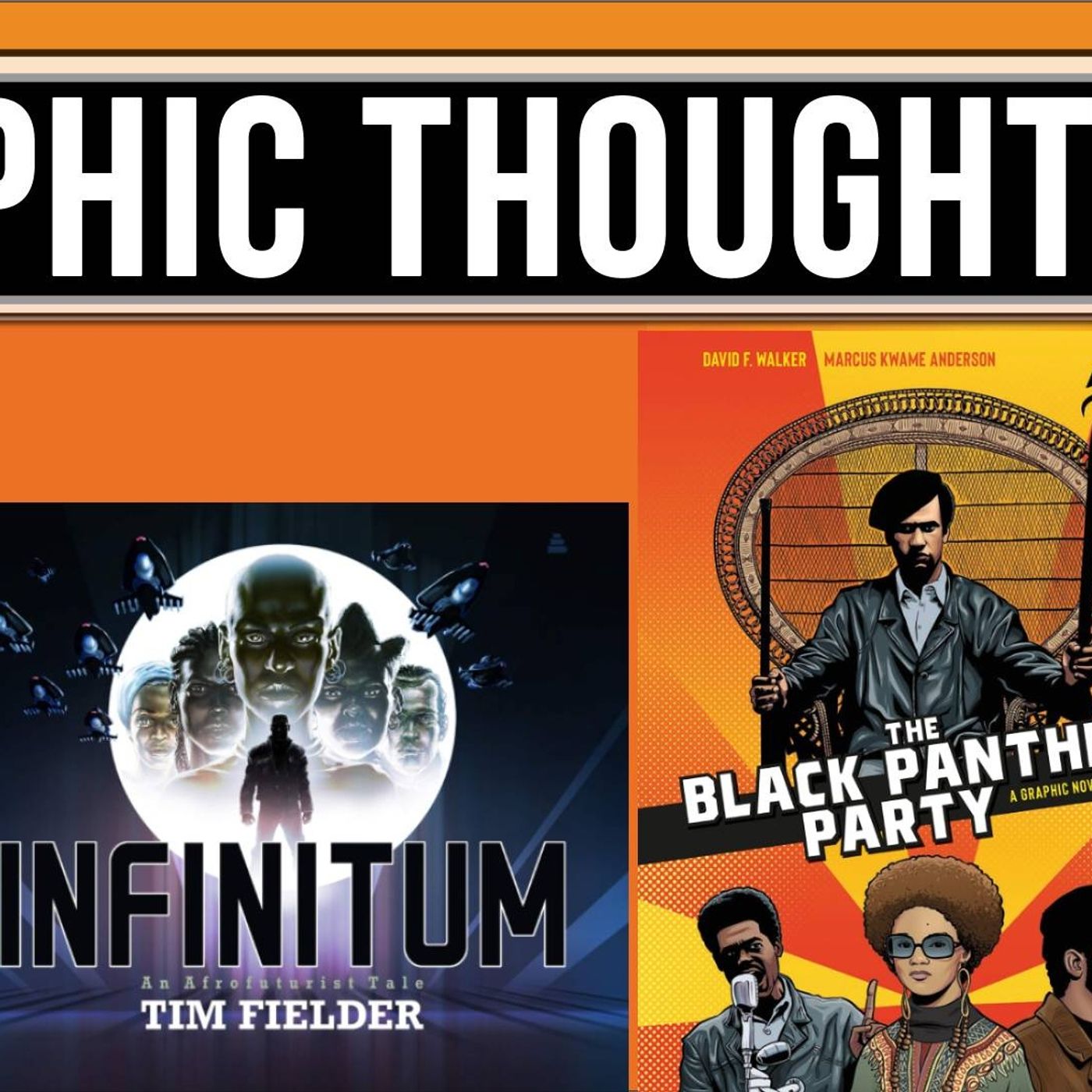
About this Episode
Hey what up there Dan here aka the Comic Concierge
and this is one of my graphic thoughts videos
where I pick three graphic novels trades or mangas
and give my thoughts and opinions on them and
don't worry about any spoilers I won't be going
into any minute detail just my general thoughts
and opinions and if you're all worried check
out below because there'll be chapters as well
as times there's for you to make it a little
bit easier but let's get to the books we'll be
talking about this week first up we have Frye
Height our second book is Infinitum And lastly,
we have the Black Panther Party. Let's get to
our first book, Frye Height, and I hope I pronounced
that correctly. It is German. My German is not...
all that great and actually to try to google
it to see if i can get the pronunciation correctly
so hopefully i did okay uh and what is this book
about what is freiheit about it what the german
title it is sorry based in germany during the
nazi occupation during the rise of the nazi regime
and this comes to us from the world of plow comics
and is written and drawn by andrea grosso simponte
and Again, it's about the rise of the Nazi regime,
and it focuses on these three individuals. It's
based upon a true story. And it's about them
attempting to rebel against the rise of the Nazi
fascism. And how do they do that? Do they do
it through force? Not necessarily. They actually
use the power of the written word. One thing
they use a lot are these leaflets. It's actually
the leaflets that they actually produce at the
time, the ones that they would use. their message
to try to break up the propaganda of the Nazi
party are published in the back and it's there's
four separate leaflets and it's just as you read
through them it is it is like reading these historical
documents and you see when they become a little
bit more aggressive throughout as I think they
they realize the plate that they're going through
and you just see them kind of going through This
attempt to fight back against a system that clearly
do not believe in in the dangers that work in
every corner often we look at the how people
can fight against the system in a more physical
sense and I thought this did a really good job
of just captivating how There are multiple ways
to fight back against a system that you don't
believe in and how important just the rule of
information is and how people can control it
and you control information you pretty much control
everything you can control believe you can control
action and how important that part was to. Why
the nazis were able to accomplish what they did
and you know, we often see resistance But usually
the resistance stories we see portrayed are typically
like the french resistance for example Rarely
are people like that are in the heart of it You
actually have people in here that are fighting
against it that also have to become german soldiers
Despite the fact that you know, they don't actually
want to fight for that cause but they really
have no belief and you can see why They are as
fearful as they are, knowing that if they're
found, if they're caught, not only does it put
the danger of themselves, doesn't put themselves
in danger, but their friends, family, anyone.
And the truth is you don't know necessarily who
to trust. For example, a person who plays a key
role in this is a secretary, and there is a trust
in how she basically overheard individuals talking
about what they're doing, turns them in, and
there are some negative repercussions there.
And I look at a nonfiction story like this, or
one that's based upon nonfiction. Some things
I look for is it telling a story that needs to
be told and I feel like this definitely Hits
checks that box because it's one I've never heard
about Personally, despite the fact that it's
pretty remarkable what these individuals did
was their impact wide I don't necessarily it's
hard to actually argue or really quantify that
I would think I think there certainly was some
impact It's hard to really say exactly what it
was. But when you read through this you would
just think what they were doing was a small positive
in a world of the ultimate negative. And beyond
the fact, is it a story that should be told?
How well told is it? You know, it's one thing
to have an interesting story, have a great subject
matter. Just because this can be an important
story doesn't necessarily mean the story that
ends up on the page. is equivalent to that and
I do think looking at the general story was effective
in getting to know these individuals. It didn't
feel dry. You felt like these people were complete
characters. You could remove the fact this was
based upon a true story and it's still an interesting
tale. Looking at the art, Sarah, I did like the
art. One thing that was really apparent and apparent
with this that was the panels were wide and large
and there's just a lot of room on the page. The
coloring design, there's like this weird texture
to it. It was like the entire world had a cloud
over it in a way where everything was a bit fuzzy.
Like nothing was completely clear. Like the focus
was off just a little bit, like a nice little
painterly quality too. And I think it certainly,
I think helped. Emphasize the fact that this
was real events because these characters look
real the world look real but it was still stylized
but not overtly stylized it's a really hard line
to draw when you're talking about events like
this that are extremely serious and you want
to be able to tell them in an artistic fashion
but do it in a way that's appropriate that is
kind of not out of line of the story you're telling
and thinking of something like how Shinya lives
for example like that's all in black and white
except for one scene with a with a young girl
in a red dress it's a stylistic choice, but it's
a powerful stylistic choice. It's not one I feel
like is trying to overly call attention to the
filmmaker. It's calling, I think, attention to
the innocence that's being lost in that moment.
I think that's similar to here. I think the colors
in general are very dark and moody. It can be
a bit dull in that, but I feel like it's purposeful.
If it was bright and kind of caught your eye
in that way, I don't think it would necessarily
correspond with the story that's being told.
But I think generally the art style fits the
story ultimately the most important the most
important thing and as I mentioned the panel
design a lot of wide panels a lot of panels that
kind of fill up the page with these imposing
figures and I think that one scene in particular
when you when you do see these individuals kind
of at times coming in and being put on trial
how they they're often so small on the page just
to showcase the Overwhelming obstacles that they're
facing with how you know this regime is consistently
hanging over them They're always this threat
and then beyond that just the story itself and
we think about it like When you do something
like this the small details like you thinking
oh they're just spreading out these leaflets
are putting messages on them well that's an interesting
story but i think this gets to some of the details
like how hard is it to get paper like when a
big part of this is getting the right type of
paper in order to do this and in order to do
that you have to be relatively mindful of that
because if you're showing up. To a location buying
a lot of paper or buying a lot of materials that
would create something like this It's going to
cause suspicion if people are aware of what's
going on So just every little thing you had to
do in order to you know Do something that in
all honesty didn't necessarily have to do But
they chose to despite what what it led to and
what it could lead to so I would highly recommend
this I know World War two is one of those things
that is represented a lot in both movies television
comics it can be very worn road to travel that
comes to storytelling. But again, I think this
was a little bit different because it's a side
of it. We don't necessarily see, at least on
the western side, we don't necessarily see this
viewpoint all that much. So that made it a little
bit different. And generally, the message being
here, although regarding a specific event, I
think it's relatively universal and I think even
ties into some of the other books we'll talk
about today. So definitely recommend it's one
I think really worth your time. It's generally
a pretty quick read. You can see it's not that
long of a book, but I do think one of the best
parts, I did like the choice of them putting
the leaflets in the back and just reading through
those. So getting context to what they did and
it was really helpful. The next book I'm gonna
talk about is Infinitum. And again, this is a
very different type of book compared to the other
two. This is a fourth, starting with the fact
that it is a fiction book. It's also a very different
type of design. You see the, you know, usually
comics are the other shape. Usually they're like
this, but this one is run in this manner and
it's... more of a comic prose style combination,
prose and comics rather than your typical comics.
This is not a book where you're going to read
it and it has a six panel, nine panel grid. You
have one page attacks typically and another page
of an image, one still but moving image. And
I like that because I like getting different
styles given to varieties and the medium of comics.
It's the type of style I don't see very often
anymore. It was certainly common. It happens
here and there like DC had their Hidden universe
book that was done that talked about things like
black lightning that was done in a very similar
style through black label This is written in
drawn by tim fielder and he does really everything
with this book The story is about king aija uba
and his queen lula and it opens up and they're
basically around the time it almost seems like
ancient egypt era And they're ruling over this
land But what happens is lula is unable to bear
children in order to kind of keep their power
going the king Uses a another individual basically
this this witch Sorceress to help birth a child
and during that process when the child is born
they take it from her and In the process she's
killed and actually levies a curse on the king
and the curse kind of causes him to become immortal
He lives forever. He lives to see his son die.
He lives to see his kingdom fall He lives to
see his wife die And what starts in the basically
ancient Egypt area has a massive scope. He eventually
becomes a wanderer. He ends up becoming a slave.
He empowers individuals during his time as a
slave to go the Underground Railroad. He fights
in wars. It goes into the present day. It goes
beyond that. It goes into the future. It's a
pretty wide scope of a story. When you just look
at time period, it's hard to really... top because
of the amount of time that it's covered in this
focusing on one character and looking at the
art style the art style is it does have it like
an animated quality to the each image typically
striking their Well told. If I had some issues
with the overall imagery of the book, it came
down to the coloring. Sometimes the coloring
was so saturated in dark colors at times, it
really hindered the line work, where you couldn't
see much within the image itself because it was
just so dark and bleak. It wasn't always the
case, but especially on the early on -going,
some of the moments that are meant to be rather
poignant and powerful, I think, are hindered
a bit. Looking at the lettering choice. There's
a lot of stylized lettering within this on a
different pages like it's A stylistically, I
think it kind of looks cool but when it comes
to reading I felt like it hindered it more than
anything because it just Put more obstacles on
the page for you to read rather than just being
you know words on the page I think you know lettering
is a difficult thing to do when you're going
to add a lot of style and things to it it's one
thing if you're like adding style to like a sound
effect or something like that on a page because
you're looking for the impact of that. You're
not necessarily reading that for comprehension,
but when you're putting that type of style, like
different colors and fonts on a page and that's
meant to be what you're reading, it just, I think
it adds, it makes it a little bit more challenging
of a read. It at least did for me. So those were
some of my drawbacks to it. The coloring sources
and then just some of the use of the lettering.
I thought it did more harm than good. It looked
cool from afar, but the actual utility of it
I thought was a little cumbersome in general,
but the story itself is is immersive and I was
I didn't know where this was going at all when
I picked it up. I kind of like displaying reading
things. Just this is a new book. Now we try it
out. I didn't even know what format was in at
all. I didn't know it was like this. And the
first thing I was stricken by was was the overall
art. I did think it was it's very digital. It's
a very digital look to it. And that might draw
some people. But I thought on the emotion side,
just the consistency through it. Was welcoming
and i do like styles like this it's a little
bit more wordy of a read like you are reading
half a book half a comic but i thought when you
consider how much time is being. Covered within
this it made a lot of sense and i think it really
started going for me once it got into the fact
that you had him going into the slaves trade
and seeing him kind of react to becoming a part
of the underground railroad and then to. You
see although he's immortal. He can't be inflicted
with wounds wounds can hurt him and then that
challenge I thought that was a nice little wrinkle
too because unlike something like Berserker for
example or Wolverine that they know they're immortal
because they can kind of heal themselves that
necessarily isn't the case exactly with with
this character and at times like he has to overcome
like many wounds and over a lifespan of being
this kind of impressive warrior that has taken
on all challenges from all different types of
the world at all different time periods those
wounds start to kind of add up And I thought
that I went seeing him deal with that. But then
again, when it gets into the future, like that,
I'm like, oh, wow, we're actually going this
far. It hits it into another gear entirely. So
despite my quibbles, I did like it. Like I said,
I do think it's a work that you can have to let
wash over you a bit. kind of escape into this
world. But once I did that, I was relatively
impressed with the craftsmanship. And again,
I love seeing comics being approached through
different methods and through different techniques.
Craftsmanship is something I really look for
when it comes to how I appreciate comics. And
I thought the craftsmanship here was unique.
I mean, it didn't always work for me. It took
a lot of chances. And sometimes chances pay off.
Sometimes they don't. But I'd rather... See someone
take a chance and it failed and then be something
that's just generally mundane and uninteresting.
So it's a good balancing act that I thought Overall
when it came to balancing I enjoyed much more
than I dislike when it came kind of to a fighting
oppression as I talked about this Overcoming
impossible odds again. This goes back to him
being thrown into a system. It's a good like
microcosm of the issues that we've seen the United
States dealing with race because he is this African
individual that is being Treated despite the
fact that he was literally a king now being treated
low of the low But not stopping there fighting
it back against that because of this curse that
he now has he has that ability But again, we
see despite the fact that he you know is fighting
these odds those scars Really impact him and
they are they are there for a long time and I
think that is certainly something that I don't
think is at all an accident you know indicating
that those wounds that have been suffered and
those wounds that started way back in the 16
and 1500s are still relevant today and seeing
King Aja being the individual that connects all
those made a lot of sense but then again it went
into even further beyond that so just to see
what people thought of this I haven't heard many
people talk about this which I think is a shame
because there's a lot here to talk about there's
a lot here to dissect on all different levels
maybe because it's outside the norm of style
people are Just a bit missing it. But again,
I would have advice checking out and see what
you think of it last this week We have the Black
Panther Party. And again, this is a nonfiction
take on the history of the Black Panther Party
It is written by David F Walker with art by Marcus
Kwame Anderson, and I'm a huge fan of David F.
Walker as a writer. I feel like he's relatively
really underrated in the world of comics, and
he's done his Power Man and Iron Fist run with
Sanford Green was great. He's part of Bitter
Root as well. He's part of that writing team.
That's been fantastic. His work on Nighthawk,
he was a co -writer on Naomi, actually even did
a really fun cable in Deadpool one shot back
when the movie was coming out a few years ago
that was like, wow, he has a versatile style
that is something that you don't see nearly enough
because I think he can really approach a variety
of different characters. I wish he got a little
bit more chance to tell bigger stories. Unfortunately,
a lot of his books end up being really good but
don't necessarily have the longevity they should.
Like his Nighthawk won't run, unfortunately got
cancelled way too soon. But it's great seeing
him doing a book like this, you know, with Judas
and the Black Messiah coming out. This is a good
one -two punch. This is very different than that.
This isn't necessarily... it is following the
history of the Black Panther Party. But it's
not necessarily a narrative per se. It is much
more an informational take. And I thought this
did a really good job of just providing context
to a lot of key elements. The amount of detail
and the amount of information in this is pretty
impressive. And when I look about just the individuals
that they touch upon, the event, this is an endless
balancing act. And I've read a lot of books that
cover important information. It's like, this
is cool things to know. These are important things
to know. and it can be overwhelming at times
or end up being relatively dry where you just
feel like you're reading a textbook. This, I
thought, avoided that for two key reasons. One,
providing a lot of context to how we even get
to the point that five grand third party is even
beginning before we even get there, setting up
the stage. And when you get to the individuals
who started it, like... It shifts focus and you,
it's more like a firsthand account, more like
a classic comic with general conversations happening
with, with some narration. So it feels like you're,
you're there in the moment relatively instead
of outside being an observer. Good example of.
showing, not just talent. So, generally, you
think of a well put together graphic design piece.
For example, you'll get the specific pages when
you have an important figure that's about to
play a key role. In order to introduce them,
you get a page. They often will get a page, and
it will be a striking image, potentially even
linking to some relatively iconic imagery, and
then some key details about that individual,
some key caching boxes to... have an understanding
of who the person is where they're coming from
and what role they play and then as a sword continues
you have that context so when they show up everything
makes a little bit more sense and you can kind
of connect all the dots so that's why the fact
you're getting a lot of information is it's divvied
out in a very helpful and informative way and
i think this is again a very important story
to be to learn because the black panther party
or black panther party for self -defense as it
was first as uh first came up It even gets into
how there were different versions of the Black
Panther Party, some of the controversy behind
them, where they come from, what was their purpose.
A big part of this, too, is the gun debate and
how guns play a key role in the foundation of
the Black Panther Party. And it's interesting
seeing how individuals will kind of change their
role on guns, depending upon who has them. For
example, there's this incident called the Sacramento
incident that deals with Ronald Reagan back when
he was governor of California. And you had the
Black Panther Party show up to a location where
they knew Ronald Reagan would be with weapons,
knowing that they were following the law. They
were very keen on making sure that they were
following the law, not breaking any laws, being
educated regarding their rights, not the rights
that they're told that maybe society tells them,
but the rights that they have in the Constitution
and actual state laws. So then you see the reaction
of individuals and there's this Sequence in which
they're going actually to the ski government
to try to challenge this this lava trying to
enact and they get lost in the commons trying
to find their way and when they finally do. By
mistake instead of going into the place that
they're allowed to by law they come to the wrong
door and unfortunately it causes some problems
there But there's also a lot of tragedy in this
as well And I think it tries to get through the
myths it tries to get through cut through kind
of the what people Talk about the black panther
party and actually what really happened and it's
very educational in that sense understanding
the complete picture of what they did what their
pillars are you learned about the ten pillars
of that that established the black panther party
for self -defense And also how there were a multitude
of different Black Panther Party organizations
that all did different things, that had different
viewpoints, some that weren't as militant as
others and the conflict that kind of ensued within
them, but how they would often still work together.
Looking at the art, I mentioned how it was just
really well designed, well put together. And
I thought the art too, when it came to representing
real individuals on the page, like you felt like
you were looking at real people, but not in the
sense of like it had that uncanny valley where
people didn't look to look too real. They had
a cartooning aspect, and I feel weird saying
the word cartooning with a comic like this, but
they certainly weren't comic book characters
drawn like general comic book characters, but
when you had like striking almost poster -like
images, you saw who they were. It was a good
representation of these individuals on a sense
of understanding that these were real people,
and a lot of people that plainly I never heard
about didn't know their stories. I think this
is a book you could probably put in a school,
and it probably should put in a school, especially
for your high school kids, if you have a high
school kid or even college age, just to see this
information, learn this story, if you enjoyed
Judas and the Black Messiah, and you found that
compelling to get more context, to get more background.
And the amount of information that's covered
here is well -detailed, well -researched, but...
I still feel like at the end of the day, I'm
not just learning. I'm seeing a story being told,
which makes it even that more compelling. And
it tries to get the complete picture. It tries
to, I think, show the bad and the good, the tragedy
that occurred. And the way it ends, too, is just
completely heartbreaking. And seeing how the
message that they were compelling, that their
mission, well, at many times was successful.
clearly is still something that has not been
fully realized yet. So beyond that, looking at
how this compares to something like Freight Height,
where you have individuals utilizing things like
leaflets to dispel the messaging of the Nazi
regime, the Black Panthers as well utilize similar
techniques to cultivate information utilizing
their own newsletter. to put things out there
to educate individuals from everything from voter
registration, just to make people aware of the
rights they have and what they can and cannot
accomplish. If they had a different political
agenda or if they wanted to spud the word about
something just to break down the system of oppression,
information, utilizing that information was just
a powerful tool as the guns they would use to
protect themselves. And what's very different
with this compared to something like Frye Height,
where Frye Height is a narrative. beginning to
add where it's more like base upon a true story.
In this, you know, you have narrative pieces,
like I mentioned, you'll get inserts of individuals
communicating and talking with one another to
divide contacts. I feel like you're you're seeing
in real history and action beyond just the details.
Those narrative pieces were a small portion of
this, though, where it was more about providing
you the information and the detail about what
happened. But in a narrative sense, the narrative
here wasn't necessarily about. The story was
about the history, and I think history is much
more interesting when you can tell it like you're
telling a story. It's not just here's a date.
Here's what happened. Move on to the next thing.
Here's a date. Here's what happened. Here's the
next thing. It's linking all together like you
would as if you were. Telling a story like here's
the beginning here's a man and here's the cause
here's the effect Going in for bit for bit It
does maybe do a little bit of jumping because
you have a lot of ground to cover but because
the way it's told Well, you're not just feeling
like you're being bombarded with dry dates and
details It's much more captivating in in that
sense and david ed walker recently did like a
frederick douglas book and I felt like They were
similar to that where the difference between
here Of course is that you have a wider range
of information ultimately though when I look
at this book I think why I liked it as much as
I did is because again going back to the idea
of information in the power It holds it breaks
down regimes, but also I think it can place us
in bubbles It can put us in places that and we
have certain Viewpoints of individuals like growing
up as a kid like I know I didn't really know
much about the Black Panthers. I think my only
Really information I received or my limited knowledge
was based upon their their minor scene in Forrest
Gump and things like that like the details We
didn't learn about them in history class. My
parents weren't people that were going to talk
about them There were you know, almost mystical
figures in a way and mostly seen in a negative
sense almost like it pseudo terrorist type of
organization, but then you get a book like this
and it can inform the uninformed. It can let
you know about important people that you never
heard of and how they have had such a huge impact.
Like we hear the term Black Power. Well, where
did that come from? And learning that, learning
about people's lives, the sacrifices they made,
but it's also not chiding away the fact that,
you know, there's a lot of tragedy in this story
and the anger that's there and understanding
that anger so you have all the books i read this
week i do think this was by far the best you
know i like the other ones they were they were
they had their moments but on a craftsmanship
level on an important level i just thought this
was far and away the most compelling thing i
read and it was something i think i will go back
to actually did buy this on the other books i
got from the library but i'm glad i bought this
because i feel like it is something i would go
back and reference because there is a lot of
information here. I tried to retain as much as
I could, but there are small details, names,
things like that that didn't immediately stick.
So going back and reading it, learning is, you
know, learning is fundamental to this, I say.
Well, anyways, that's it for me for this week.
I did want to mention that the Comic Concierge
is also on a podcast. So if you'd rather listen
to it that way, just search Comic Concierge in
your podcast app and you'll be able to find it.
And outside of that, just want to thank you for
taking the time to check out this video. Appreciate
that. Let me know what you thought of this book.
What books have you been reading? Let me know
in the comment section below. But just remember,
comics are for everyone. The key is finding the
right one. Until next time, keep reading.
No chapter markers for this episode.