
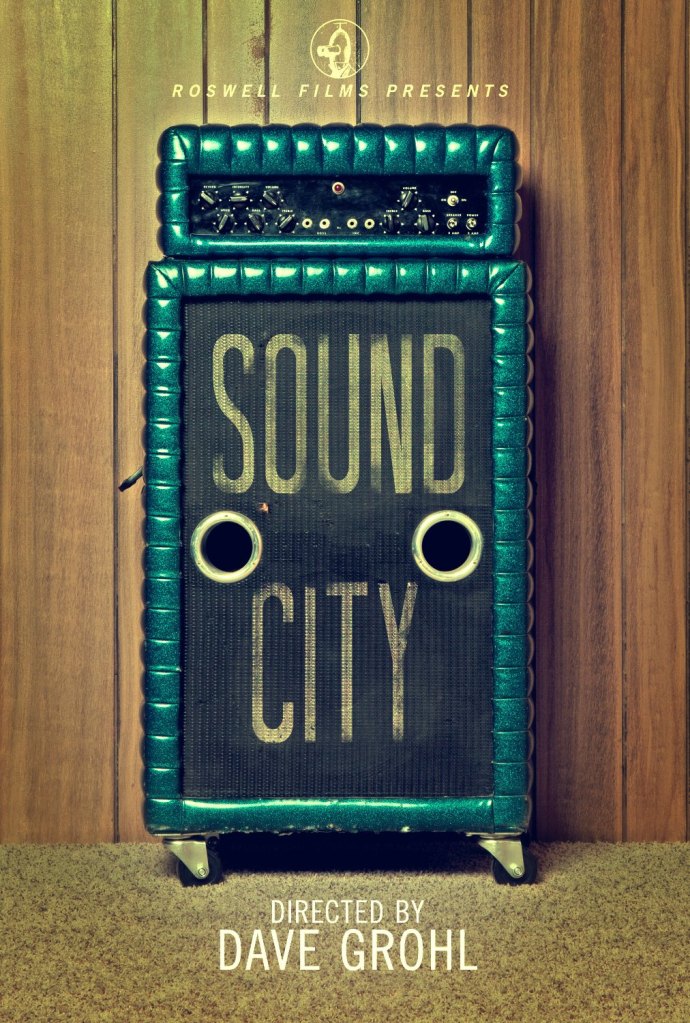
Article By: Dan Clark
The music industry has its troubles as of late. With the advent of more advanced digital technology and the increase of piracy the face of music has drastically changed. People no longer need million dollar sound studios to record albums. Instead musicians can use a half decent laptop to produce the same quality sound. Revolution comes with consequences, both positive and negative. One rather large negative consequence is the fact that many famous music studios have had to shut their doors for good. Dave Grohl, who many fans know for his work with Nirvana and Foo Fighters, has made his first foray into directing with the documentary Sound City that depicts the tumultuous history of the famous music studio. Grohl’s complete and pure admiration for this topic is drenched all over this documentary. For the most part it avoids being a simple fluff piece about a monotone topic. By incorporating the story of Sound City in concurrence with the evolution of the music industry he made it the perfect microcosm for the price of progress. Though its insight is relatively general, any music fan can still appreciate the desire to keep this legend going.
With this being Grohl’s first venture as a filmmaker it is actually quite impressive how well this movie was made. Its structure of talking head interviews along side archival footage is by no means groundbreaking, but the use of that tried and true format may have also made it easier to get over that initial learning curve. If this is a sign of what he is capable I hope we see more from him in 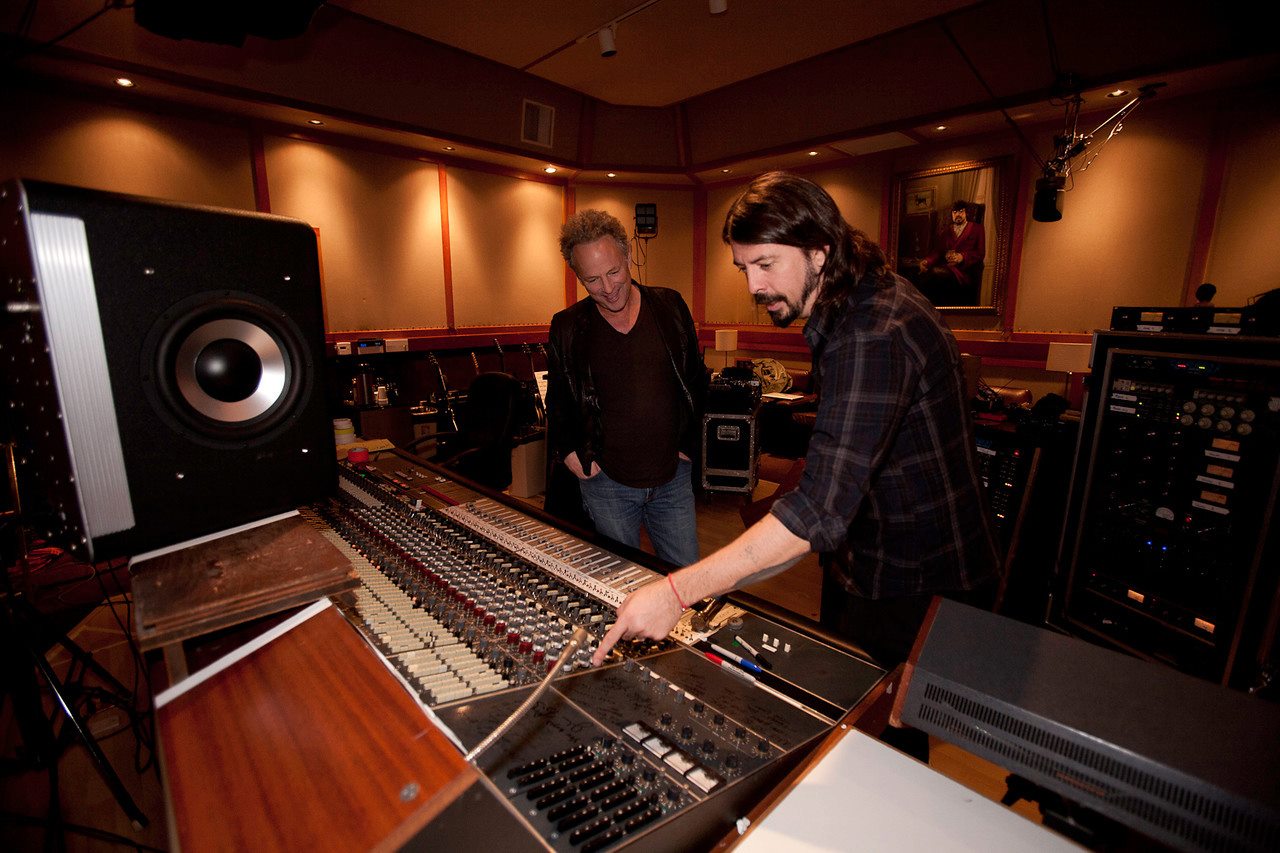 the future. Together with its tight editing and comprehensive story arc the film progress nicely through this unlikely success story of how a dilapidated sound studio turned into a mecca for the movie industry. Any music fan will unquestionably become infatuated with the endless cavalcade of music greatness on display. Influential musicians from all genres felt that Sound City had a momentous impact on the success of their careers.
Much of the film is focused on that element—discovering what made Sound City such an icon. It dictates the early history to its illustrious demise. A lot of it is told through the lenses of musicians like Tom Petty, Stevie Nicks, Rick Springfield, among many others. You get this great firsthand look—not only into Sound City—but the creation process as a whole. Seeing how the backstory of some of rocks greatest albums was surely fascinating, and all of those musicians shared in the universal love affair. Sound City was treated like some who has such a dominating personality it is easy to forgive that wretched order coming from their unhygienic body. In the kindest terms the place was a dump, but that only added to its charm. As Dave Grohl states, “It has a great decay”. Success for Sound City was largely based on luck and happenstance.
Not a lot of attention was spent on the technical aspect of what made it such a success. There was mention of how its design greatly benefited the sound of drums. Its unconventional layout allowed for a sound no one else could produce. Also there was ample admiration given to the custom made Neve Console. Handcrafted design made it extremely rare and priceless. If not for the Neve Console there is a good chance this documentary would have no purpose of being made. The owners of Sound City bet the bank of the creation of Neve, and that bet paid off with dividends. It lead to creation of gold record after gold record. Huge artists like Fleetwood Mac and Rick Springfield became huge stars after cutting their record s at Sound City, though as quickly as the success came it began to fade away. During the 80’s the desire for crisp digital sound made the desire for classic studios mute.
Music aficionados will already know much of the history covered here. Still interchanging in this history lesson gave the overall story a much more layered format. Again it is not innovative in its approach, nevertheless it was needed to give a better understanding of this story as a whole. Plus those who are more novice on the topic may find it fascinating that digital technology has had such impact for decades. Of course the advancement of digital technology is far different in the 80’s than it is now, and seeing that evolution was also an interesting facet to this story. Grohl worked in these multiple angles with ease. The pacing was never halted as everything felt like a natural progression. Sound City’s last boom came in response to Grohl’s early work in Nirvana. After Nirvana recorded Nevermind everyone wanted the Sound City experience. Once again it became a main stay in the music industry. Unfortunately there was one obstacle it couldn’t get over. Inventions like Proto Tools made the need for sound studios obsolete.
Where Sound City falters is in its last act. It divulges into a self-indulgent making-off documentary that runs far too long. After Sound City closed its doors Grohl purchased the famous Neve board and moved into his personal studio. He then brings in famous musicians who recorded at Sound City to make songs exclusively for a a tribute album. Although the idea is not that outlandish it made the rest of the film feel like a lead up to an infomercial. More importantly it was determent to the overall theme of the film. Up to the final act it was dedicated to expressing the importance of Sound City, and how it provided an experience that could not be replicated–so trying to relive it made it feel all-for-naught. Grohl’s heart was in the right place. His admiration for the Neve board made him want to see this dream live on. However it just felt like an excuse to get all these artist to play together, and not for the betterment of the overall narrative. It was the one place Grohl showed his naivety as a filmmaker.
Final Rating:

