 Altered Geek
Interview with Lily Wexhew on Voice Acting

Part of a Collection
About this Episode
Hello and welcome to Geekcast Radio Presents,
an interview that will also be syndicated on
Altered Geek and Studio 2009. I'm one of your
hosts for this evening, Steve Megatron, and joining
me is my usual partner in podcasting crime, TFG1
Mike. Coming to the studios tonight is Lily Wexhew.
And if you're not familiar with Lily, she has
lent her voice to the Assassin's Creed franchise,
appeared on Grey's Anatomy, been the announcer
for the opening and closing ceremonies of the
2010 Olympic Winter Games, and is an author.
Hello, Lily, and welcome to the show. Hi, thanks
for having me. Thanks for being here. Yes, thank
you. So to get started, could you tell our listeners
a little bit about your background? Um, so I
guess the best way to describe me would be maybe
a failed singer, a failed singer who became an
actress who became a voice actress. No. Basically,
yeah, I'm an actress. I started acting when I
was a kid. And I thought I was when I was really
young, I had a really strong connection to my
voice. And I thought I was going to be a singer.
And then my grade. I don't know, four singing
teacher, you know, accused me of sounding like
a buzzing bee. So my career ended very prematurely.
And and then by the time I was about 19, I just
I don't know, my voice was kind of. popular at
the time. Everybody would come up to me and say,
oh, you should do radio. You have a radio voice.
And I was like, okay, sure. Sounds good. And
eventually wherever I worked, I befriended some
DJs that actually worked at a local station and
they one day needed a female voice and they called
me into the radio station and I started recording
voiceovers that way. And then that kind of became
a sort of a side gig. And then over the years,
it kind of took center stage. And I still do
acting, but my days just get filled up with doing
voice work. So that's sort of the story. Awesome.
Yeah, that's a pretty big jump from wanting to
sing to jumping to acting. Well, you know, it's...
First, many, many singers end up doing voice
acting in particular, especially in animation.
It's very, very common in commercials as well.
So it's not that uncommon, you know. And also
think about musicals. A lot of singing actors,
you know. But I really, just because I had this
super, I just thought when I was a kid, it was
kind of embarrassing. I don't know, I must have
been like around seven or eight years old. I
just thought I had a really good voice. And I
don't I wasn't, you know, necessarily singing
or anything. I just thought I had a really good
voice. And I didn't know why. Like nobody told
me I had a good voice. I was just a kid, you
know. And I just thought, you know, it should
be discovered in some way. So and then I saw
Adventures in Babysitting, which was a movie
with Elizabeth Shue where she has to babysit
these kids. And then she. She's kind of stuck
with them and she takes them all over town and
she takes them in Chicago in this blues bar.
And when I saw the blues singer singing, I was
like, oh, that's what I want to do. But then,
you know, I failed. Like I said, my teacher just
said, no, you can't sing. And I just, you know,
I just never sing again. And so I just. did what
a lot of kids do who like being on stage, which
was just acting, you know, in class and theater.
So it's not that far of a stretch, but I really
did think that voice was going to be my thing
growing up, you know, which is kind of strange,
but it worked out. It was actually kind of prophetic,
so. That is pretty cool. Yeah. I love that movie.
Isn't it cool? You know, I have to watch it again,
but I just love that movie. And that when they,
when she takes those kids down in the blue bar,
I just remember, I was like, finally, like now
I know what I want to do. You know, it didn't
quite work out. Hey, but everything's kind of
a stepping stone though. Yeah, no, it did. It's
funny, you know, and later, much later, like
recently, actually, like last year, I started
taking singing lessons. I had told my husband,
I was like, oh, I kind of would like to sing.
And actually for our wedding, we wanted to sing
a song for our wedding because he was playing
guitar. And I was like, oh, it'd be cool, you
know. And I said, I'd have to take some singing
lessons. And so he got me some lessons. And actually,
it was the best thing I did for my voice career.
It really just made my voice clearer, more beautiful,
more resonant, more resilient. So it actually
and I joke about this and I say it's kind of
like Botox for the voice, like it just rejuvenates
you. And yeah, so singing really is. And a lot
of singers do cross over to voiceovers because
they have beautiful voice, they're well maintained
and they have control of their instrument. So
it's actually very, very related. That is pretty
cool. I've not heard that angle for voice acting
before, but that does make a lot of sense. Yeah.
And actually for the book, when I before I wrote
the book, I interviewed a bunch of casting directors
and directors. And that's when I became aware
of the connection because I didn't even realize
it either, because in animation, actors who work
a lot in animation often have to sing. Like if
you watch those kid shows, there's a lot of singing
in them. So I was like, oh, yeah, that makes
sense. But I just I never thought about it. So,
yeah, big, big connection. So if you're a singer
listening to this, voiceovers is just a short
hop away. It's one note down the scale. Oh, yeah.
Yep. So did you always want to be an actor aside
from doing music? And yeah, I mean, around probably
the same time, I thought that I had the best
voice in the world around that time. I probably
also thought like I was the best comedian in
the world. You know, when you're seven or eight,
there's no one there to do a little ego check.
But yeah, when I was a kid, I used to always
what I used to do was I used to write these little
monologues and I used to perform them for my
mom. And I used to watch sketch comedy and I
just. I wanted to do comedy at the time, actually,
is what I wanted. But and then I got involved
with school plays and took acting classes. So,
yeah, acting has always been. And also, I think,
to be completely honest with you, and I think
if there are other actors listening to this,
they may have a similar situation or any kind
of art. My mom wanted to be an actress. And I
think that. You know, her career got cut short
because she had three kids really young. And
I think that I had one of those outgoing personalities
as a kid. And I just thought she was like, oh,
she's an actress. And she kind of fed me that.
And I kind of thought that that's what I would,
you know, like I never, people ask me like, when
did you start acting? When did you start thinking
about it? And honestly, I don't remember. Like
there was never another option for me. Like that's
what I thought I would do. Of course, it's a
very hard life. Nobody tells you that part. But
luckily voiceovers kind of saved me. In terms
of having a career that was sustainable. But
yeah, so it was always just something that was
kind of natural within me. I never really questioned
it until I was a little bit older. And then I
was like, well, do I really want to do this?
But by then I just was doing it. So yeah, it
was just how it happened. It was just kind of
fed to me. That's awesome. That is very cool.
So you were in the Assassin's Creed video games.
What was it like working on a video game environment
compared to on screen or other forms of voice
acting? You know, that video game happened. I
booked that when I was just kind of starting
out professional acting. And it was very I think
I didn't quite. kind of take it seriously to
be honest like I was kind of untrained and inexperienced
and I remember we had to do for that game you
know it takes place in Italy and all the characters
are Italian and so We all had to do an Italian
accent. And I was like, oh, yeah, I can do that.
No problem. You know, and then I got into the
studio and there was a coach and it was just
10 times harder than I realized. I was like,
oh, boy, this is not like like you've got to
really work on accents. You know, some accents
are easier than others, but Italian is very specific.
And unless you listen to a lot of it, it's going
to be difficult. And so I kind of was kind of
put in my place, you know, in a way, just like.
You're going to have to prepare for things. You
know, it's all fun and games, but you are a professional
here and people expect you to be prepared. And
then it was also the beginning of motion capture.
And for listeners who maybe don't know what motion
capture is, you know, in video games, they basically
put sensors all over your face and your body.
And you basically wear a suit and they put all
those sensors all over you and on your face.
And they film you with those sensors and then
they use those sensors to design characters so
that they look real. And so at the time, it was
the beginning of that. So in my session, they
put sensors just only on my face. And so we had
to say our lines with a proper accent. And then
we were kind of like in a box with like a...
There was a camera in front of me and there was
kind of a box kind of over me like you couldn't
move too much, you know. And honestly, with the
accent and the not moving and everything, it
was just like it was hard. You know, it was harder
than I thought. And it was very, very humbling.
And, you know, video games, it's like it's like
theater on steroids. But you also have to be
very, very naturalistic. So movement is really
important. You kind of have to have bigger movements
than you would, let's say, than a film actor.
But your speech has to be like a film actor.
So it's kind of a science and it takes a lot
of experience to find that sweet spot. And it's
just by doing it and doing it and doing it. And
because the technology was kind of young, I think
I just didn't know where... it sat for me, you
know? So, um, it was challenging. I mean, it's
an amazing project to be a part of, but excuse
me, it was not easy for me. You know, it was,
it was challenging. I learned a lot and I learned
that, um, in any field in the arts that you want
to work a lot, you have to really love it. And
then you have to train really hard. Like it's
not something you should just expect to be good
at and just like ace. Training makes perfect.
Yep. Yep, totally, totally understand that. Because
I play some roles in a children's radio drama.
Oh, that's awesome. Podcast, which I also happen
to produce. That's so cool. There was a particular
season or series of episodes where I was playing,
because we were doing like a Boston, kind of
like a Boston Revolution type thing during the
Revolutionary War, and I had to play kind of
an old -timey American, and then I was supposed
to also play a British soldier, and I was just
having a hard time wrapping my mind around it
because I hadn't had sufficient enough time to
train for that. that dialect and because they
have a couple of different dialects and it just
kind of determines you know which one you need
to use and um there was this kid that was in
there doing some other lines for a couple of
other episodes that we had going and um i was
saying yeah i'm having a really hard time doing
this british and uh accent and he says oh i can
do a british accent and i was like here you go
i handed him the script had him read it and he
i was like oh this is great so i took him to
the director of the program and they were like
oh yeah this is good and so they used him and
i was totally fine with it you're like he just
saved me yes i was like yes that was so worth
the producer and that happens not so good if
you're not the producer yes yes i was just like
it's so funny because he said he steve posted
this on twitter and i'm like here's at least
five different british people that i know that
you could ask about how to do it yeah it's hard
I mean, accents are, you know, they come easy
to some people. And I have a very musical ear.
I think that's something anybody that plays an
instrument is a little bit like that. I don't
know if you guys play instruments, but, you know,
so you pick up the nuances. But accents, if you
really want to be authentic, they require some
work. Oh, yes. Because the thing is, in the field,
too, like, the thing is, because there's so many
people now, that are kind of, I want to say,
like allowed to be in the industry, like before
the industry was so small. You know, if you weren't
in the small circle of people, you just weren't
ever going to work. And now for various reasons,
which I go over in my first book, you know, the
Internet has made it has made jobs accessible
for so many more people. And the field, you know,
just discriminating less. And so you have so
many more people with different accents and,
you know, different ethnicities. So they have
access to those people. So now, for example,
if you're going to do an accent, you better do
it really, really well. Because the person that's
from that place has an agent and they can get
in the door just as much as you do. And you're
going to be competing against them. So you better
make sure that you have a really solid accent.
You know, it's yeah, it's it's not easy. It's
fun to do. Like, I love doing accents, but and
I'm not like a master, but I love doing it. And
let's say an acting class, you know, you pick
a British play or a play set in Boston or whatever.
But it is like it's not easy. No, no. to do like
to do to pull off and we see it too even with
famous actors sometimes we're like oh come on
please you know they only they're only putting
up with that because that actor is famous you
know yes that happens all the time there are
very few really famous people who can do a really
good accent oh yeah totally um so well the funny
thing about the famous people is that they're
hiring them for that sound You look at Chris
Rock, for example, not to throw the man under
the bus or anything, but you look at him and
you hear like he's he's the new iPhone 12 pro
ad campaign person. That's great. He got that
ad. Great. That's awesome for him. But like for
the characters that he voices, like in Madagascar
and things like that. they looked at him and
looked at the character and they said we want
his voice yeah we don't want him to do another
like we don't want him to come in and try to
do a maurice lamarche or rob paulson or whatever
we want chris's voice and that's that's right
that's what's so interesting about the celebrity
voice the big time yeah when you get you know
That's true in every, I mean, it's true even
on screen. You know, what happens is that those
people, you know, they'll sell the movie, right?
So some people will just see it because he's
in it. So that's a sort of a marketing thing,
you know? So yeah, you're totally right. He was
not hired to do a voice. He was hired for Chris
Rock, you know, do what Chris Rock does. Yeah,
absolutely. And that's just a reality of being
in the arts. That happens on every level with
everything. Yeah, for sure. Yep. It's good to
be famous. Yeah, it definitely does. So you have
a new e -book series right now called Get Clever
About Voice Acting and Announcing. And I saw
that it was also kind of dubbed as a very similar
to a For Dummies series. What prompted this?
You know, it's when you do voice acting, everybody
always asks you like, oh, how do I get into it?
And I'd love to do that. And somebody told me
I had a really good voice, you know, and and
people ask you for coffee, for dinner, for this,
for that. And honestly, you cannot get that information
in one conversation. Like it's just is there's
so many levels to it. Right. So and also a lot
of the time, like you talk to people and then
they by the end of it, they're like, OK, I'm
not going to do it. So you're like, oh, that
sucks. It's much easier to be like, here's this
book. So over time, I just had so many people
and even friends who were in the industry. Like
I helped a lot of my friends start their careers.
And so my peers would ask me a lot of questions.
And so and I always loved writing since I was
a kid. Everything starts when you're a child.
When I was a kid, I had a journal. As soon as
I knew how to write, I had a little journal.
And I would always take notes. And I'm just like
a note taker. And so over the years I collected
kind of notes that I had put together and I just
thought, so it was always kind of a matter of,
of when and not if, you know, for many, many
years I was like, well, who am I to talk about
Voigtland, you know? And then one day I was just
like, you know what, I'm going to do this. I
love writing. And, um, maybe later on in my career
when I'm in, you know, my sixties and nobody
wants to hire me anymore as a voice talent, I'll
have like started a writing career, you know?
So, um, cause it's, it's hard. It's, it's, I
mean, You do get more work when you're younger,
whether it's on screen or for acting. But, you
know, in voice acting, it's less severe, but
it can happen. And so I'm conscious of that.
So, yeah, I just thought, you know what, I'm
just going to do this. It's going to give me
some good practice for writing. And it's something
I know. And I know it's going to be useful to
people. And so that's why I did it. It was sort
of a very part -time thing that I did. It took
me so long to do it. But then the pandemic happened
and I had to kind of get it out in the rush because
the pandemic really kind of changed, not changed
things, I want to say propelled. The industry
was already going, you know, towards the home
studio and actors having to work, you know, get
their own studio. And the pandemic just propelled
that. And so I knew that a lot of actors would
need to set up a studio and to just need to know
how the whole voice acting business worked. So
then I kind of rushed to kind of. you know, get
it, finish it all together and, and get it out
there for, for people who might need it. That's
great. Yeah. I, I, I've noticed too, that a lot,
a lot of things have changed with, uh, between
COVID happening and in between just the internet
of things. And it's just easier to get people,
um, remotely, like even, um, like I was saying
with the, the production aspect of doing a radio
drama, uh, is, And we had to adjust because of
COVID and set people up with their own home studios
to record. And our director is actually from
Canada. Yeah. So it made things totally different.
Oh, yeah. I mean, you know, I can't tell you
when this happened because what happened was
a bunch of pretty much I feel like all the agents
like in the same week sent all their actors who
didn't have home studios, but who did do voice
acting. By going to other studios, they sent
a huge email. Everybody got an email from their
agent saying, look, everybody's asking for actors,
for voice actors right now. You guys need to
set yourself up. And so I had so many emails
and phone calls going like, what do I do? Like,
you know, my director, they need me. And they,
you know, and even companies like Ubisoft would
send their actors microphones like and sound
cards so that they could. you know, have a good
sound, a good quality sound to record. Now you
have to have a quiet space to record. And obviously
the microphone is just kind of the small part
of it. The quiet space is the most important
part. But, you know, everybody was like, what
do I do? What kind of software do I need? Like,
what's going on? So, yeah, it was very real.
And a lot of games and animation shows just went
remotely. A lot of that was already happening,
but it wasn't happening on a, on the scale of
high profile companies. And now it did. And so,
you know, it's going to go back to in person.
Some recordings in person are already happening,
but you know, it's, it's, it's really propelled
something that was already happening, which is,
you know, why are you going to bother getting
people in person if you can just get them and
you can get them at a moment's notice too, which
is, that's not my favorite part of what the COVID
thing is everything now. is happening. I don't
know if you're experiencing that on your end,
but it's like everybody for me, my clients, everybody,
it's just like they want everything now. It's
like it made everything a lot faster because
because everybody's kind of at home and and they
don't have to commute and they don't have everybody's
just like at each other's fingertips. So it makes
everything faster, which is really like difficult
because all of a sudden it's like I had like
before like. My clients would, for example, schedule
a session in two days or in three days or next
week. Now they're like, can you do this today?
You know, because they know that I'm there in
the studio. And so it's made a lot of things
faster. But back to the previous subject, it's
like, yeah, it changed. It made it possible for
people to work from home. And, you know, those
trends, even though some of the studios are going
to go back to in person, obviously for motion
capture, they're going to be back in person.
But a lot of the video games that don't use motion
capture, they're not going to go back. You know,
you can get a director on the line, like exactly
like you're like you're saying and like your
show is going and it can all be done, you know,
just fine. So, yeah. That's yeah, that's it's
it's totally different environment now. But yeah,
that's it's good. There's good and bad. Yeah,
it's more stressful. I don't know if if you felt
that, but it's it's. It's more stressful now.
I find that people are just expecting things
like, for instance, auditions. We used to have
like for video games, normally you'd get like
two or three days, you know, and for animation,
the same thing. And for commercials, you'd have,
I want to say it used to be two, three days,
you know, then it went down to 24 hours. Now
it's the same day. And a lot of times my auditions
have to turn them around like in an hour. And,
you know, it's tough because, you know, you're
it's just it's just so demanding. We've just
become like it's just a race, you know, and it's
hard. It's hard to keep up with. Like, honestly,
a lot of times, like the auditions that are like
that, unless they're I know the casting director
and they know me and they've specifically asked
for me or it really fits me. I don't bother anymore
because I'm just like I can't, you know, first
of all, I've got work or whatever. And it's not
sustainable. It's not sustainable to do that.
So I don't know what's going to happen, but that
part of the industry is tough. And even for actors,
like as an actor used to go to a, you know, there
were self tapes, what we call self tapes, which
is you record your audition, you know, a friend
reads the lines with you and then you record
your audition and you send it, you send the video
in. So that kind of has been happening for years.
It started primarily for actors. Famous actors
who might have been out of town or working actors
who were out of town. And then it became kind
of a thing that happened a lot. And now and now,
you know, it's becoming the norm. So now there's
there's no in -person auditions. But the thing
is, for self tapes, you used to get like three,
four days. You know, now I got a self tape yesterday
and it was like due today. But please, please,
please, please send it to me well before then.
Meaning send it to me today. you know yeah which
was yesterday and it's like okay you know and
sometimes it could be like nine or ten pages
of dialogue so it's uh yeah it's it's going it's
going fast yeah it's it's um but i feel like
this is not the only industry it's happening
in you know it's happening everywhere it's like
that um that old um I'm going to say military
saying because I forget which branch it is off
the top of my head. I think it's Marines, but
whatever. It's like the only easy day was yesterday.
And it's one of those things now where you had
like. Before the pandemic. We thought we were
living in this fast paced world of everything
now, now, now, now, now. Well, now that the pandemic
is here, we were things yesterday and last week.
And oh, my God, why is this late? No, my God.
Like. For me, I haven't had a chance to – I've
done several podcasts over the last year, but
I've been doing this for 12, 13 years. The network's
been around 12 or 13 years. Steve's been doing
this for 14 or 15 years. For the last year, outside
of recording stuff with him, my computer's in
storage back in Illinois. I'm finally getting
it now, but it's one of those things where it's
like – I haven't been able to podcast the way
I normally do it the right way that I know how
to do it and get it right here. And I'm like,
crap, can I still do this? Yeah. Can I still
do this? Right. And it's like, Oh Lord. Yeah.
Yeah. I used to, you know, my grandfather has
a saying, you know, um, go slowly. It ends up
going, being faster. Yeah. Go slowly. It ends
up being faster. And it's true. Like if you do
things right, it does. You do. Like what happens
to me now, even for voice work, let's say more
corporate stuff, the clients will send me the
script and then they'll just say, oh, no, no,
no. There are some changes like three days later.
You know, so instead of getting it right the
first time, so now they go back and they go back
and they go back, you know. So it ends up actually
being more like energy. It's not cost efficient
because your energy, you're constantly having
to go back again instead of just doing it right
the first time, you know. So it's, yeah, we had
it so good before we didn't know. You don't know
what you have it until you lose it. Oh, yeah,
totally. Go ahead, Mike. What do you recommend
to people who want to get into voice acting?
How do you recommend them have a plan to do so?
If somebody comes to me and they want to do voice
acting, the first thing I want to know is, do
they perform in any way? Have they ever been
on stage? You know, what their background is?
Like, for instance, somebody came to me the other
day and they were like a preacher. And so that's
kind of perfect because this person is already
performing. You know, they're already aware of
performing. So that's always good. If you don't
have any experience performing, my first thing,
would be to find out what kind of voice work
they think they want to do. And if it's anything
acting related, whether it's animation, video
games, commercials, even narration, I would say
to them, I think you should go take an acting
class if you've never taken one. Go take an acting
class, or if you're not into acting, do some
improv. Do something that's going to get you
on stage, going to get you out of your head,
and it's going to get you to commit to saying
things that you have not written, but that you
have to get behind because that's our job as
voice actors. We have to get behind whatever
we're saying. Right. So that you need to train
for that. Otherwise, it feels really weird. Yeah.
And you're not going to be natural doing it.
And because we're competing against people like
Chris Rock, famous people who end up doing commercials,
and those people are really great because they
have amazing experience, we have to kind of develop
the skill that they have, which is really to
get behind what you're going to say. Now, that's
something that you do long term. You know, I
take acting classes all the time. I'm always,
if I hit a dry patch, I'm not booking for some
reason. I get a coach, you know, in whatever,
if it's a commercials that I'm not booking anymore,
I'm struggling with narration. I just always
hire a coach. And I'm in acting class. And when
things are busy, I'm not in class when I'm like
overwhelmed with work. But when things slow down,
I try to be in class and I try to be regular
with it, you know. So it's not something you
ever arrive at. You don't ever just. Say like,
oh, now I'm an actor and I'm done training. It's
like you're always going to have to learn. You
know, I compare it to skiers, you know, or snowboarders
or any kind of sport. You know, you never go,
oh, I've mastered all of that. You know, I know
everything there is to know about that. No, you're
always going to need to become better. So that's
number one. You have to just think like an artist,
be an artist and just commit to that. Then after
that, you read my books. After that, you have
to understand how the industry works. Because
once you understand how the industry works, you
can figure out where you fit in or where you
want to or where you think you fit in. And when
you know where you think you fit in, you want
to take specialized training in that specific
thing. So if you want to be a video game actor,
you need a video game coach. And you should be
doing some theater, by the way, if you want to
do some video game acting. Theater is like really
a direct gateway. And and then you want to take
some very specific coaching because there's some
specific techniques and things that you should
know about in that sector. And then you can make
a plan of how you're going to get work. You know,
it often starts with a demo and you shouldn't
make a demo before you're ready. So it's kind
of a it's kind of a long, you know, it's kind
of a long journey. But then once you have a demo,
then you can figure out, OK. How am I going to
get jobs? So you can get through an agent, but
these days you don't need just an agent. And
even if you can't get an agent, you can still
work. There's tons of people doing video game
work specifically who don't have an agent, and
they work on different video games. Because now
the beauty of the internet is that you can find
your own clients. You can suss them out. There
are casting notices on Facebook. There's pay
-to -play sites. There's all kinds of ways to
get hired. But it really starts with you committing.
to thinking like an artist and being an artist
and understanding that this is kind of a lifelong
journey. It's not going to be a quick get in,
make some money and get out. That can happen.
It's not impossible, especially if you start
really young, but it's just not the norm. So
it's better to go with a blueprint that is going
to work than just a sort of magical thinking
of, oh, I'm going to get lucky and discovered.
You know, kind of like when I was seven or eight
years old, like that stuff doesn't work. It doesn't
work. It's not how it works. So it's not what's
going to keep you in business, making money,
having a career, sustaining yourself, being able
to buy a house, do whatever the things you want
to do, you know, buy your nice car or whatever.
Right. So you just need to have a plan. But it
really starts with having a mind frame of. And
it's like you almost like I love comparing it
to being an athlete because athletes have that
mentality of just they love it so much. You have
to love it so much because it's going to be hard.
So you have to know that you're going to get
knocked off. And then you're going to have the
only reason you can get back up again is because
you love it so much. So athletes have that kind
of like passion and resilience built in because
they love it so much. But they also have this
discipline of I can always be better. You know,
and that's to me voice acting. So it's it's it's
now it doesn't mean that you need to be at the
top of your game to start making money like you
can start making money early on in the game.
You know, it's I've seen it happen. But if you
have the right mindset, you're going to be in
it for the long haul and you're just going to
have more probabilities of doing really well
long term, you know. But I'm not suggesting that
the money's only going to come in. after you're
a master no i started working i didn't know what
i was doing you know and i was working i was
i was paying some bills with that money you know
so it can happen even as you're discovering yourself
but there is something about just getting in
for the long haul and committing to it that's
just gonna bring you on a level long term where
it's sustainable that's some great advice absolutely
Let's switch gears to social media. Yay. So something
that you've enjoyed doing is your Instagram live
streams with fellow voice actors. Tell us a little
bit about that. Yeah, I mean, it's it's sort
of was in conjunction with my launch. You know,
I so there's there's three books, right? One
of them talks about really like we just talked
about being an artist, becoming an artist. And
one of them talks about the technical part. Of
recording. And then the third part is sort of
the entrepreneurial part. So I'm slowly moving
into I've had a couple of them with some video
game voice actors. And just to talk about the
truth of about, you know, working as a as a voice
actor, it's it's people often have this idea
in their mind. And it's it's it's not as glamorous
as people think. And. And I just thought it would
be cool to talk to some people and talk about
some stuff that we don't always talk about. So
the next guests will probably we're going to
get a little bit more technical. And then in
the third part, we're going to get a little bit
more about the entrepreneurial aspect. But, yeah,
the idea is to really kind of lift the curtain
on on what's actually going on, because we're
in a different era, you know, 10, 20 years ago.
Things were different. Now we're in 2020. There's
the Internet. It's a strong power. And we kind
of have to do our own thing. Like, you know,
my friend Elias, the first guest that I had on
the Instagram Live, you know, Elias is, you know,
he's the voice of Adam Jensen and Deus Ex. People
love him. But, you know, he had to kind of make
his way himself to the Comic -Cons, you know.
So it's not something people think about. It's
just. But you have to always be doing things
yourself. And I think once people understand
that, then voice acting becomes a lot more accessible.
And they realize like they have the tools. It's
going to depend on them. And that's kind of my
whole thing about the books is like you can do
this. You can do this on your own. You don't
need an agent. You know, I was years without
an agent. And I did fine financially. Like six
figures fine. you know, and I didn't have an
agent. So, and there are others, there are so
many others like me. So, but it's all about kind
of doing it yourself. And so that's kind of what
I try to talk about in the Instagram lives on
some level, whether it's from the acting perspective,
you know, acting, you can't do on your own, you
have to do with other people. But, um, you know,
the technical part and the entrepreneurial part,
all those things you can also do with other people.
But the point is, is you have to take charge,
you know, nobody's going to take you by the hand
and Just like I said before, discover you. You're
going to have to do things on your – even if
people on the outside world think, wow, that
guy or that girl, they're so successful. I want
to be like them. Well, guess what? They do a
lot of their stuff on their own. And so it's
kind of empowering to know that because then
you're like, oh, okay. It's not like you sign
with an agent and then they do all the dirty
work. No, it's not like that anymore. You know,
you have to do all the work now. You know, now,
in fact, you kind of have to build your own resume
and then maybe an agent will consider you. Like
it used to be the opposite. You used to go to
theater school, get an agent, and they would
help you build your resume, you know, because
they would give you access to auditions, get
you meetings with directors and things like that.
That's still happening for a very, very, very
small portion of people. The rest of us mortals
have to just build our own careers. But it doesn't
mean you're not going to have an excellent career
doing extremely well and reaching a six -figure
income if that's what you want. It's not going
to be overnight. It's not a guarantee. No, there's
no such thing. But it is absolutely within the
realm of possibilities if you work hard. Well,
that's like what you were saying earlier about
going to acting classes and learning the craft
and then going in 20, 30, 40 years ago. You needed
the agent, like you just said, to get your foot
in the door. Now, in the day and age we live
in now, social media is your agent essentially
where you just said you have to build your own
career. You have to kick in the door yourself
and you have to say, hey, I've done this, this
and this. Notice me. Yeah, exactly. You know
that kind of thing. Yeah, absolutely. Yeah, go
for it. Self -promotion is key to anything nowadays.
Absolutely. And if you're not self -promoting,
you're not going to succeed. And this is coming
from a failed author. I'm not kidding. I have
three books published and I never did anything
with any of them. Well, yeah, but like you said,
you didn't do anything with them. You know what
I mean? If you decided to, you know, it's up
to you. You probably decided that energy wasn't,
you know, you were going to put your energy in
something else, right? Because we only have so
much energy. Let's be real here. You know, you
can only do so many things. But like there's
this one guy on Instagram and he's on TikTok
and he does insanely well. And, you know, he's
figured out a way to use his... He's a voice
guy. He's a voice actor. And he's figured out
a way to promote himself while also kind of just
being himself. So he does these commentaries
on these reviews, these live reviews on McDonald's
food and the new McNuggets. He does all these
ridiculous, super ridiculous food reviews. And
he does all sorts of things. And he uses his
awesome, beautiful voice to do it. And he reaches
so many people. And guess what? He gets work
from it. Now, I want to talk about something
here. Social media is great. Absolutely. If you
can figure out how to build, you know, your following
authentically, kind of the way that he's done
it, right? So he uses his skills to keep people's
attention, then it's great. But there's also...
the internet, so a website, right? So you can
also create a lot of traffic for yourself and
turn visitors to a website into clients actually
more easily than you would by being on social
media. But social media is an important tool.
And if you're young and you already enjoy getting
likes and you've already figured out that I get
more likes when this happens or I get more likes
when that happens, then you already have kind
of a leg up. I talk about that in the book. It's
like a lot of people are scared of the skills
that you need to become like a working voice
actor. But the truth is you already have those
skills. You're already on Instagram waiting for
those likes. You're already doing that and getting
them and building your following. Well, it's
the same thing with your marketing. It's going
to be the exact same thing. You're going to get
out there and knock on doors and people are going
to like or they're just going to pass. It's the
same thing. It's the same skills. But I just
also want to reassure people that if social media
is not your thing, for instance, and you're someone
that you've taken classes and your teachers are
like, you're really great. It's time for you
to get clients. It's time for you to go out there
and get yourself out there. There's also other
tools like search engine optimization, for instance,
right, that you can use to help. buyers find
your website. So there are other tools that you
can use as well to promote yourself. But either
way, you are the one that's going to power that
machine. You can get some help. You can hire
a company to do it with you, definitely. But
you are the power behind that machine. Nobody's
going to do it for you. If you just have a website
and you just put it out there and you don't do
any work to optimize it, well, guess what? It's
just going to sit there. Same thing with your
social media. If you're just going to create
an account and post a picture once a month, well,
you're not going to get a whole lot out of it,
right? So you have to power that machine. But
what I also want to say, though, is that You
don't have to power all of them all the time.
Pick one machine that works for you, that works
with your personality, that works with what you
have to offer and focus on that. For some people,
it's YouTube. You know, it can be a different
thing depending on your talent and what you want
to do. But I do recommend I'm just going to find
this guy's Instagram because I think he's a really
good example of what you can do as a voice actor.
It's the perfect example. So let me just try
and see what his handle is. Sorry, guys, you're
probably going to have to edit this. And it's
crazy, too, what you can achieve just through
self -promotion of just having fun with it. Oh,
yeah. I mean, I got so many clients just reaching
out to people with my material. And, you know,
it's just something that you can... that you
can do that is well within your reach. And if
you like getting likes on Instagram, you'll be
fine with marketing. It's the same thing. It's
exactly the same thing. You're throwing spaghetti
on the wall and some of it sticks and some of
it doesn't. And you learn which ones stick. And
that's pretty much it. Yeah. It's funny. We've
been doing this thing for God knows how long
now with the podcasting. Steve says we have numbers,
and Steve says that specifically my stuff gets
listened to, and I never believe him until he
actually shows me a sheet because every time
I put something out there, every time I put a
podcast episode out or whatever, it's like, oh,
okay, it's just Mike doing another one of his
posts. Yeah, it's a lot of work if you want to
do it to a scale. You have to decide where your
energy – The bottom line is this. We all have
to just get paid. We have to pay our rents, pay
our mortgages, pay our cars, pay our food. So
whatever brings in that money, the rest is kind
of extra, right? So it's like if you're making
money with your voice or with whatever you're
doing, if that's making you money, then you don't
need to go out and have a crazy social media
account. You're making the money. You know, it's
if you're not and you're looking at ways to market
yourself, then that's when it becomes a proposition,
you know. But you can like I spent my first years
just reaching out to people, you know, and that's
all I needed to do. So I didn't have to build
a huge social media presence because I reached
out to people personally. And then eventually
those people became my clients. And then those
people became repeat clients. And then they just
keep coming back to me. So then it creates like,
oh, I have a bunch of clients that keep me busy.
So I don't need to do all that social media work.
But if you're just starting, there are great
tools to get out there and show what you can
do and attract some new eyeballs because everybody's
on social media. So the guy that I was telling
you about who's a great example, his name, his
handle is S underscore Johnson underscore voiceovers.
So he's just. He's just figured out, he uses
his personality and his voice and he packages
it in a way that you know what you're getting.
If I'm going to be a client, I instantly know
why I want to hire that guy. It's clear. He's
got this big baritone voice. He's hilarious.
So I know he's going to bring out the humor in
any copy I give him. And he's just a no -brainer.
I don't need to listen to 50 demos. I hear him
and I'm like, that's the guy. So if you can look
at this example, and you think you have something
you can bring, then that's a great way to handle
your social media, whether it's on YouTube or
Facebook, wherever you want to be. Right, absolutely.
Yeah, that's great. Yeah, I'll have to check
him out later. I just send it to you. Oh, okay.
He's very funny. He's very funny. He's hilarious.
So, before we let you go, how many... How can
our listeners find you and the various projects
you have coming up that you can speak about?
OK, so I work primarily in a sector of the industry
right now that is it's just not it's it's like
I do a lot of boutique voiceover work. So basically,
it's ad agencies who are doing manifestos. A
manifesto is when a company. talks about themselves.
Um, not, not, not necessarily like a product
in particular. And, um, and they, they basically
hire me to be the voice of that manifesto. And
so a lot of the stuff happens behind closed doors
and it's very annoying. Um, because, you know,
I would publicize a lot of it, but I can't because
a lot of it is that as we were talking before
the show about the non -disclosure agreements.
Um, so I would say right now, Um, you know, the
best thing to keep in touch with me would be,
um, you know, go to my website, lilywexuvoiceovers
.com that you will usually have my latest, the
latest things I've worked on. Um, and then let
me just think if there's anything special that
would be like, oh, wow. You know, um. Well, right
now it's political season, so I do some political
messaging. But I don't want to get into that
because who wants to talk about that? That's
not fun. Right, exactly. It's a lot of stuff
like that, you know, so it's not like super sexy
stuff, unfortunately. But if you go to my site,
you'll see what I do. Yeah, I'm just trying to
think of something. I recorded something all
day yesterday. Oh, it was, you know what I get
hired to do a lot of these days? It's just coronavirus
like prevention, like all of it. It's just coronavirus.
Just wear a mask and protect yourself and do
this and do that. And one day we're all going
to be able to get together. So it's all of that
stuff. So it's not very sexy. So since you're
in voice acting and announcing and all of that,
why isn't your book on Audible? Oh, yeah, because
that would take so long. Oh, come on. It can't
be that long. You know how long it took me to
finish writing that thing and bring it to a level
that was acceptable? Because like when you write
a book, like at the beginning, like, oh, this
is easy. I could just write anything. And then
you're like, oh, that's really crappy writing.
So it took me a long time to get it to a level
that was like professional, you know? And then,
so now I would have, you're right. I would have
to, I mean, so many of my friends ask me that.
They're like, oh, come on, just do it. You know,
it's time consuming right now. Since the pandemic
hit, it's been so busy. Honestly, I did not.
I did not. imagine this would be the case. Um,
but it's been really, really, really busy and
I just haven't stopped. So when things slow down,
I'm, I'm assuming around the holidays probably,
although this year, who knows, you know, there
might not be holidays, you know, but, um, but
yeah, when it slows down again, that's something
that I know people have asked me to do and I
will do it because, Hey, who wants to read, right?
It's way better to listen to stuff. Well, here's
my thing. It's a book about voice acting and
analysis. I know. And honestly, it isn't just
that. It's more so for me personally. Yeah. While
I grew up reading and I love reading. I absolutely
do. I prefer, I mostly, on the Audible stuff
that I do listen to, it's... Mostly autobiographies
and that kind of stuff. So, you know, whatever.
But it's like I love hearing the people that
wrote the book read the book to me and hear it
in their voice instead of me reading the text
on the page and trying to think in my head, what
are they really saying? How are they sounding
when they say this? So I'm a very auditory type
person and it's like. I'd rather hear it than
try to strain my eyes to read it at 1 a .m. Yeah,
no, I totally hear you. I'll always remember
the day that I was long time ago. It was still
cassette tapes. But I at the time it was a book
on tape. It was Ethan Hawke, you know, the actor.
He wrote, I think, several books, but I think
it was his first book. And I put it in the in
the car and I had a long road trip. And I was
like, oh, this is so cool. Like Ethan Hawke narrating
his own book. Like, yes. You know, so I totally
get what you're saying. I'll join the club eventually.
I will. You're making a really good point. Which
point was that? Was that rules for a night? I
think it was called. Was it called Ash Tuesday
or something like that? Oh, I don't know. I just
I think is one of his first books. I think it
was called Ash Tuesday. I don't remember the
book being particularly good, to be completely
honest. But listening to him, I mean, I love
him as an actor, listening to him narrate it,
I was like, yeah, that's cool. It just makes
it more interesting. Yeah, totally. I agree.
It's just one of those things where if you get
attached to a voice and you're like, ooh, I'd
love to hear this person all the time. And this
is not embarrassing for me to admit, but for
God knows how long now, I'm a huge fan of the
Investigation Discovery Network. Oh, yeah. And
my number one favorite show on that network just
ended recently, Homicide Hunter with Joe Kenda.
And I have his first book. His second book comes
out in March of next year. I've listened to his
first book so many times that I know it by heart.
And it's not because it's boring. It's more because
his... The dude puts me to sleep every night
because his voice is just so good and how he
said, I'm like, I could start at any chapter.
And as long as it's, you know, longer than, you
know, an hour or so left in the book, I can just
immediately just fall out and go to sleep. That
happened to me with the Game of Thrones books.
Did you ever listen to Game of Thrones? No. Oh,
my God. That voice actor is insane. He did, like,
you know how many characters there are in Game
of Thrones. But in the book, it's just so crazy.
And there are 50 hours per book, by the way.
And I would totally, like, every night just put
that on and just totally fall asleep. And then
my husband the next day would be like, but you
don't know what happened. I was like, no, I don't.
But, yeah, I hear you. Good to be put to sleep
by audio. It's fun. Absolutely. We would like
to thank Lili for taking the time to chat with
us in this Geekcast Radio Presents interview.
Stay tuned for future interviews on Altered Geek,
Geekcast Radio, and Studio 2009. We will catch
you next time, folks. Bye -bye.
No chapter markers for this episode.
Hosts


More from Altered Geek
All Episodes →
Skydance Acquires Paramount, DCU Critiques, and Audible AI
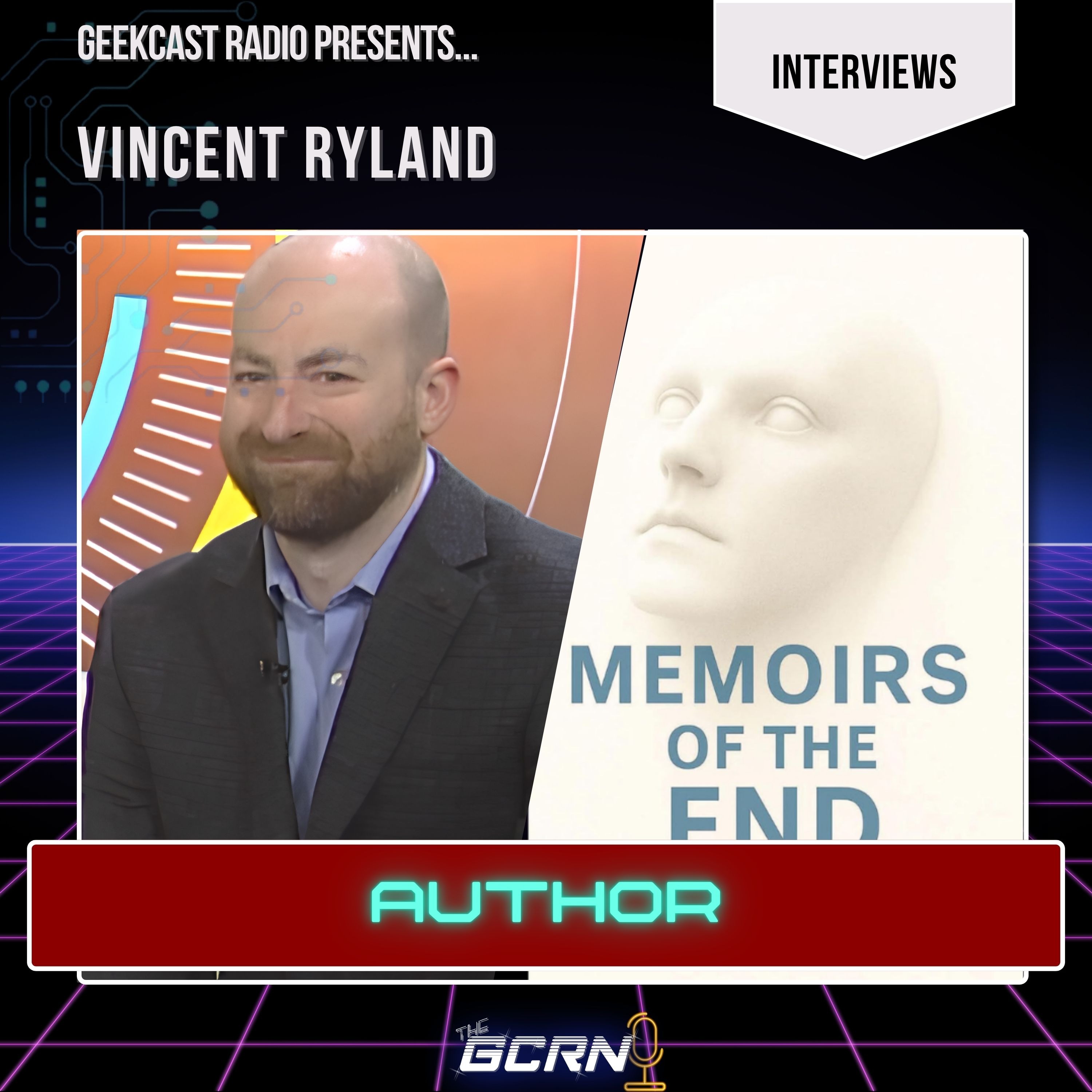
AI Dystopia, Corporate Mergers & "Memoirs of the End" with Author Vincent Ryland

Transformers 40th Anniversary Release, Darkwing Duck Casting, Toys R Us Comeback, Gremlins 3 Teaser & Studio Re-releases